

Ottawa’s Strongest Man and Woman
On October 24, 2026, the parking lot and grounds around A Foot Above Fitness at Place d’Orléans turned into a proving ground. Athletes from across the capital region stepped up for Ottawa’s Strongest Man and Woman, a local strongman competition featuring men’s and women’s novice and open divisions. Hosted by Ottawa’s largest privately owned facility, the event delivered exactly what the promo promised: heavy hits, big pulls, and serious strength, rain or shine.
A Foot Above Fitness (110 Place d’Orléans Drive) is a 21,500-square-foot space with nearly 9,000 square feet of gym floor, combat sports facilities including a full boxing ring, and a community-focused vibe that made it a natural fit for an outdoor-style strength challenge. Owner Zachary Boissinot and the team created a full day of competition that tested grip, posterior chain, pressing power, and pure grit.
These weren’t abstract lifts. Each one demanded a different mix of strength, endurance, and coordination that shows up far beyond the competition floor.


Results
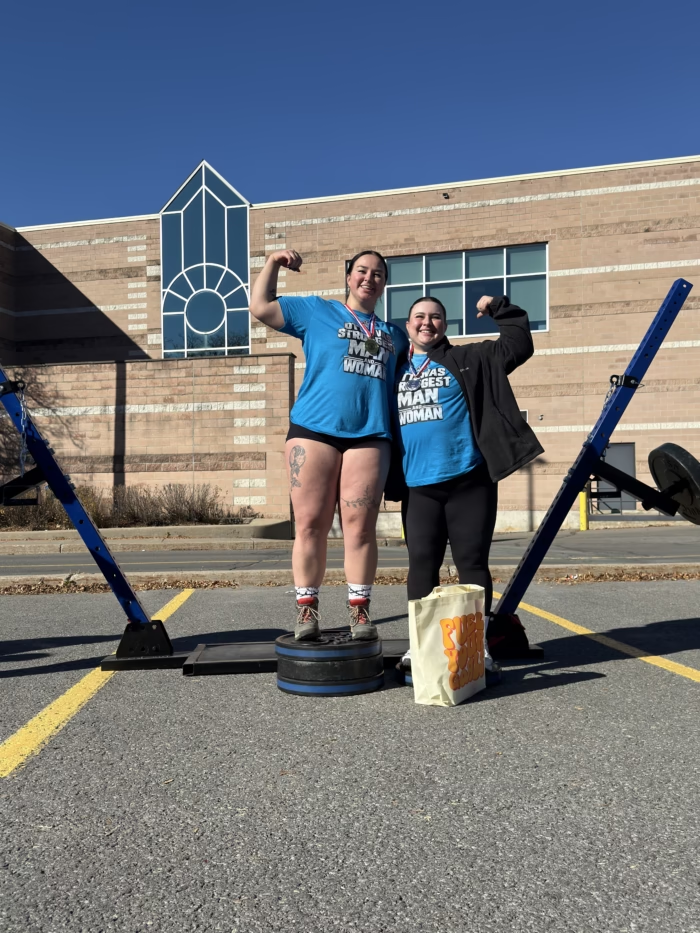
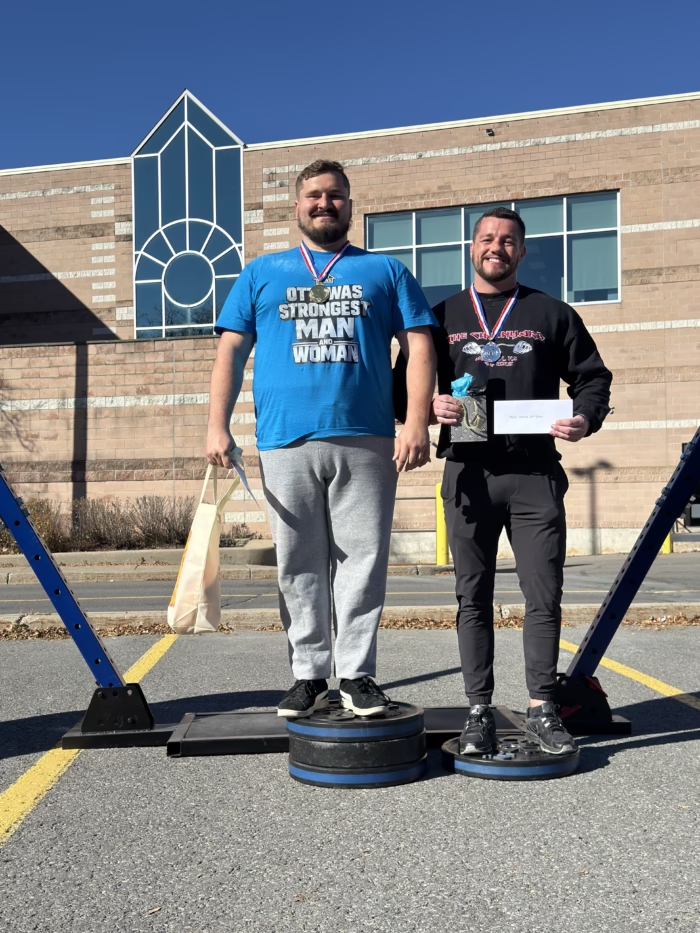
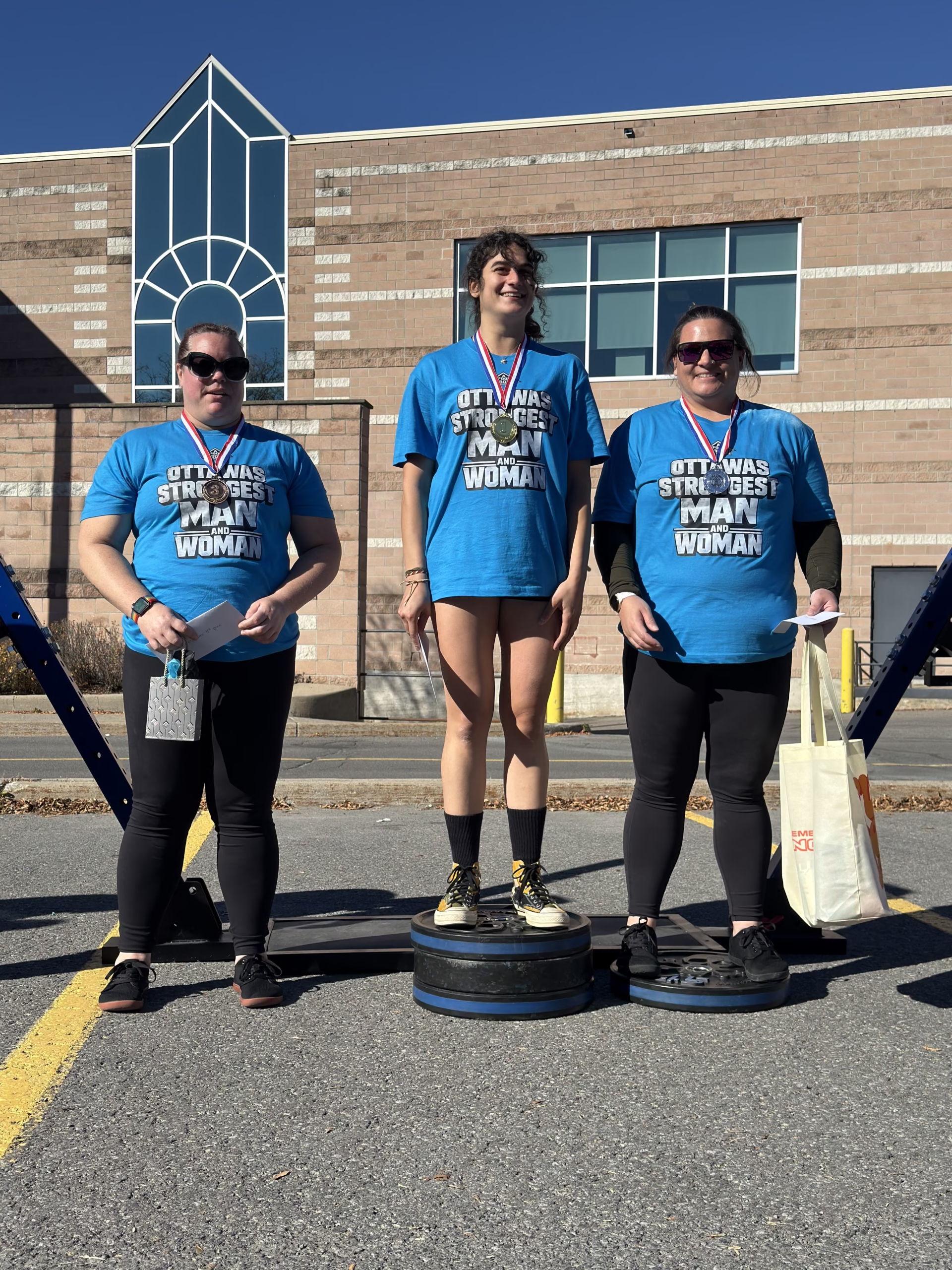
In the women’s open, Gabby Sebrango put together a strong all-around day, including a standout truck pull of a 26,000-lb milk truck 50 feet in 47 seconds. She was publicly celebrated as Ottawa’s Strongest Woman after the event.
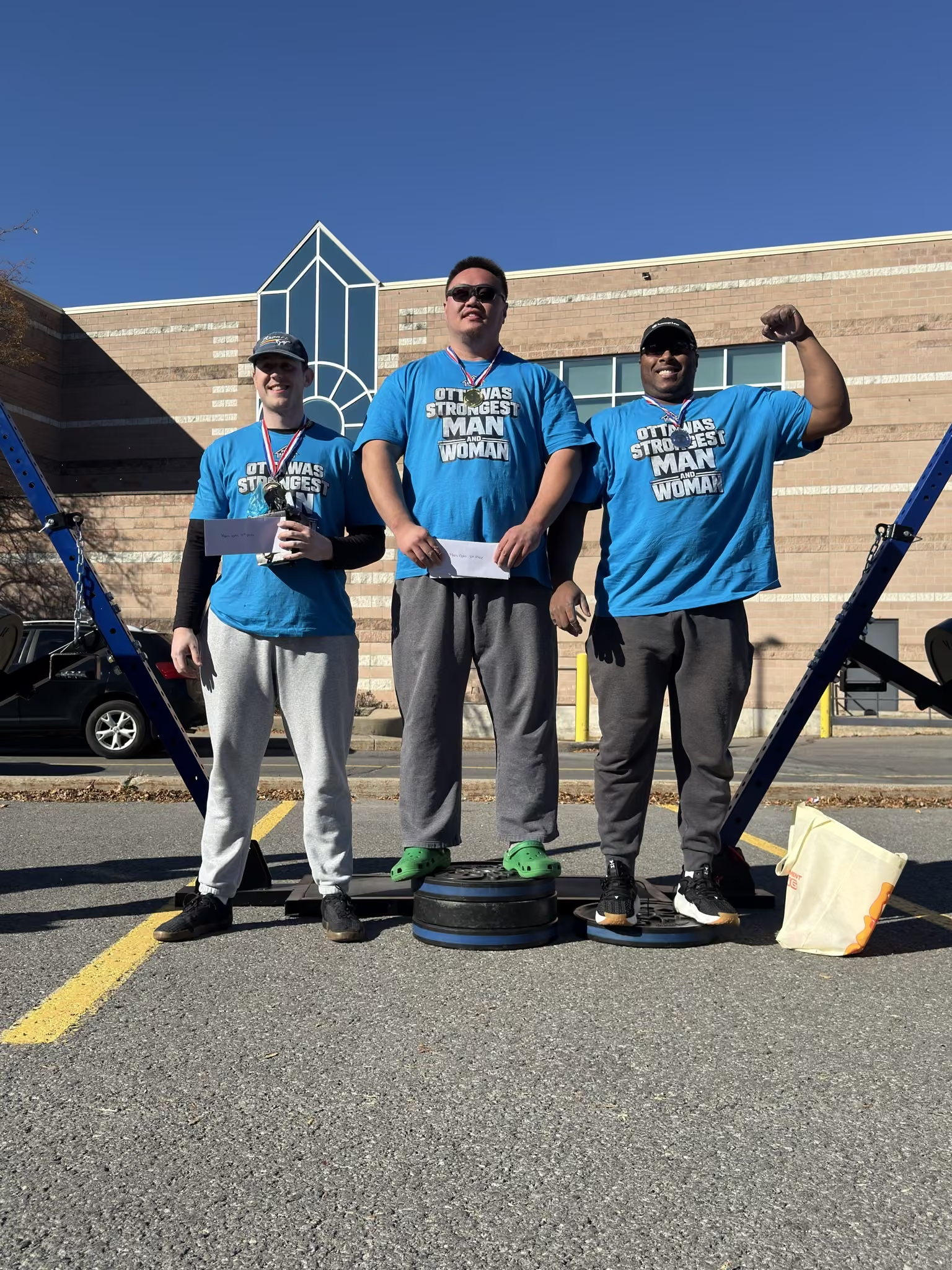
Charles-Alexandre Ladouceur swept the men’s novice category. In the open, Shangye Zhang took the title with consistent high placements, including the top log press, ahead of Tarek Oueld Hammoud and Max MacDougall.
Men’s Open
| Athlete | Carry | Pts | Car Deadlift | Pts | Max Press (Log) | Pts | Hercules Hold | Pts | Truck Pull | Pts | PLACE | PTS |
| Shangye Zhang | TOUCH | 1.5 | 2 | 3 | 290,300 | 3 | 0:59:00 | 2 | 27.88 | 2 | 1 | 12.5 |
| Tarek Oueld Hammoud | TOUCH | 1.5 | 0 | 0 | 260,280 | 2 | 1:03:35 | 3 | 41.56 | 3 | 2 | 8.5 |
| Max MacDougall | 7ft 4inch | 3 | 0 | 0 | 0 | 0 | 00:51:87 | 1 | 44.25 | 1 | 3 | 5 |
Women’s Open
| Athlete | Carry | Pts | Car Deadlift | Pts | Max Press (Log) | Pts | Hercules Hold | Pts | Truck Pull | Pts | PLACE | PTS |
| Ava Sinclair | TOUCH | 1 | 0 | 0 | 140 | 1 | 00:17:75 | 1 | 134 | 1 | 1 | 3 |
| Gabby Sebrango | 15FT | 2 | 26 | 2 | 180 | 2 | 1:13:72 | 2 | 0:47:13 | 2 | 2 | 10 |
Christina Saydé dominated the women’s novice division with top marks in the Sandbag/Farmers Carry, Hercules Hold, and Truck Pull. All events that reward grip endurance and the ability to keep moving under fatigue. Alicia McDonald took second with the best log press in the field, while Amanda Maggiacomo secured third.
Men’s Novice
| Athlete | Carry | Pts | Car Deadlift | Pts | Max Press (Log) | Pts | Hercules Hold | Pts | Truck Pull | Pts | PLACE | PTS |
| Charles-Alexandre Ladouceur | 39 FT | 2 | 17 | 2 | 230,240 | 2 | 0:46:12 | 2 | 00:35:62 | 2 | 1 | 11 |
| Mike Hamm | 0 | 0 | 16 | 1 | 140 | 1 | 0:38:31 | 1 | 0:51:07 | 1 | 2 | 3 |
Women’s Novice
| Athlete | Carry | Pts | Car Deadlift | Pts | Max Press (Log) | Pts | Hercules Hold | Pts | Truck Pull | Pts | PLACE | Pts |
| Christina Saydé | 14.56s | 6 | 0 | 0 | 130 | 5 | 1:17.25 | 6 | 240 | 6 | 1 | 23 |
| Alicia McDonald | 19.31s | 5 | 0 | 0 | 140 | 6 | 1:00.16 | 4 | 46 | 4 | 2 | 19 |
| Amanda Maggiacomo | 24.04s | 4 | 0 | 0 | 125 | 4 | 42.65s | 3 | 132 | 5 | 3 | 16 |
| Julie Dube | 6.5ft | 2 | 0 | 0 | 80 | 1.5 | 1:04.84 | 5 | 23 | 3 | 4 | 11.5 |
| Jennifer Beyore | 25.6ft | 3 | 0 | 0 | 100 | 3 | 32.53s | 2 | 14 | 2 | 5 | 10 |
Sandbag & Farmer’s Walk
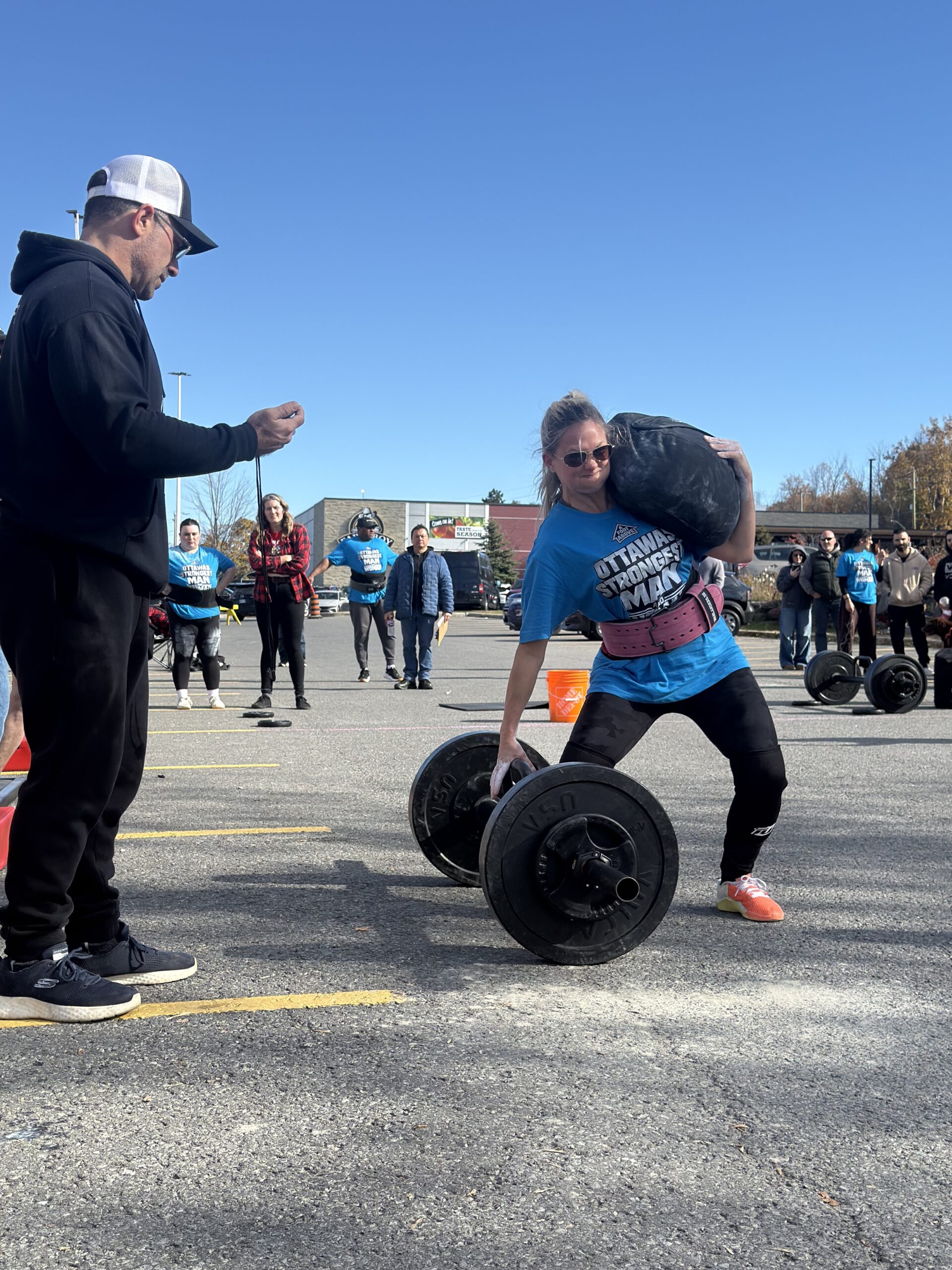
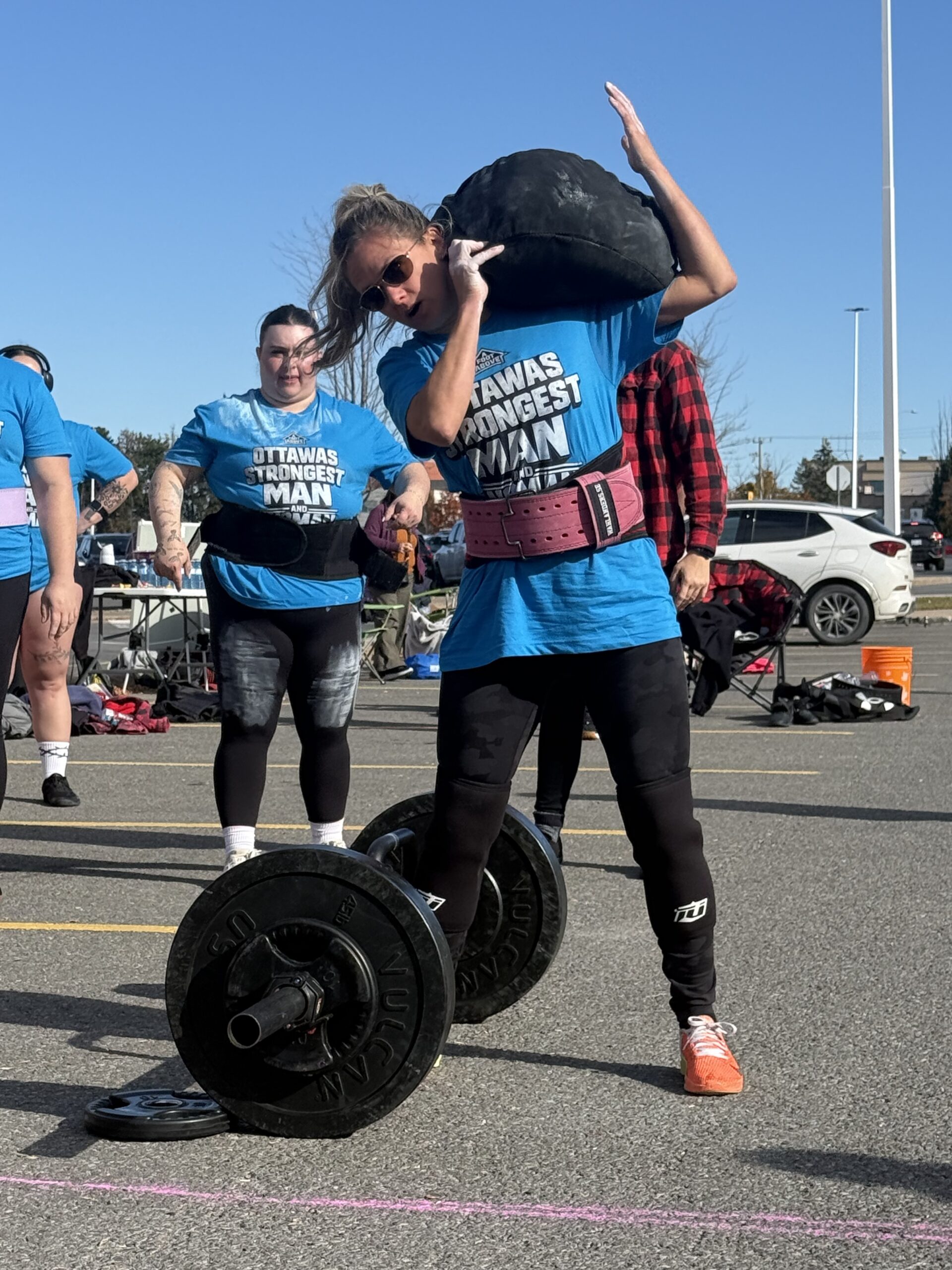
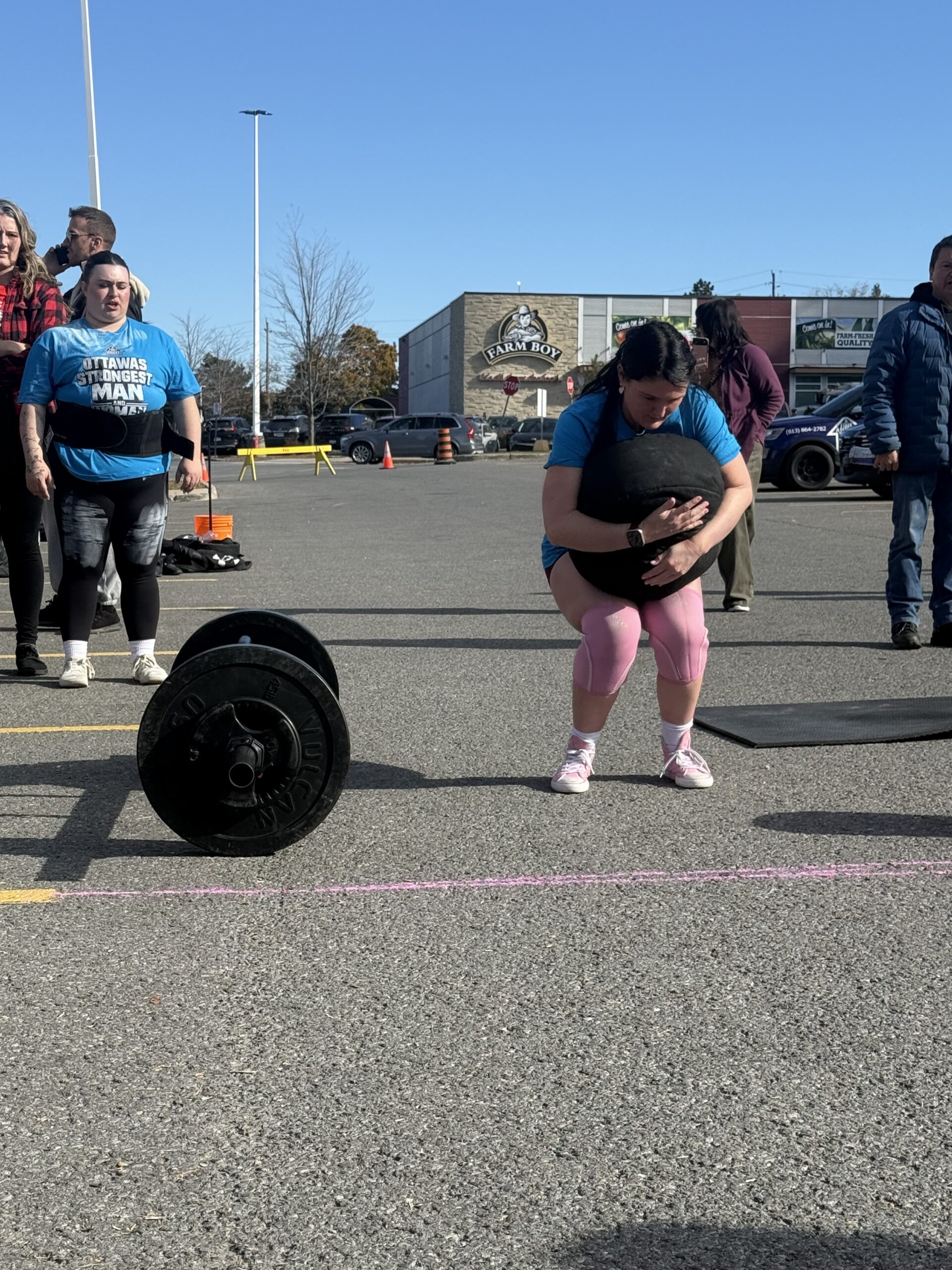
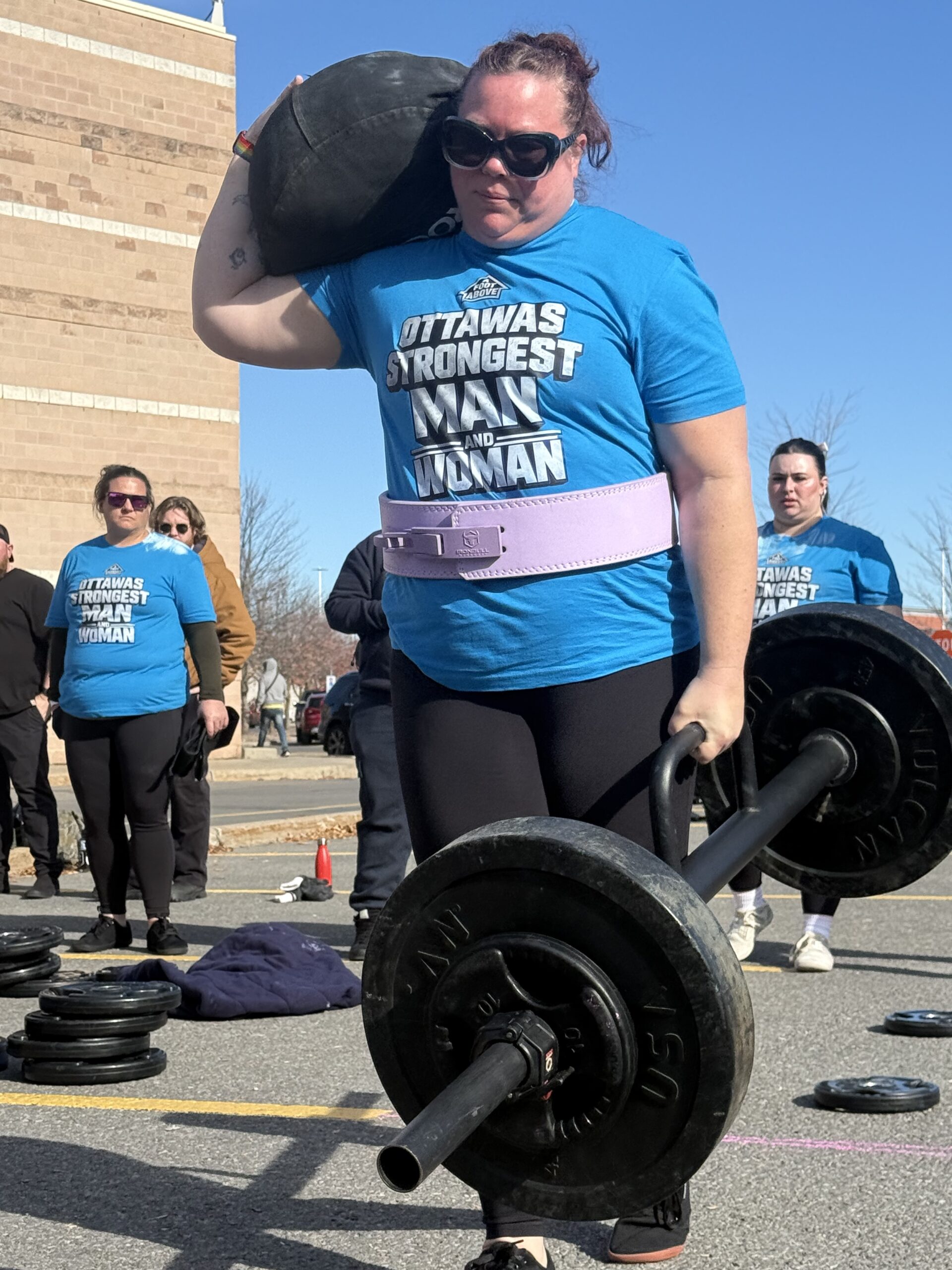
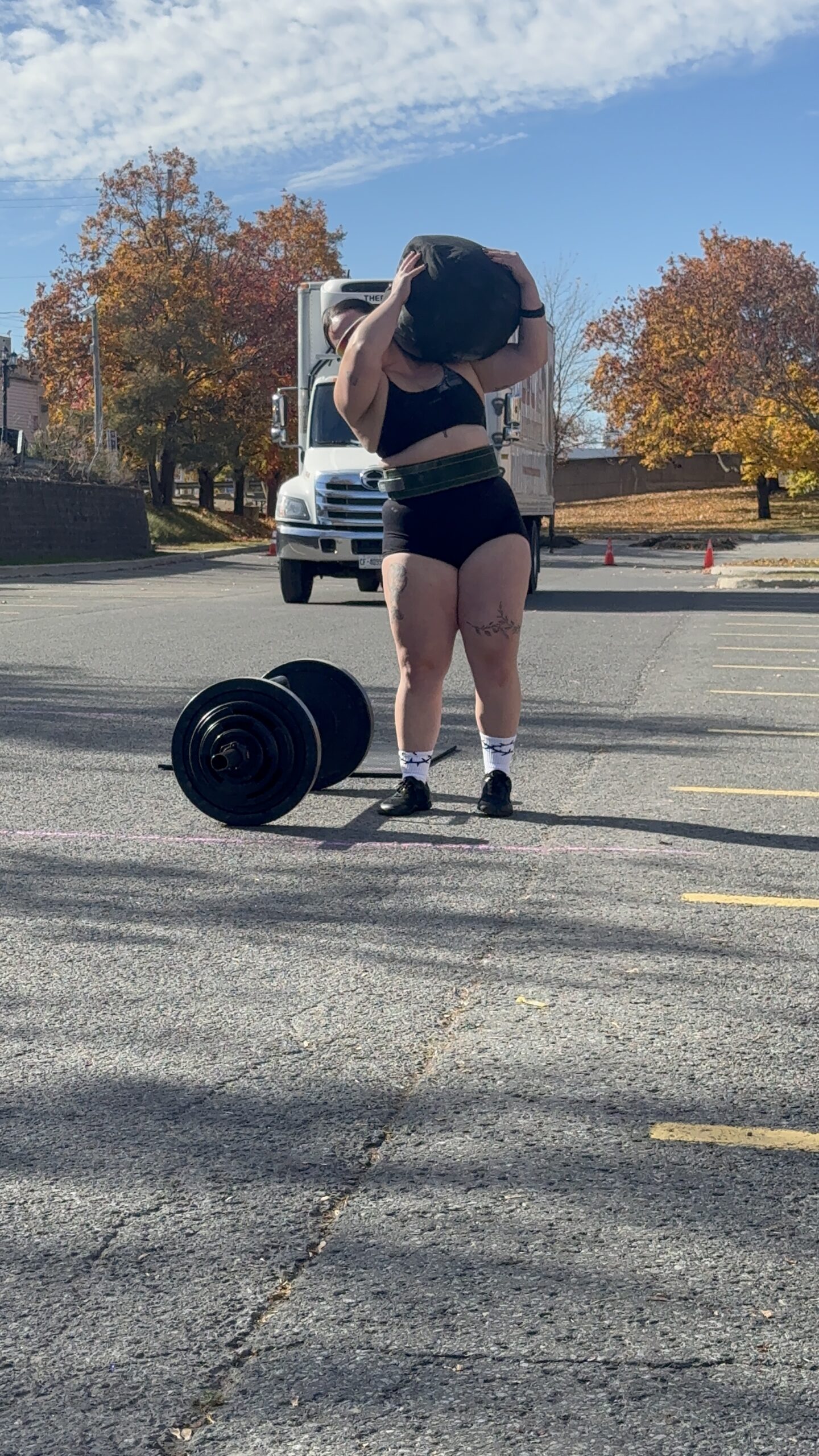
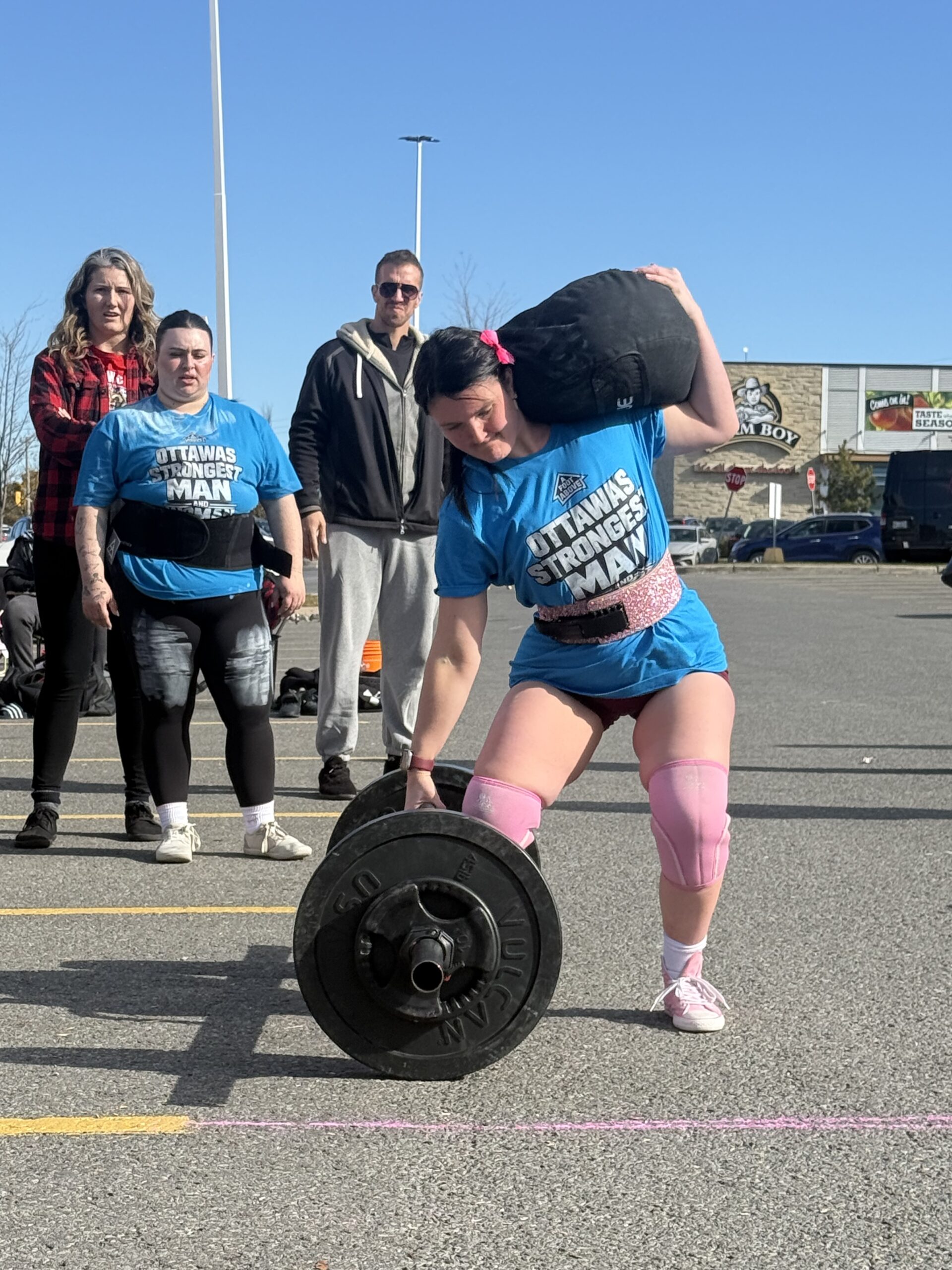
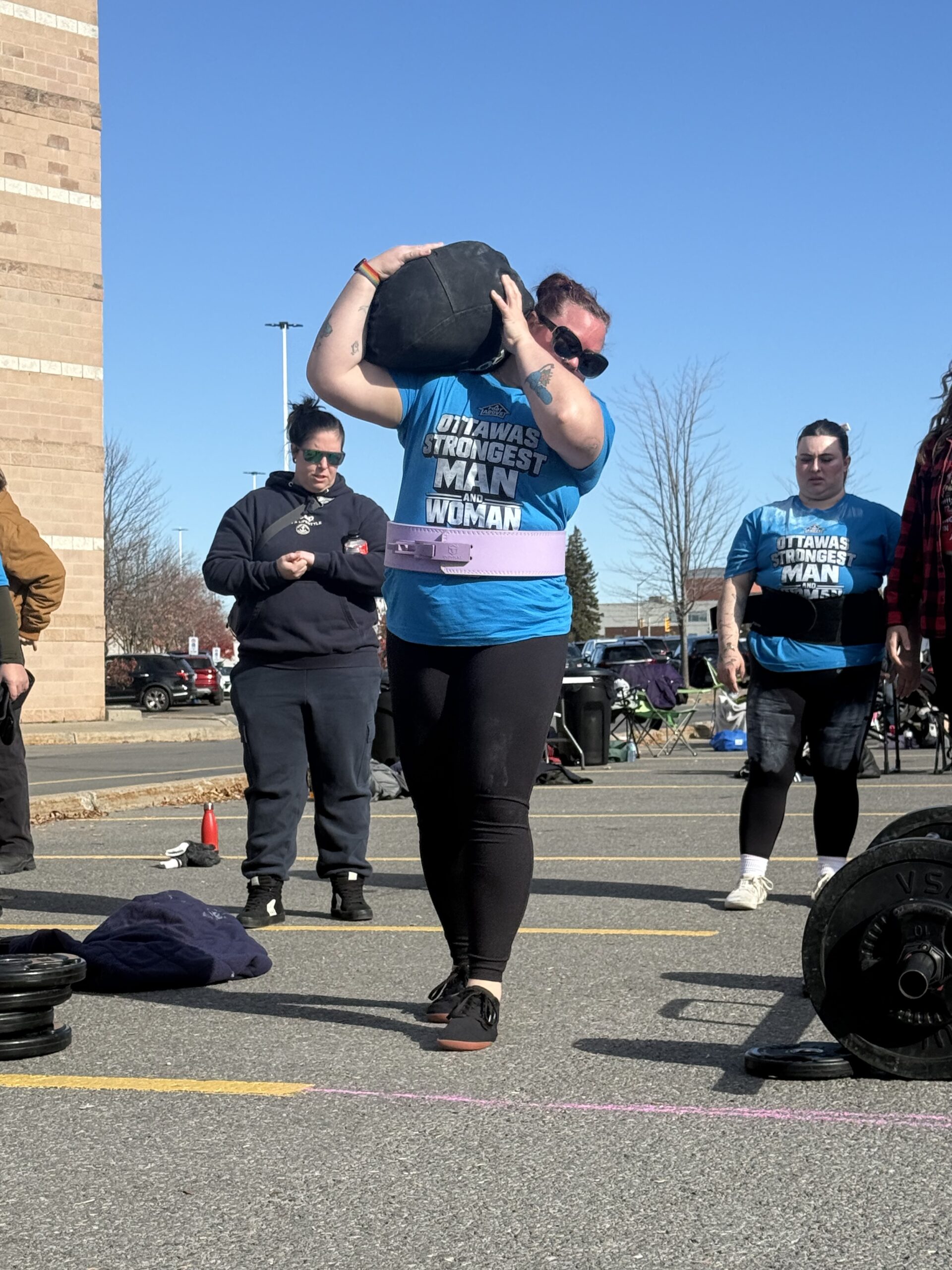
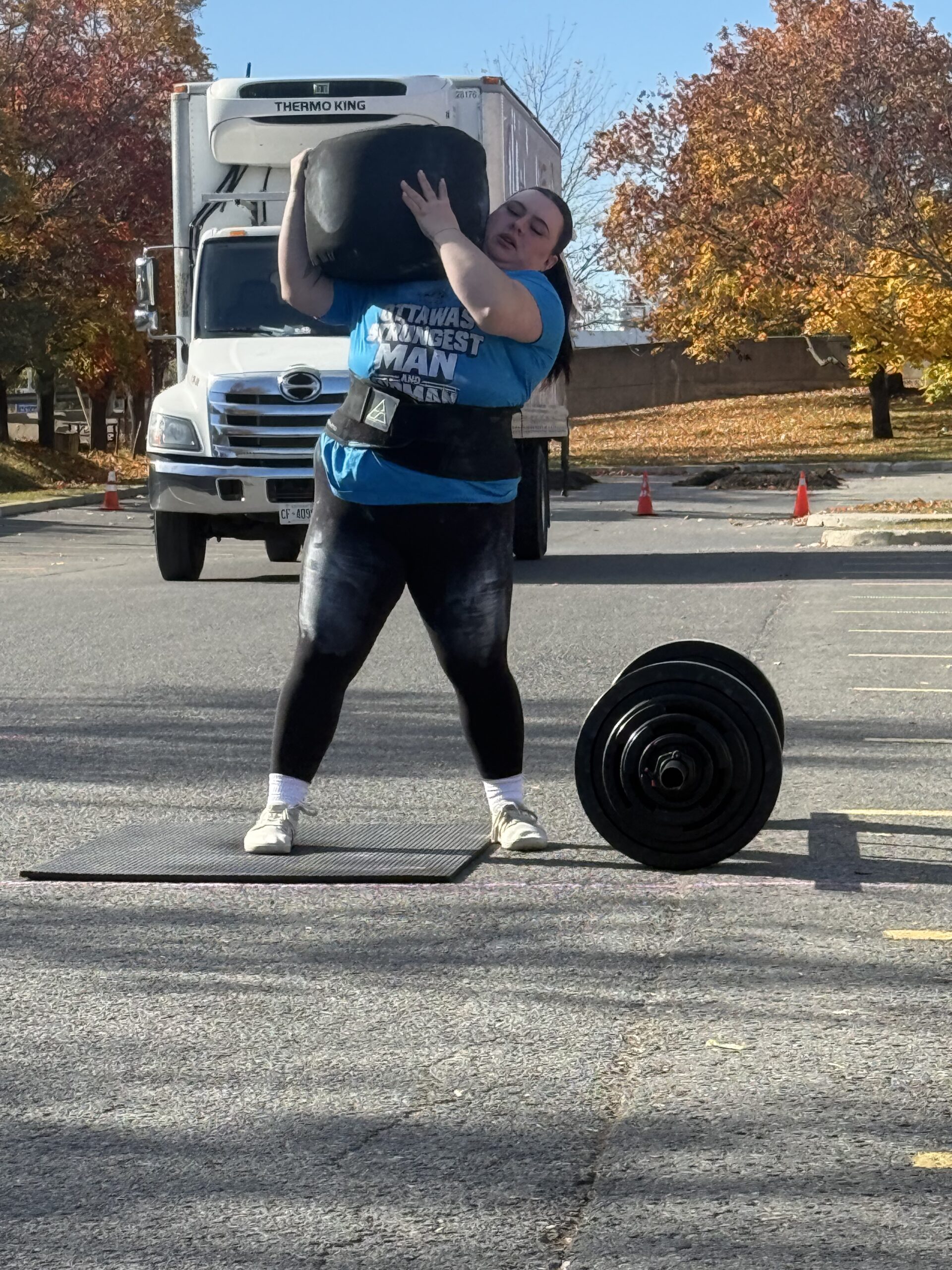
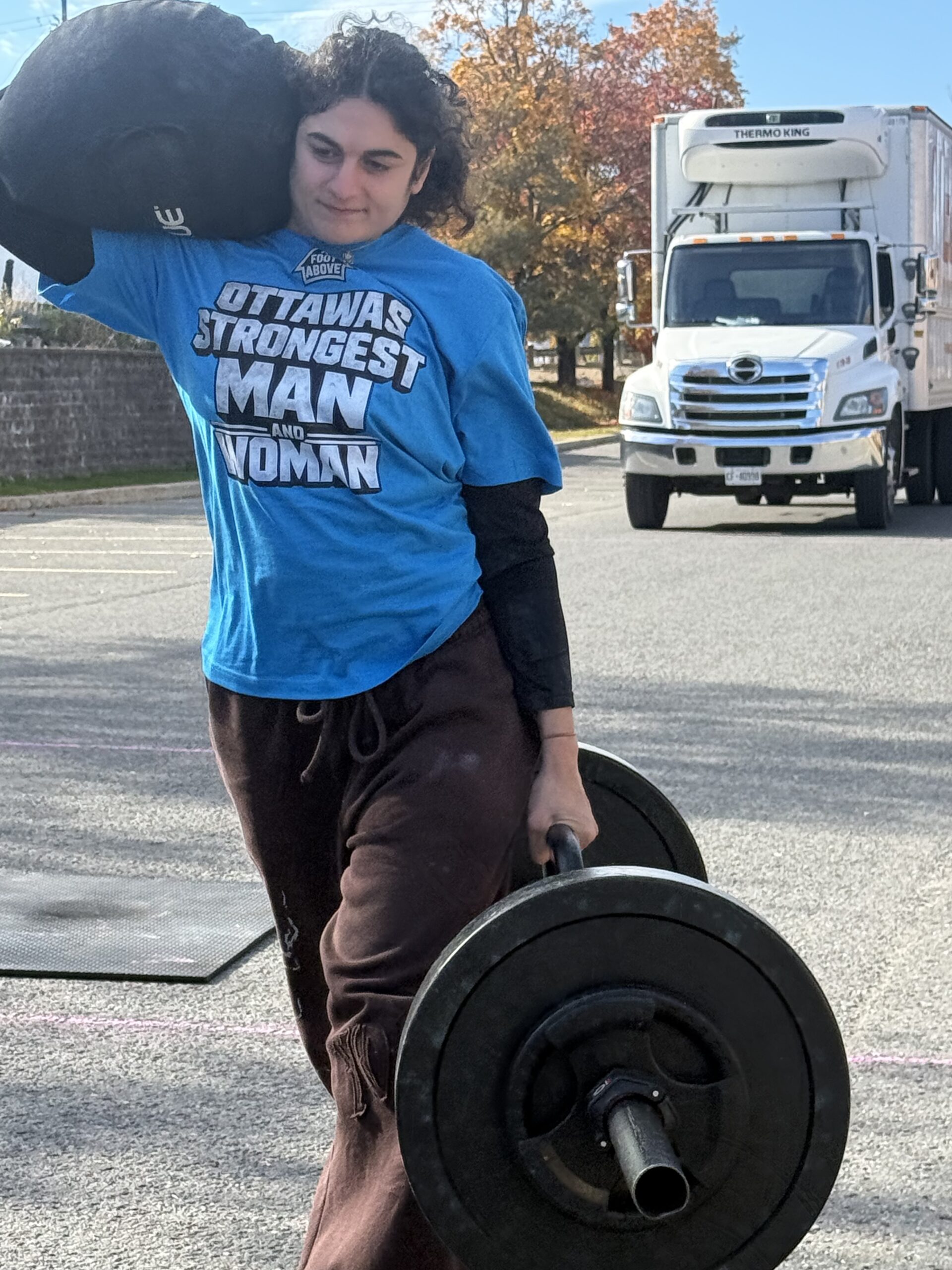
The Sandbag/Farmers Carry opened the day and immediately sorted the field. Athletes either finished the full distance and were ranked by time, or fell short and were ranked by how far they got. That split showed up clearly in the results: the top women in the novice division posted clean times (Christina Saydé at 14.56 seconds, Alicia McDonald at 19.31), while others were measured in feet. In the open divisions the same pattern held—some athletes completed the course, others were stopped by grip or stability before the finish line.
This event is one of the purest tests of real-world strength. The sandbag is awkward and shifting; the farmers handles are rigid but demand constant grip. Together they force the athlete to keep the core braced, the shoulders packed, and the breathing controlled while something heavy tries to pull them off balance with every step. Success depends less on a single maximum lift and more on the ability to stay tight and keep moving when the load starts to fight back. That is why the athletes who trained carries consistently tended to separate themselves early.
The practical transfer is immediate. Carrying heavy, unbalanced loads for distance is what people do when they move furniture, haul groceries, load materials on a job site, or carry a child while also holding bags. The same grip endurance, upper-back strength, and core stability that keep an athlete moving on the farmers walk also keep the lower back safer and the shoulders healthier during ordinary heavy work. For the competitors at A Foot Above Fitness, the Sandbag/Farmers Carry was less a specialty event and more a direct measurement of the strength they already use outside the gym.
Car Deadlift
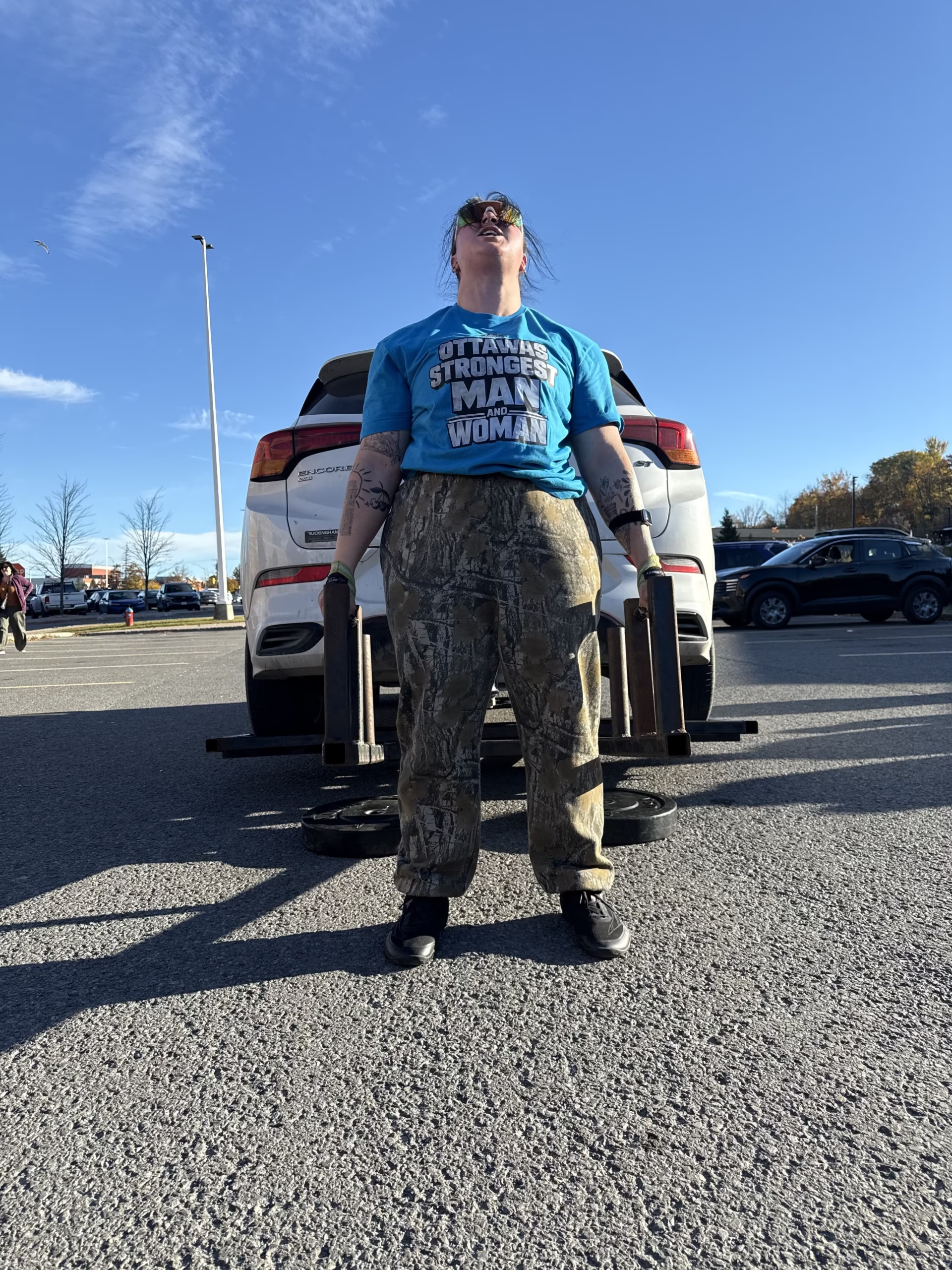
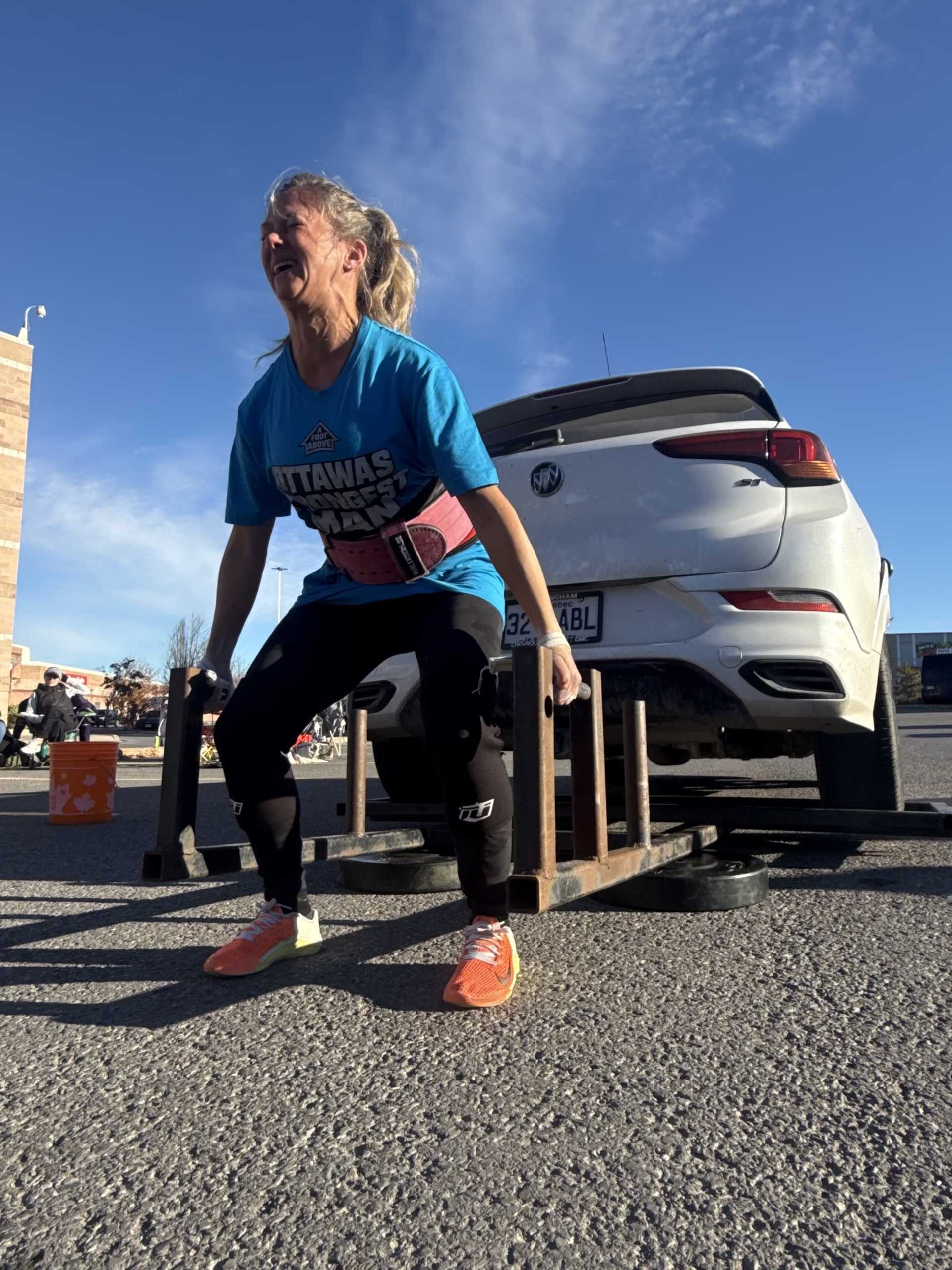
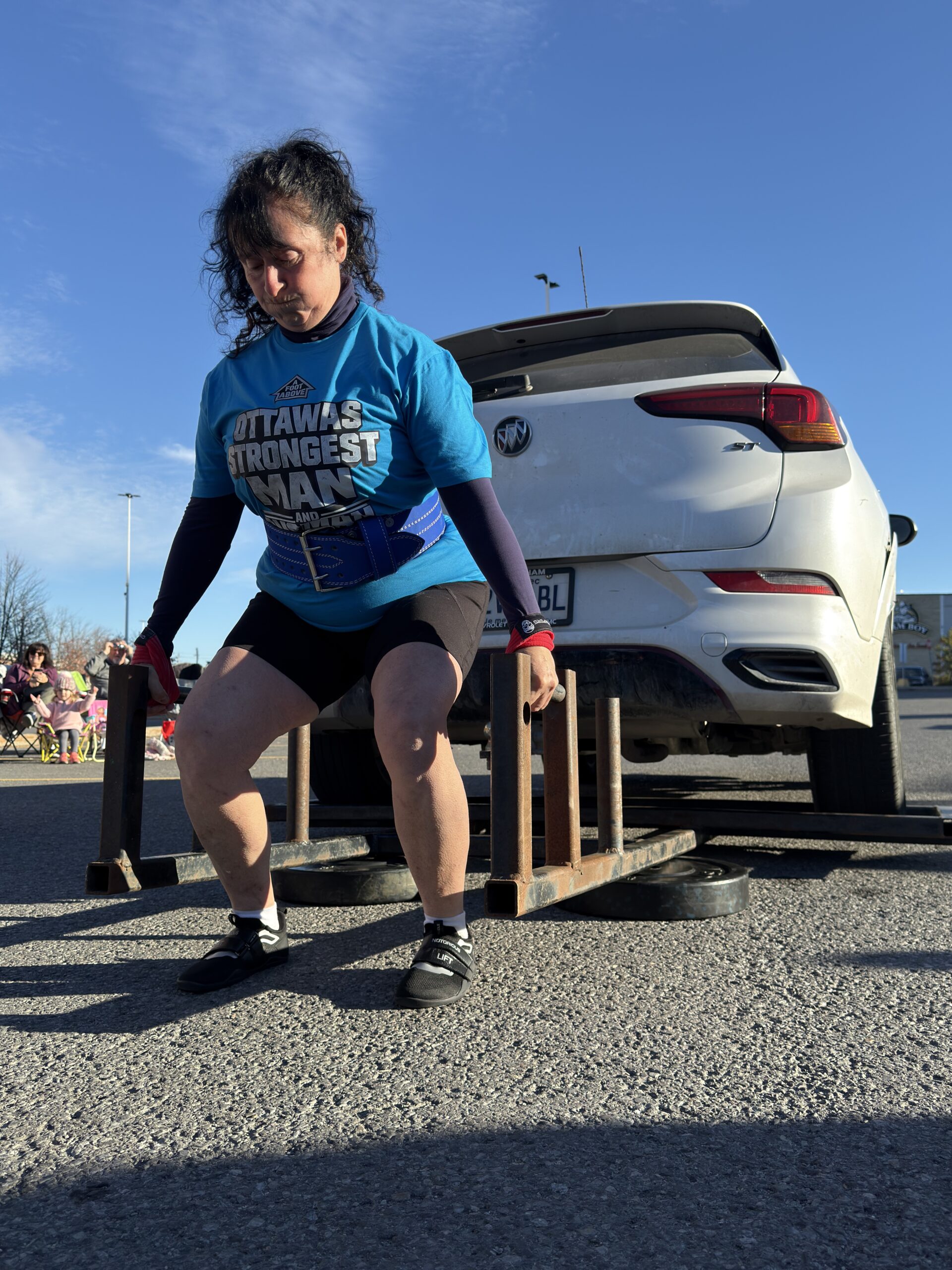
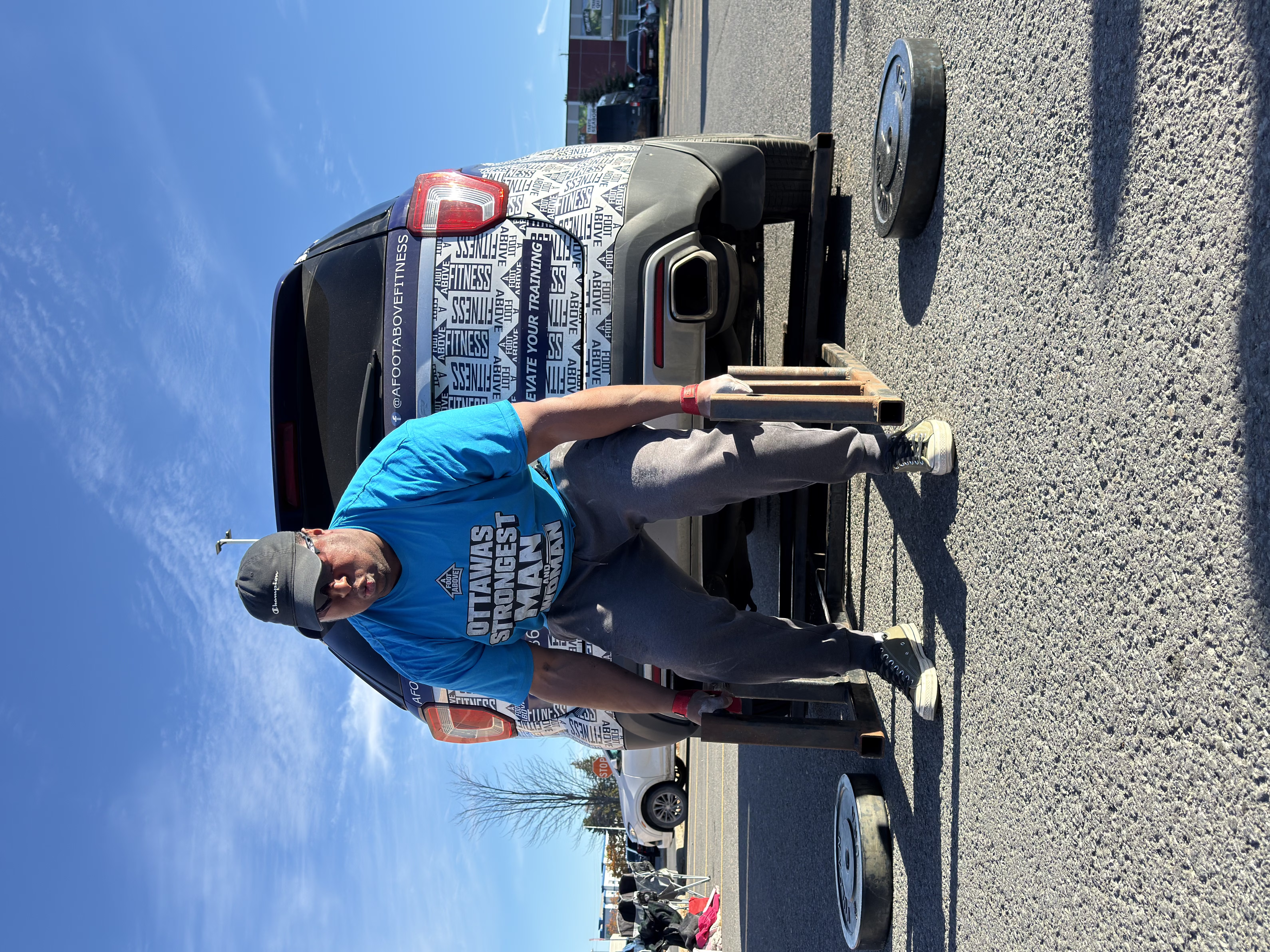
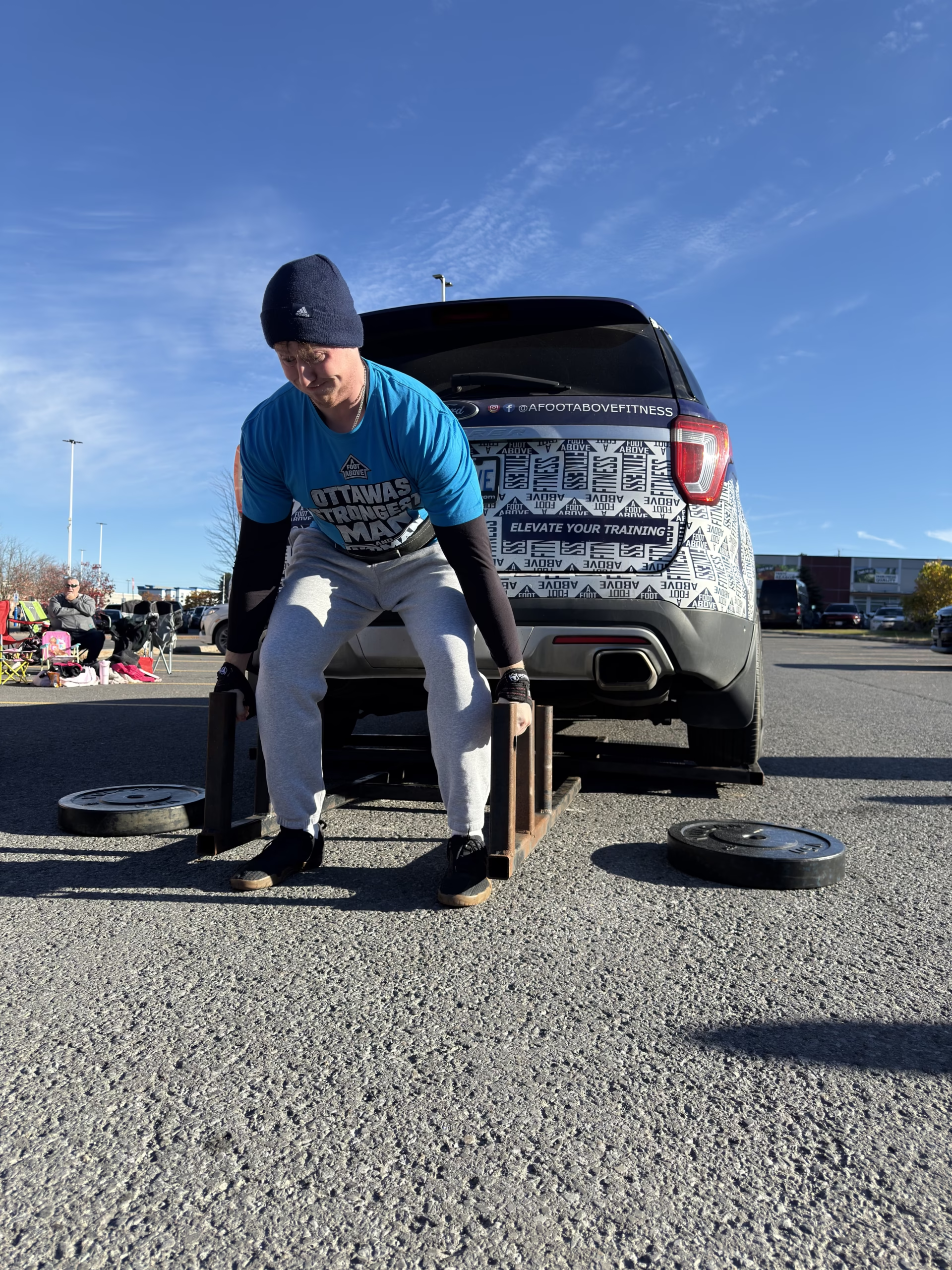
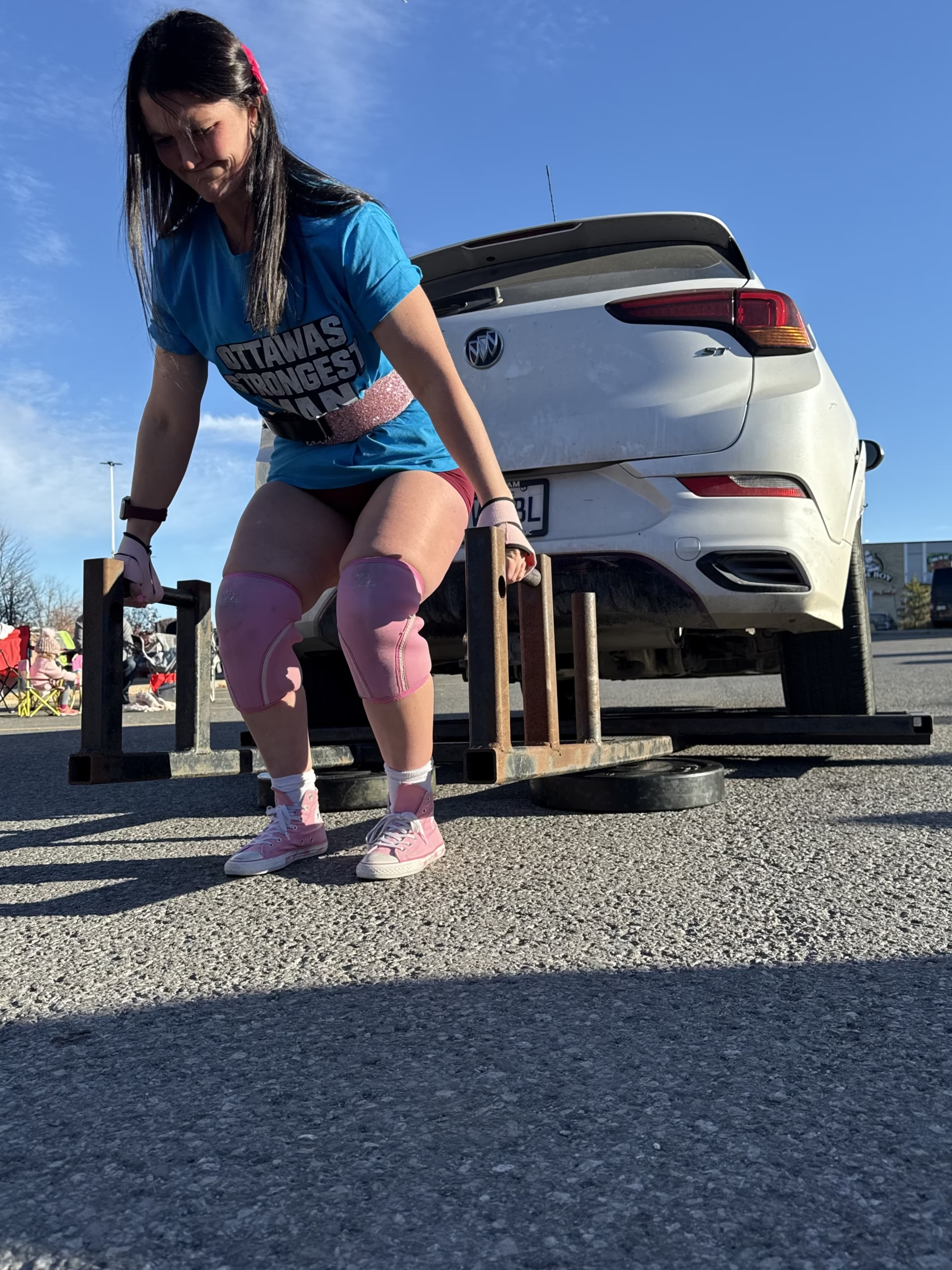
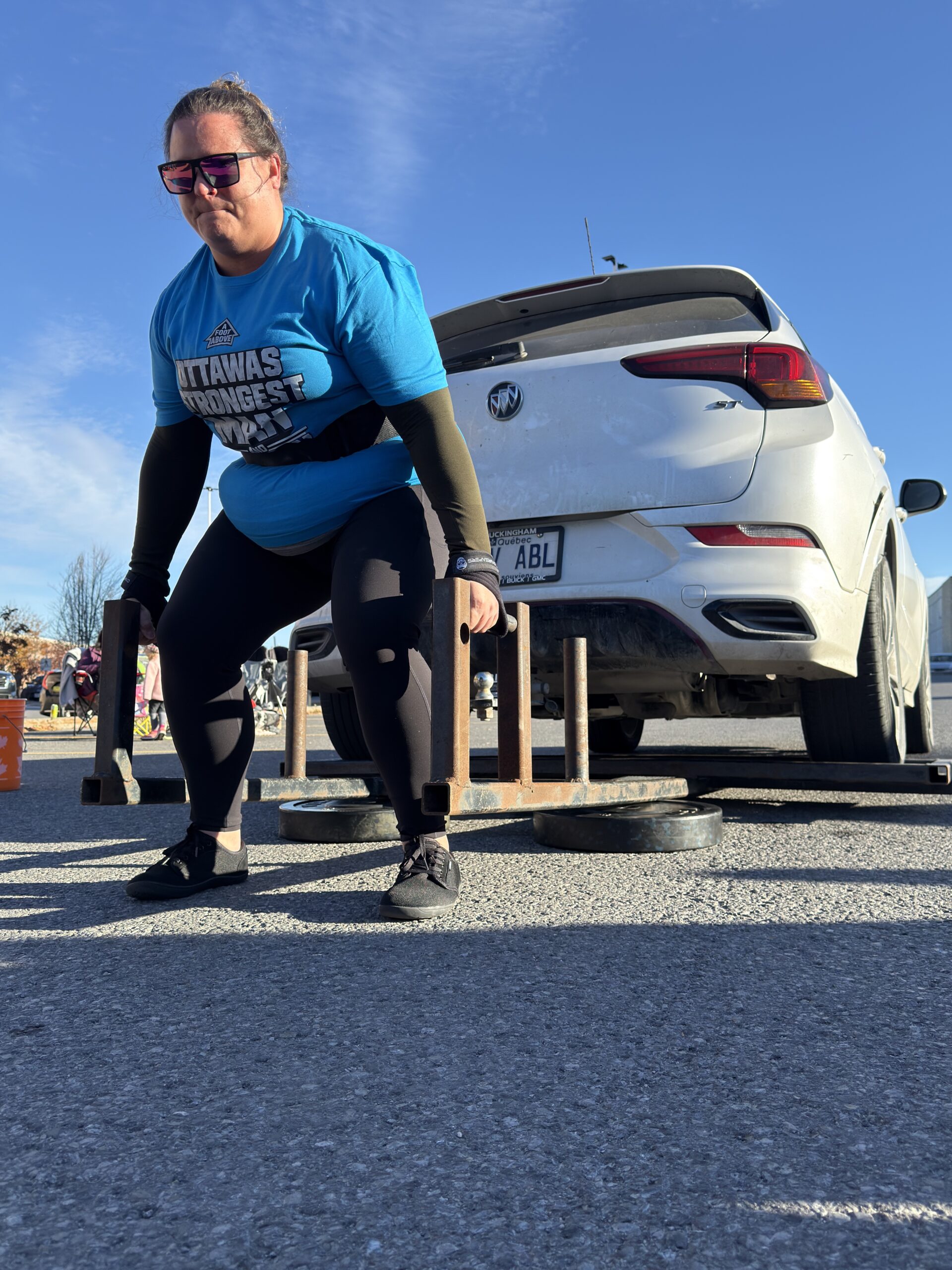
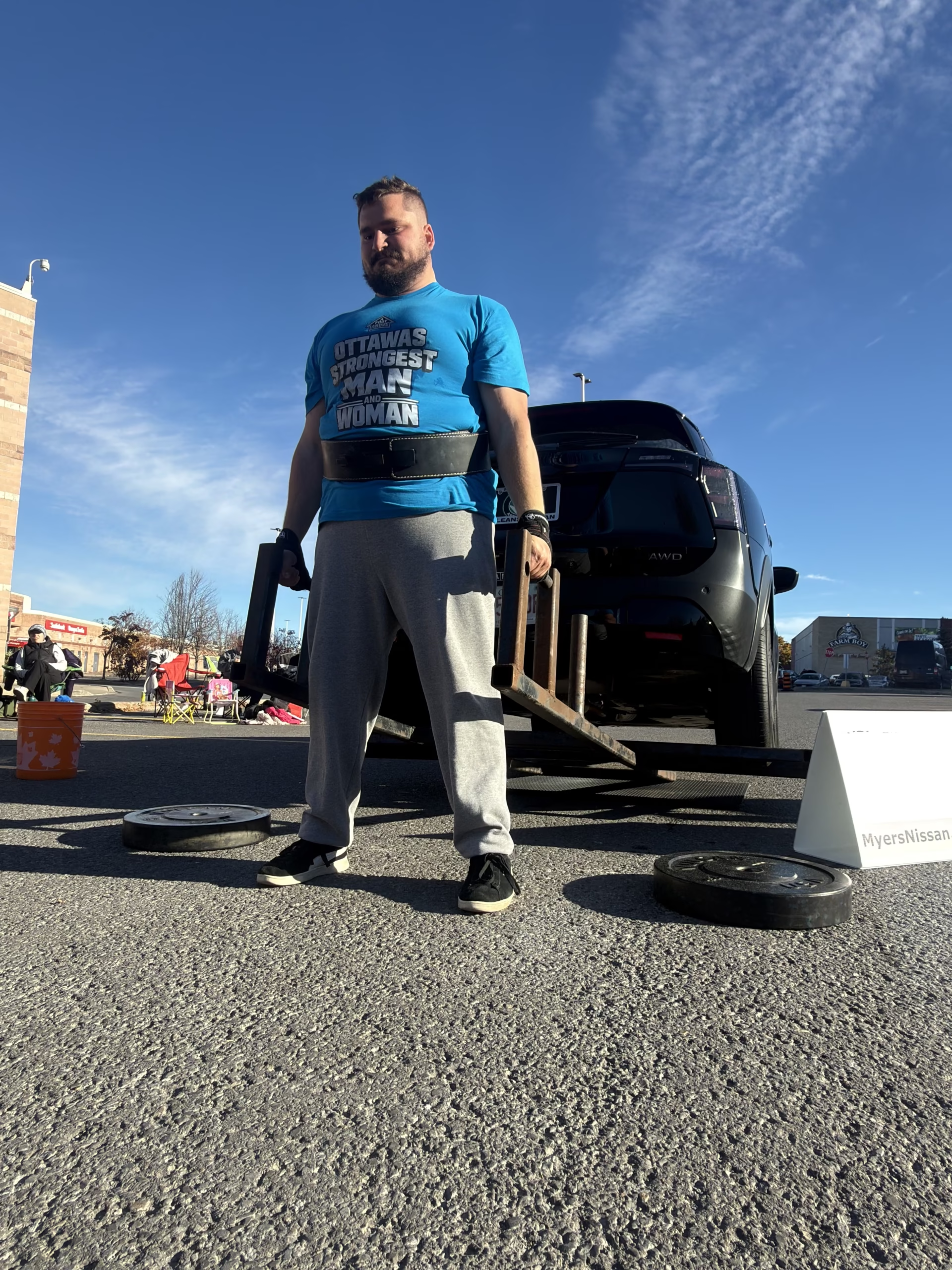
The Car Deadlift was the most polarizing event of the day. Gabby Sebrango pulled 26 reps in the women’s open, Charles-Alexandre Ladouceur and Mike Hamm both managed double-digit reps in the men’s novice, and Shangye Zhang was the only athlete in the men’s open to record any successful lifts.
Pulling against the resistance of an actual vehicle is a pure test of posterior-chain strength and technical consistency. The car does not flex or bounce the way a barbell does; the athlete must generate force from the floor, lock the hips and upper back, and keep the tension without the benefit of stretch reflex or bar whip. Those who could maintain position through multiple reps demonstrated not just raw strength but the ability to recover quickly between efforts and stay tight when fatigue set in. The athletes who zeroed the event were usually limited by either the starting strength to break the car off the ground or the capacity to keep the back rigid once the load moved.
Outside competition, the Car Deadlift mirrors the most common heavy lifting pattern people encounter: picking something substantial and uncooperative off the ground. Whether it is an appliance, a loaded wheelbarrow, a piece of equipment, or a heavy box that has settled into the floor, the same hip drive, braced torso, and willingness to keep pulling when the object does not move on the first attempt are what prevent the lower back from absorbing the entire load. The competitors who handled the car well were, in practical terms, the ones best prepared for the kinds of lifts that appear without warning in daily work and life.
Log Press
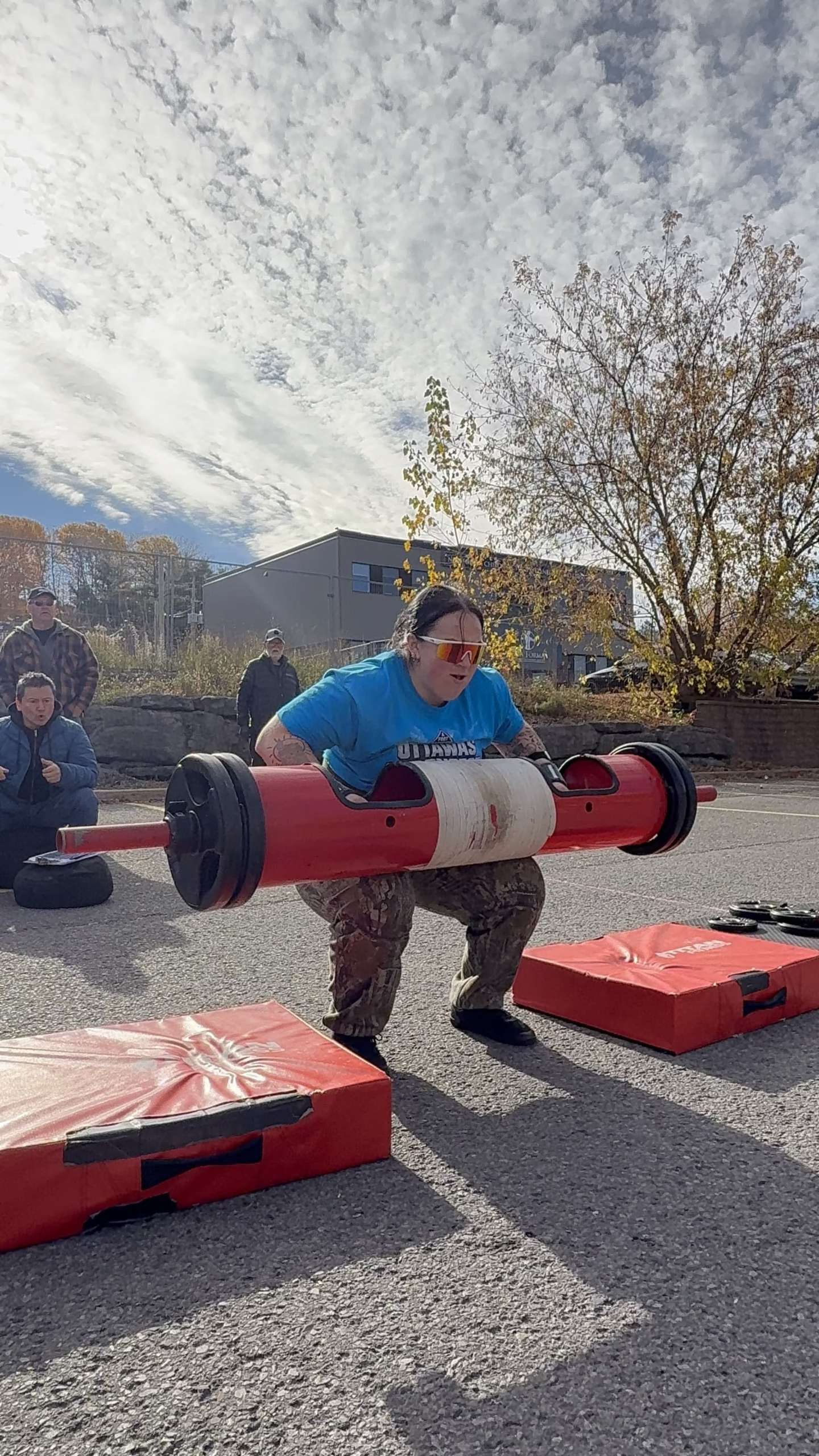
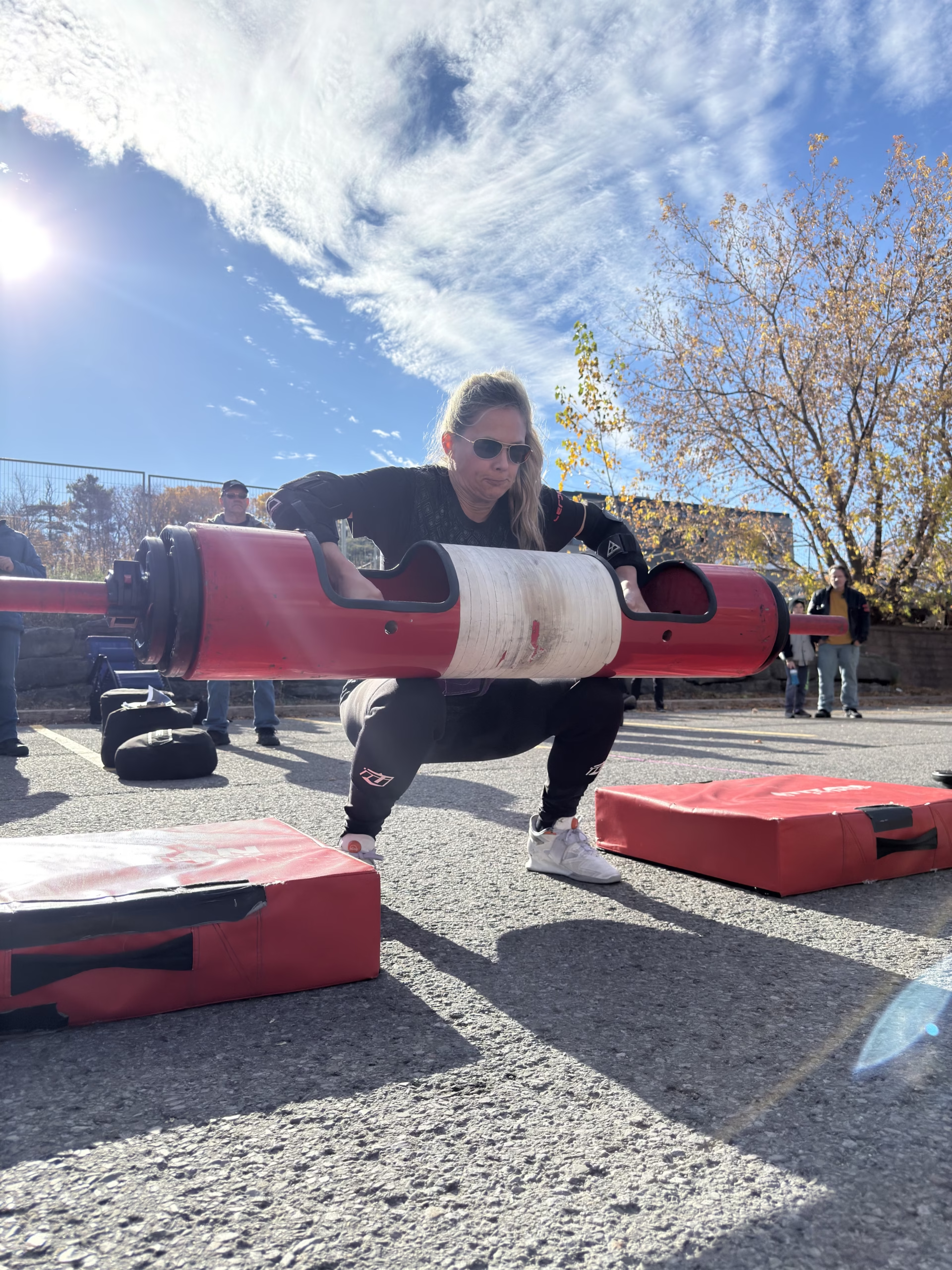
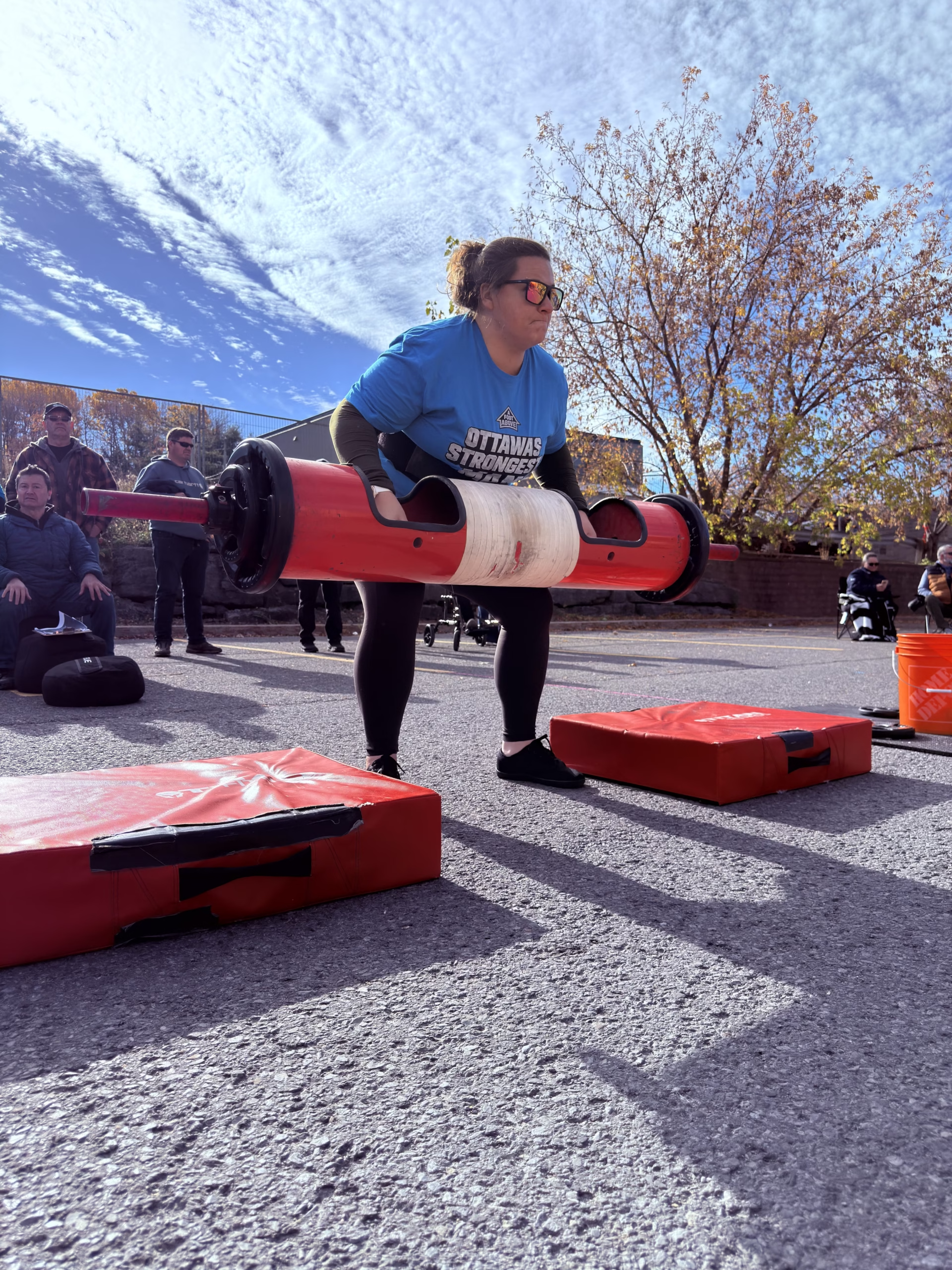
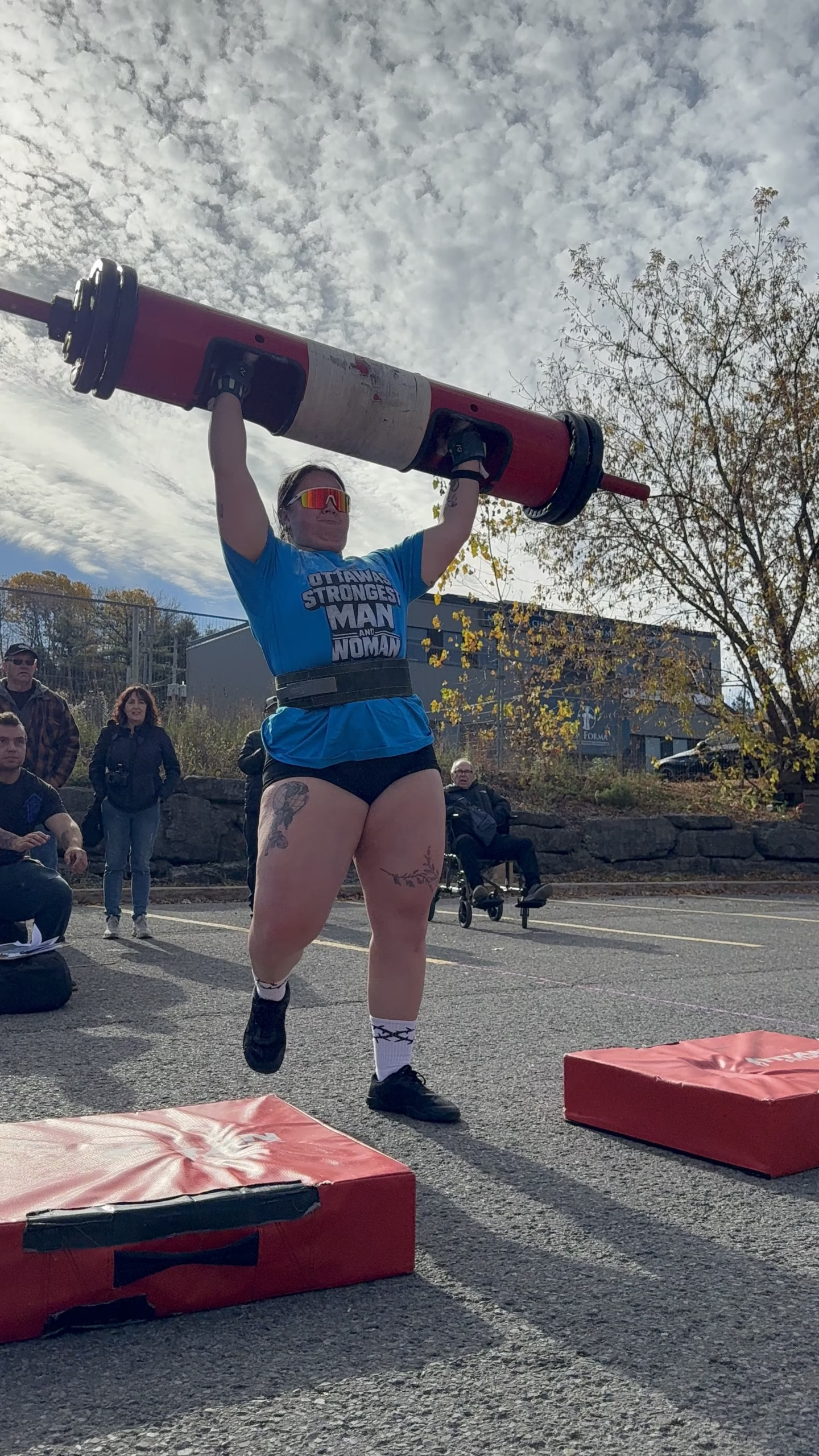
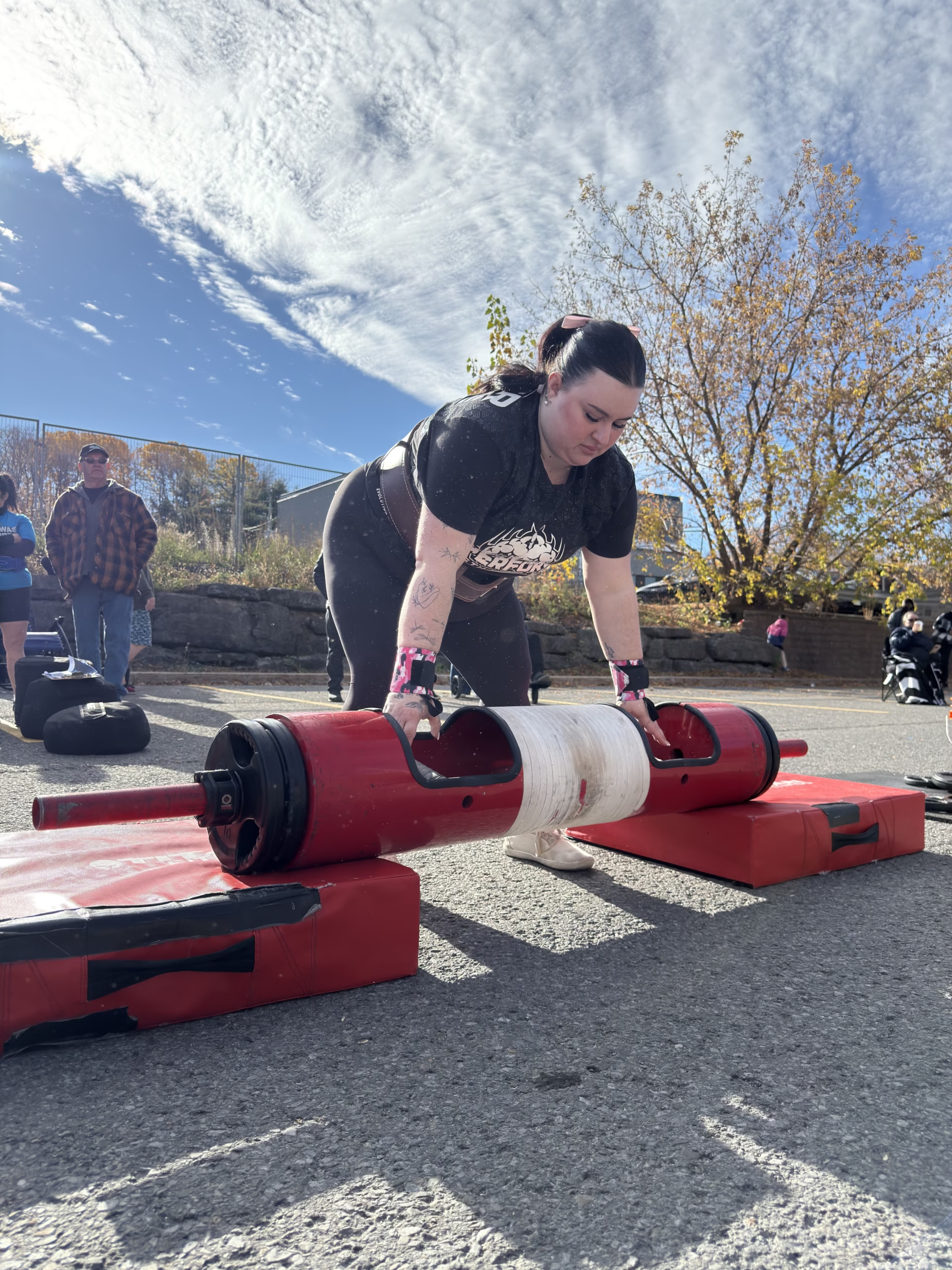
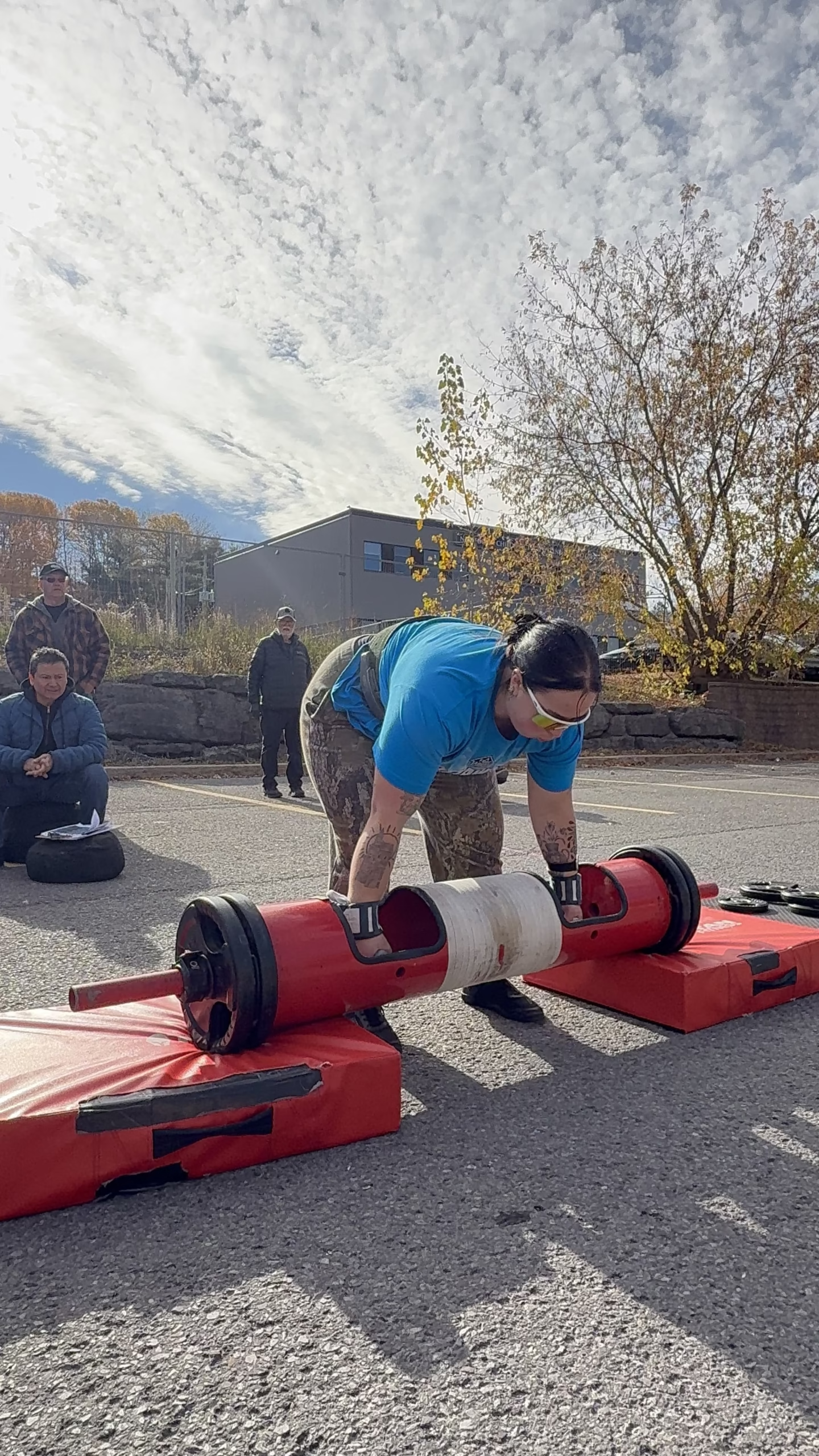
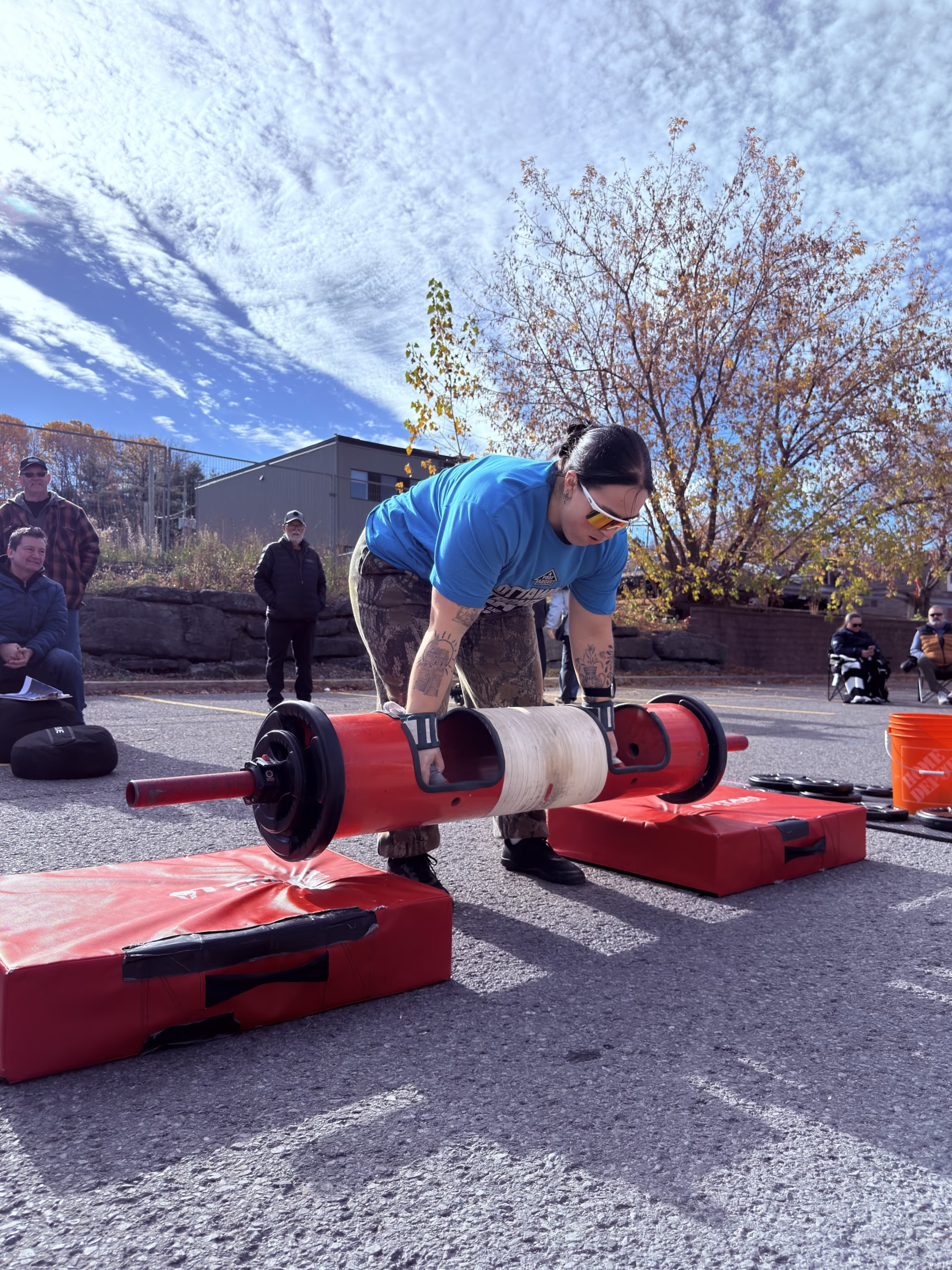
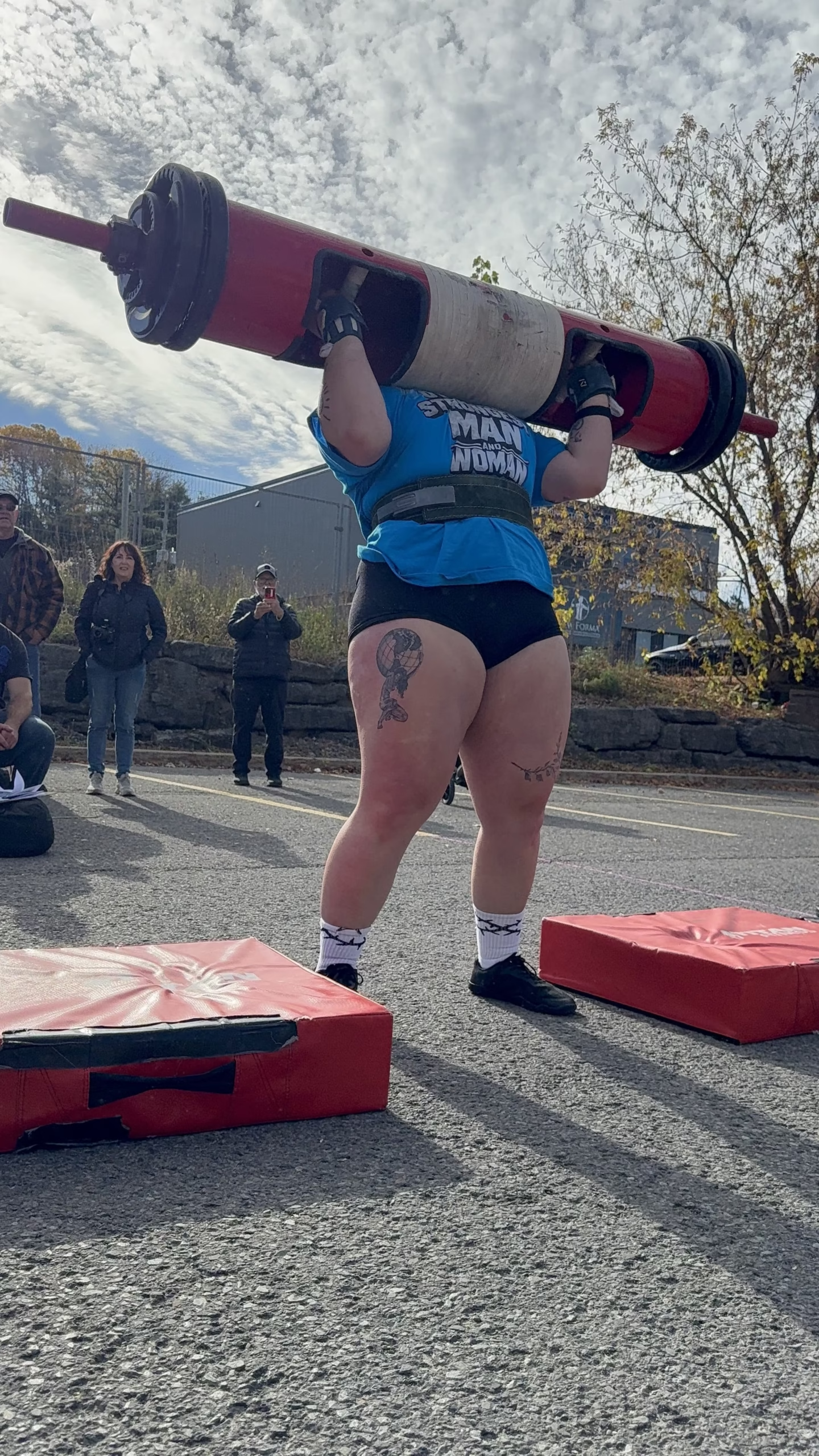
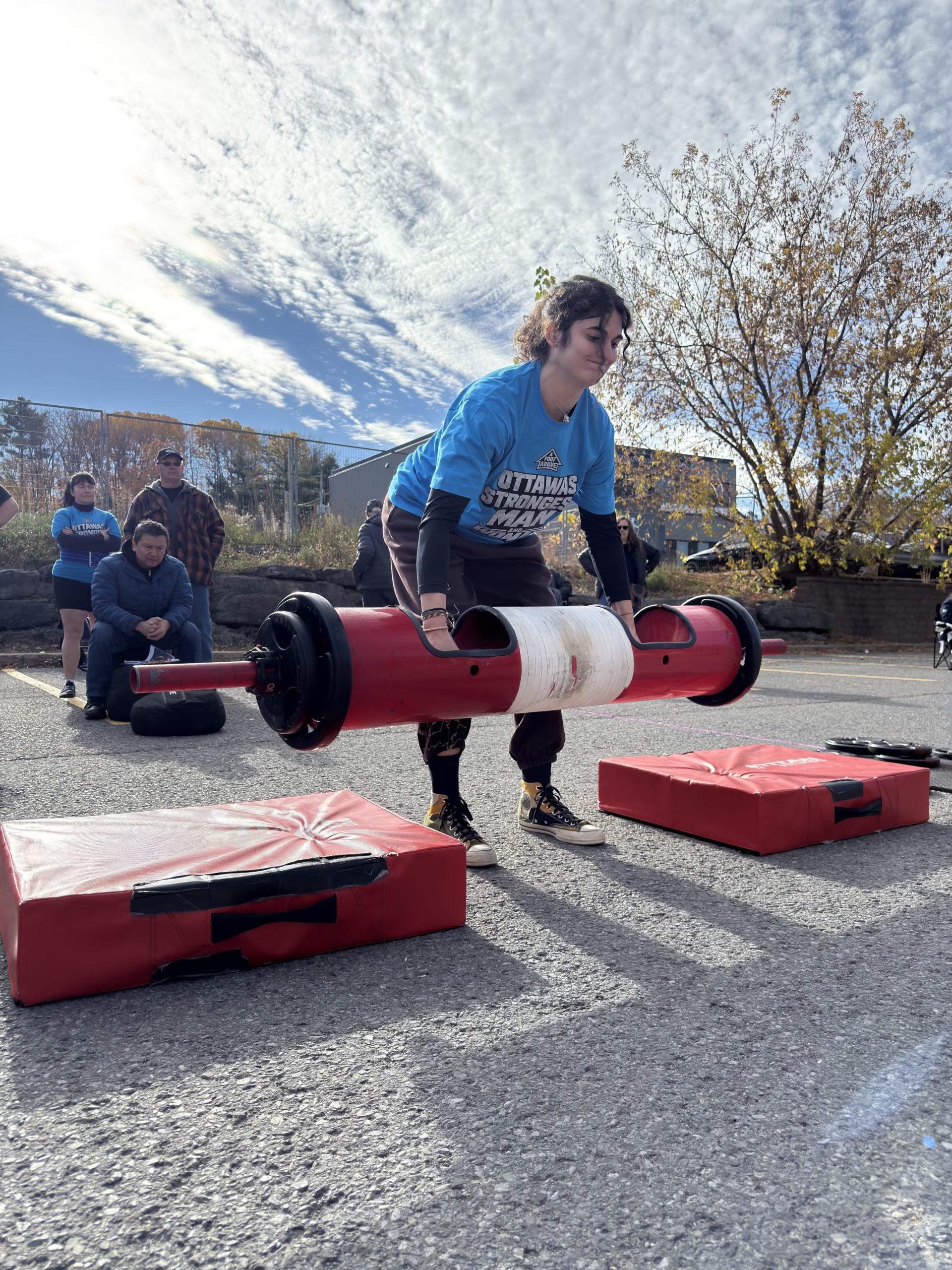
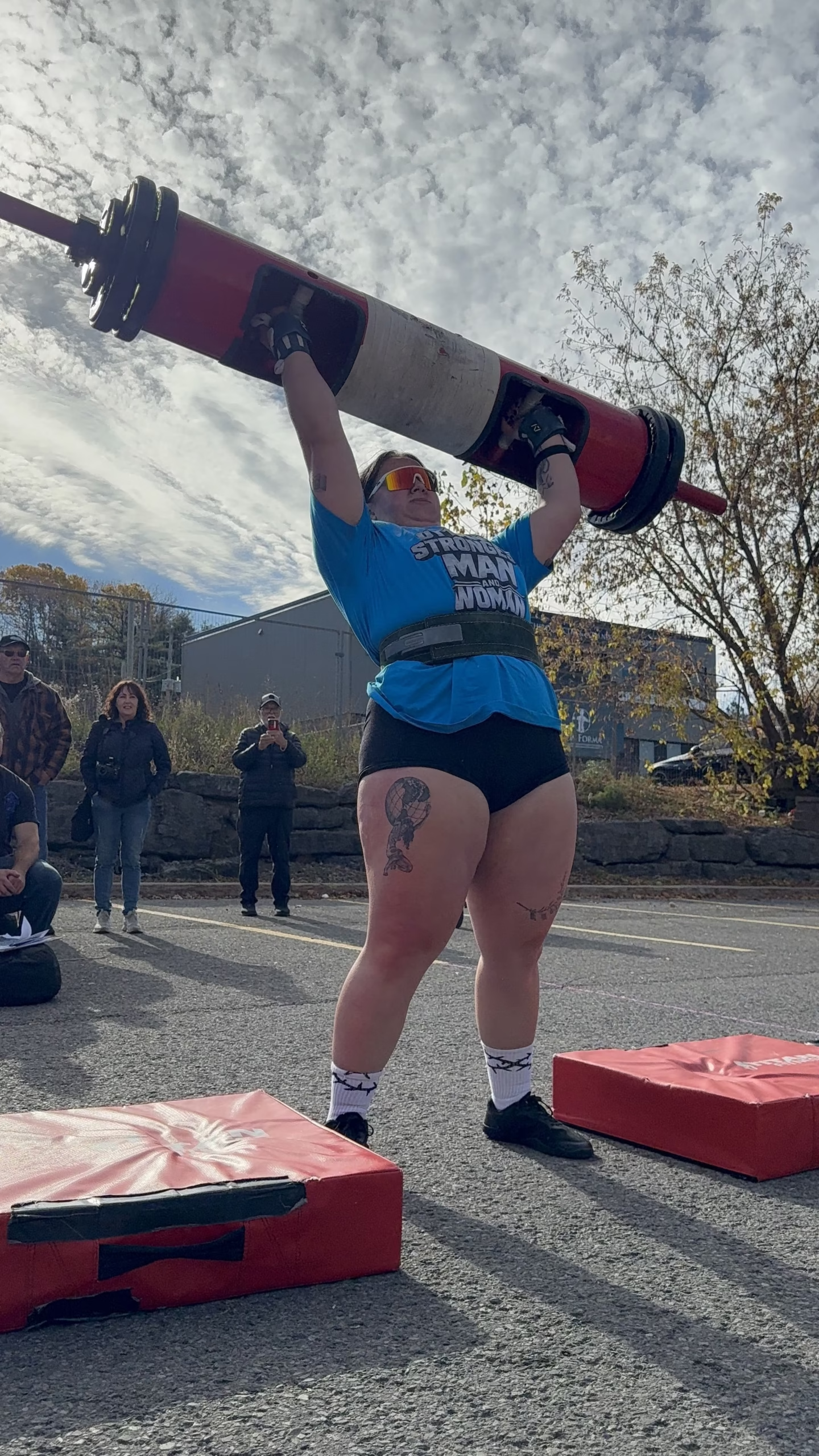
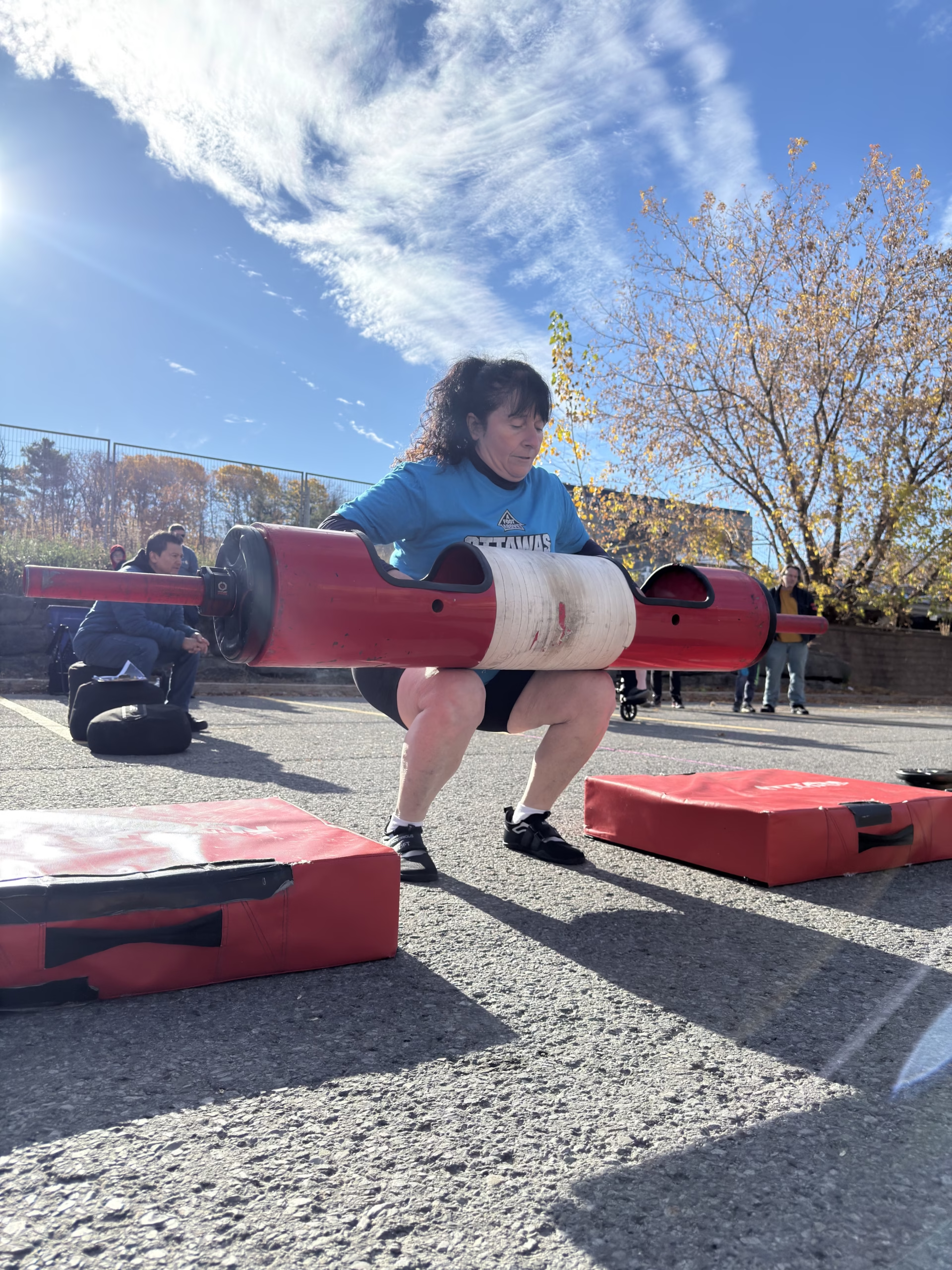
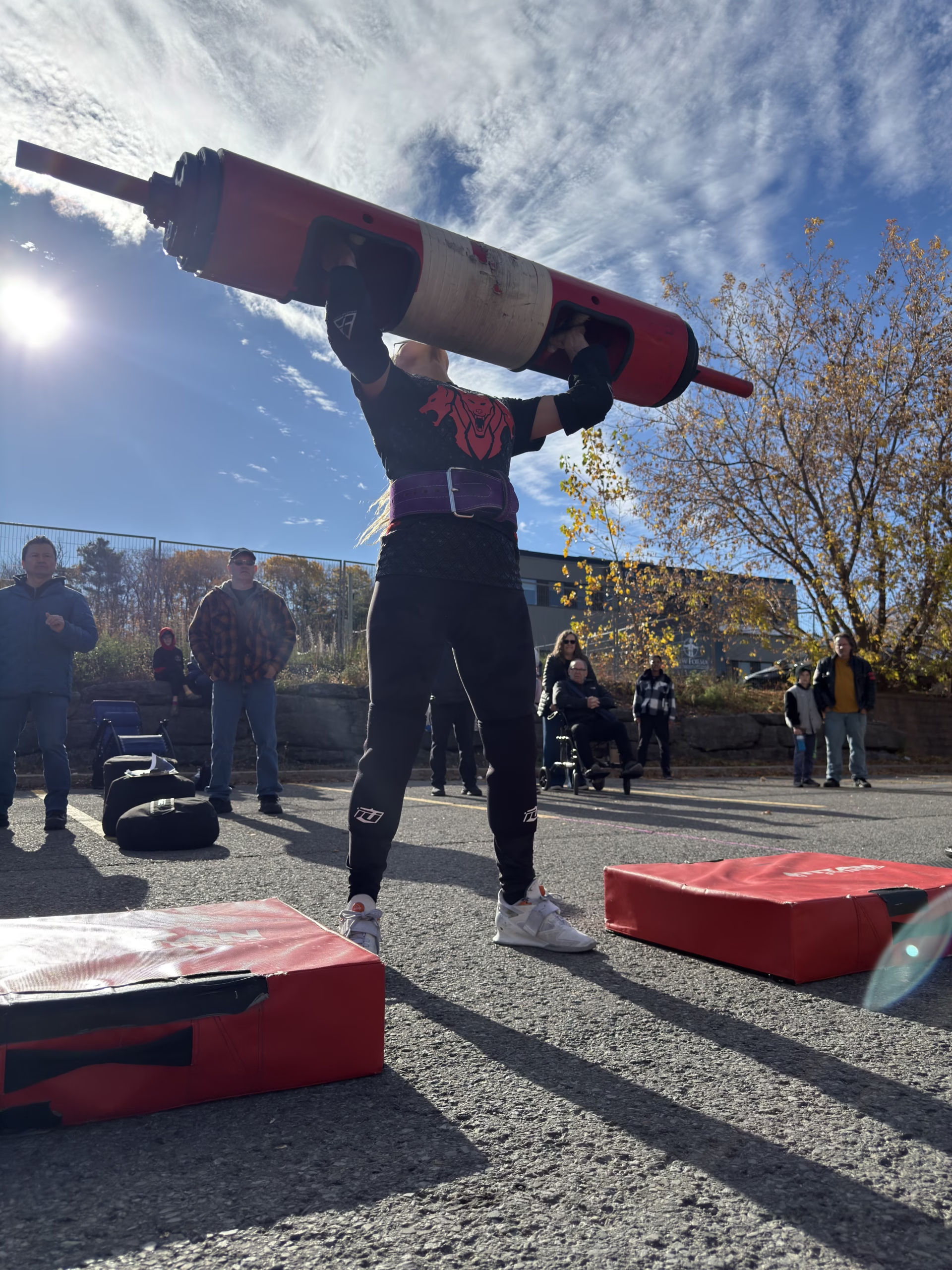
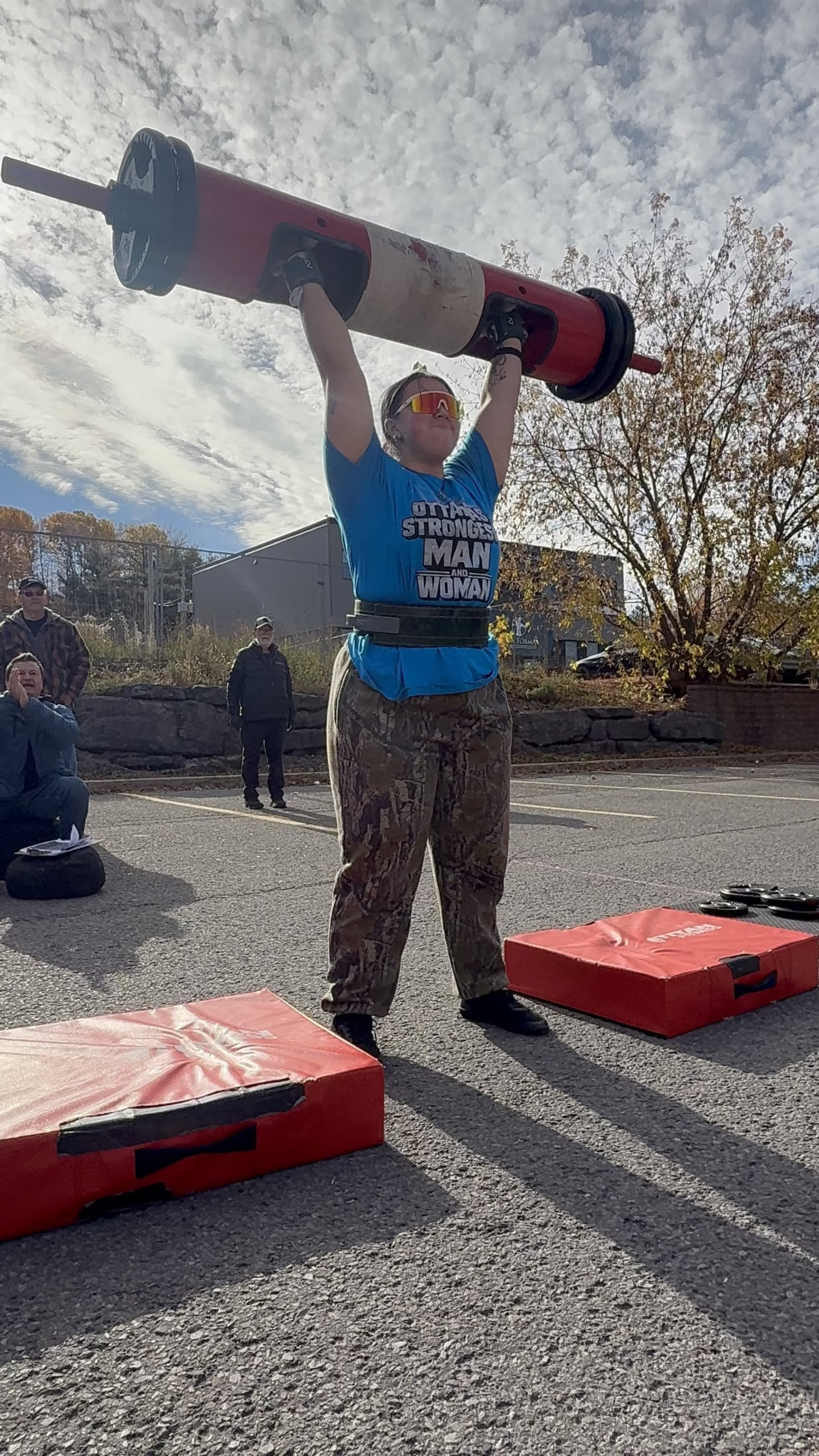
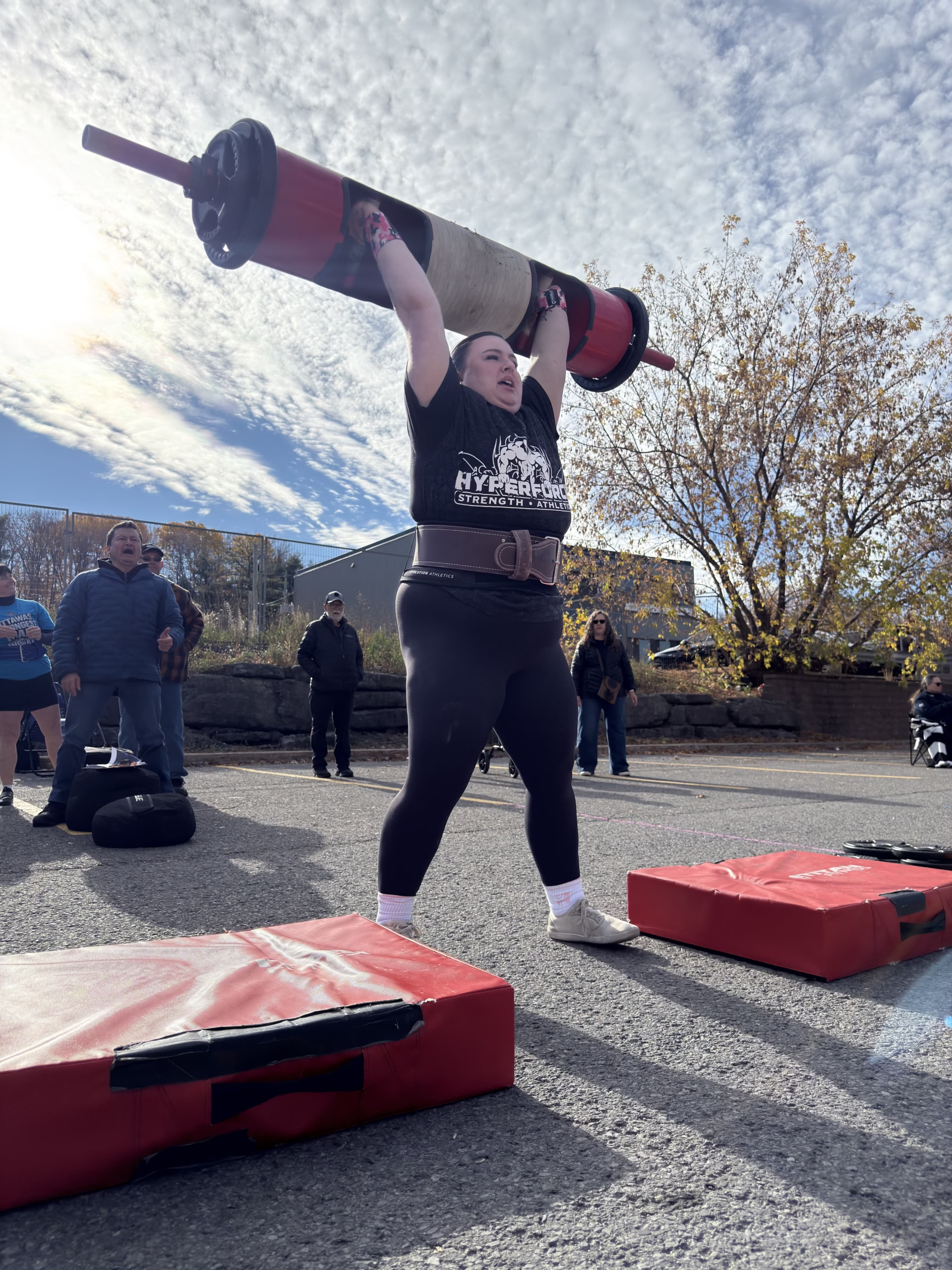
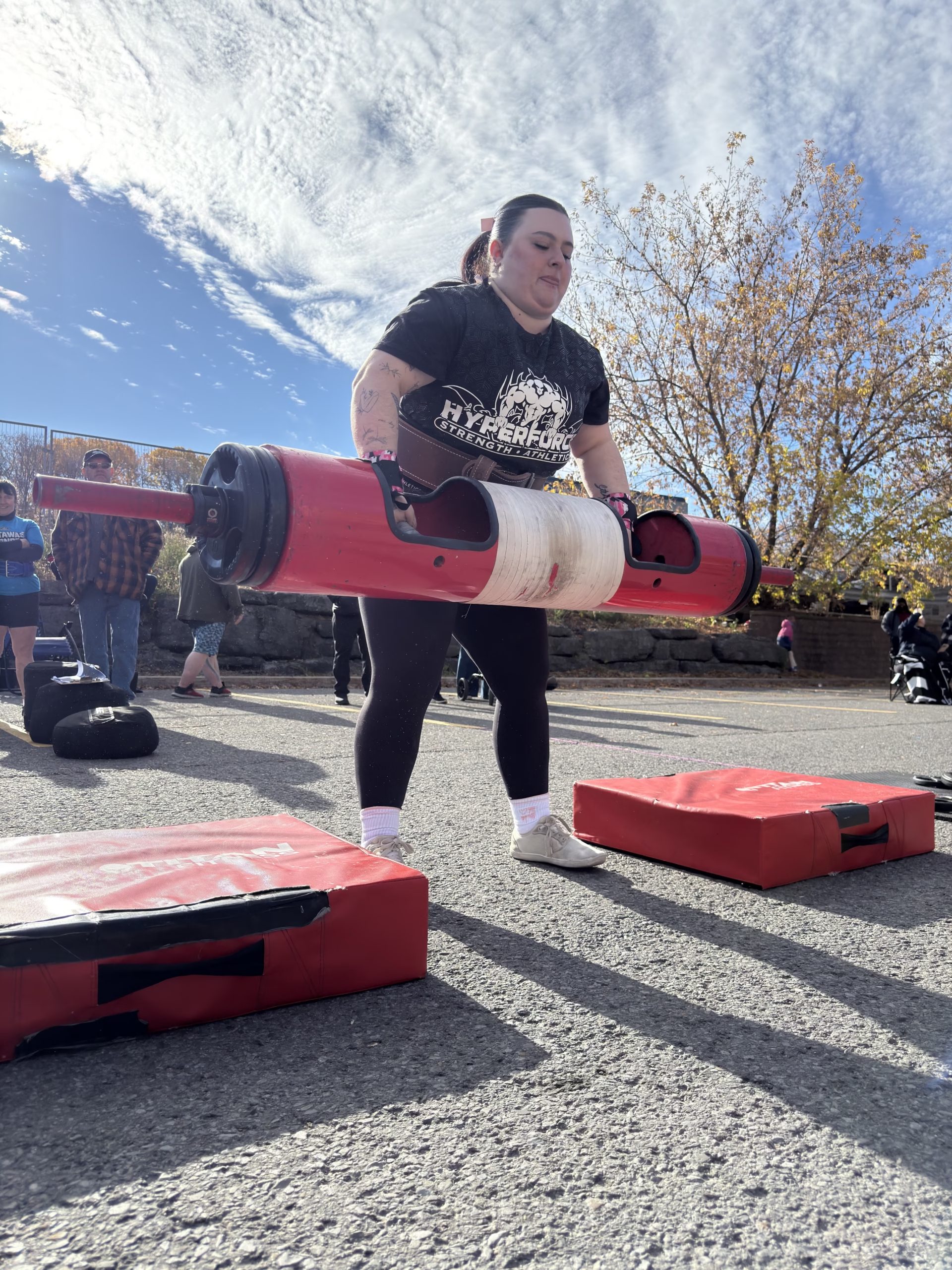
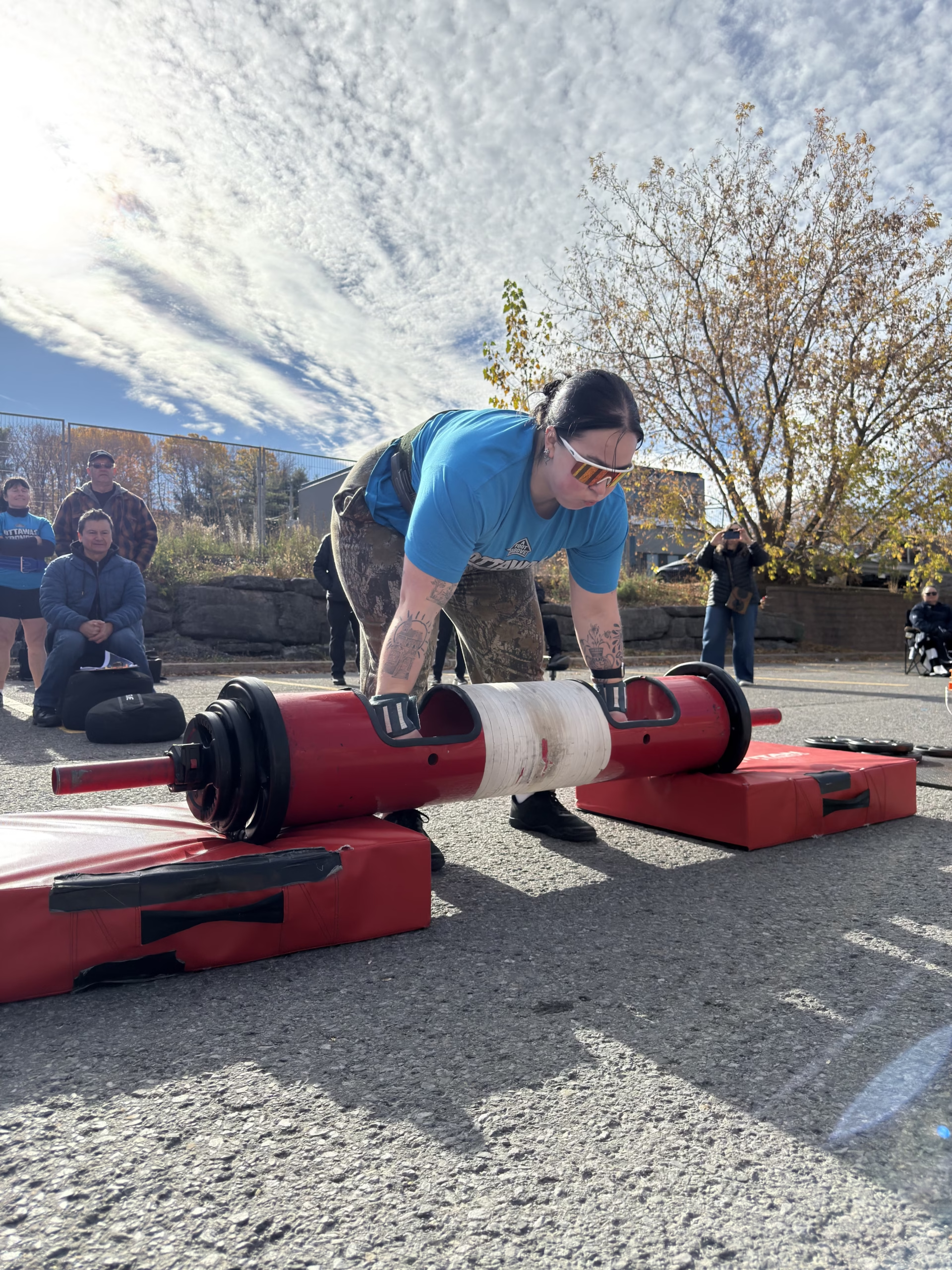
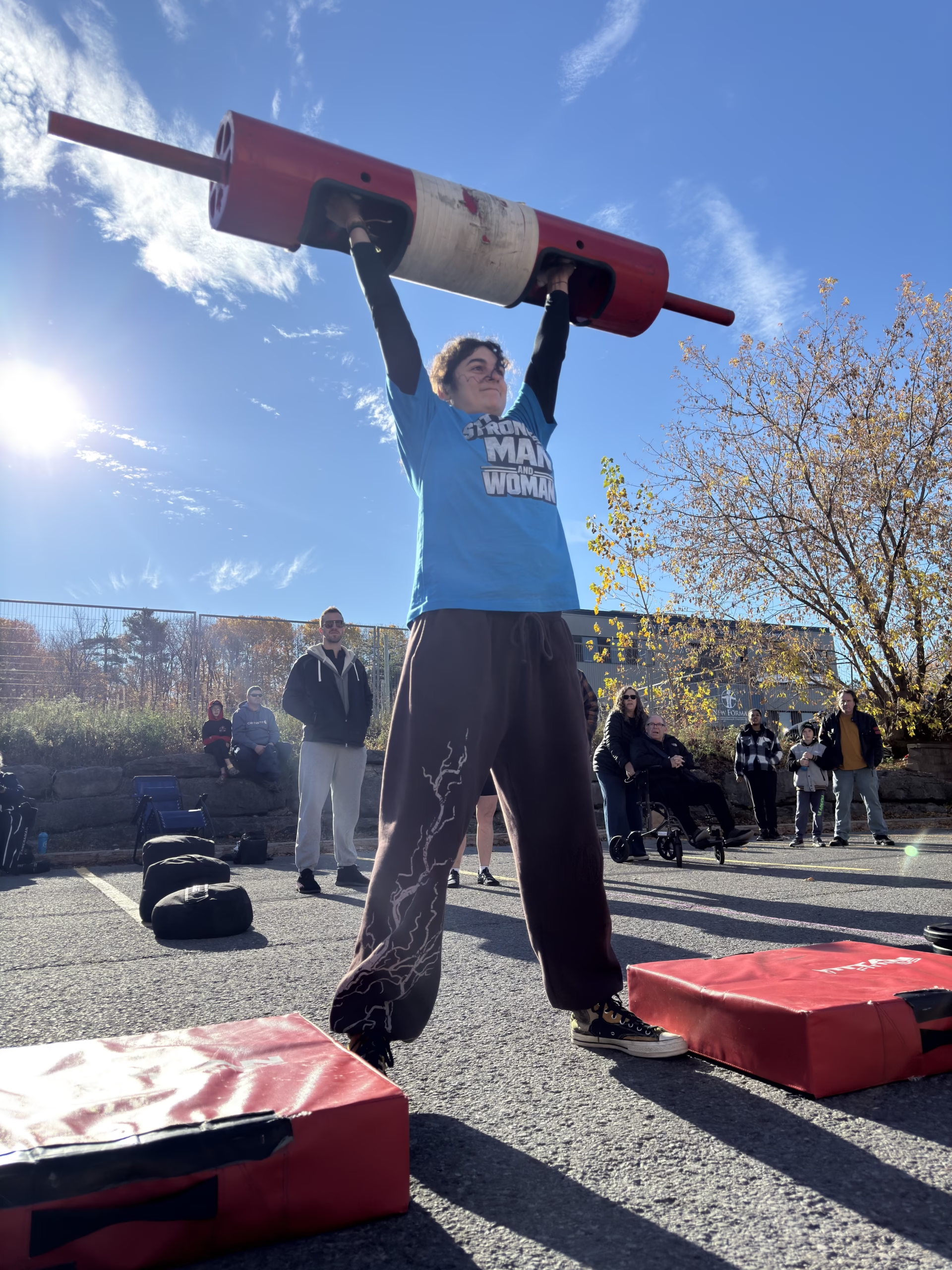
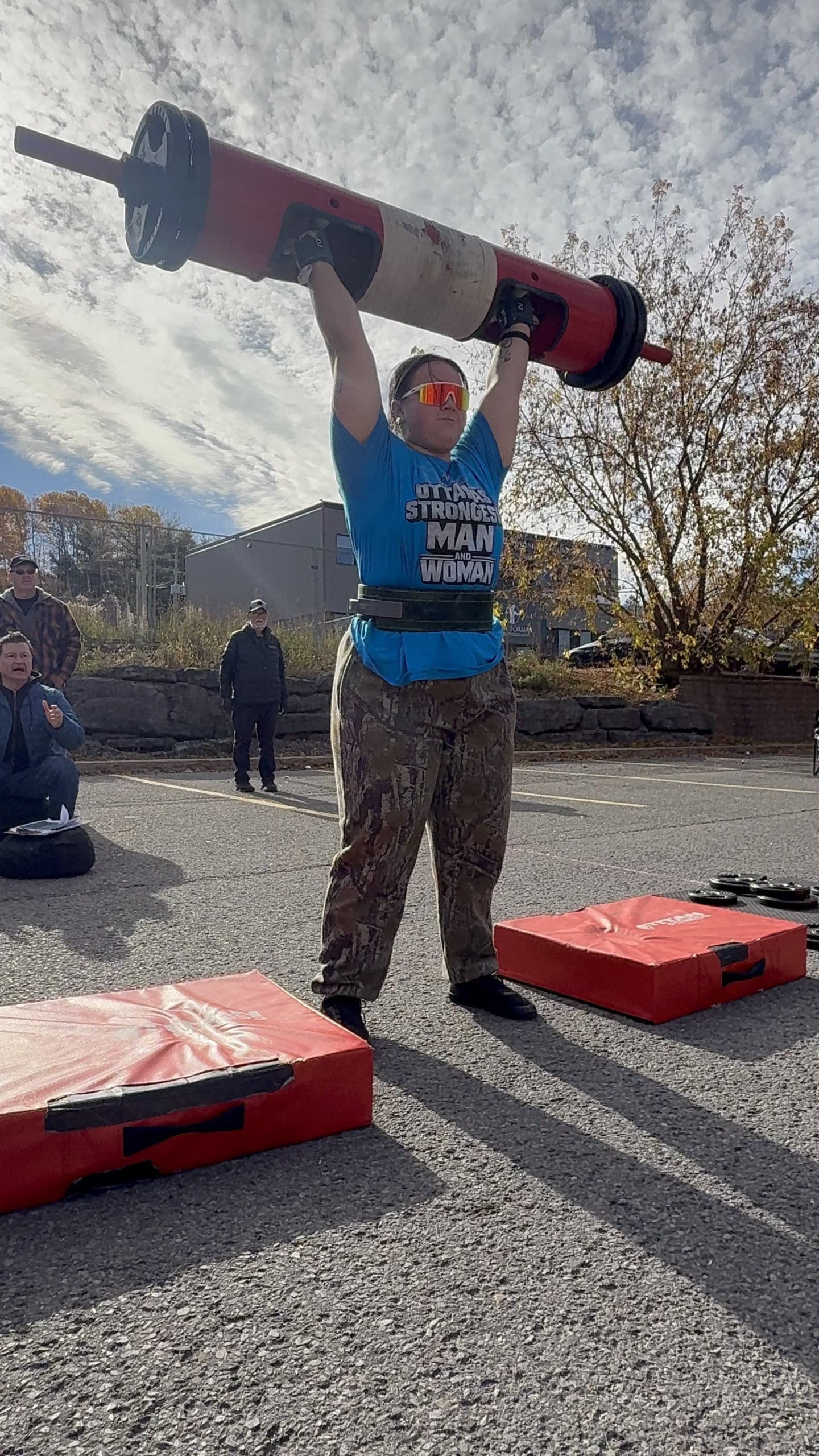
The Max Press (Log) separated athletes more cleanly than almost any other event. Overhead strength ranged from 80 lb in the women’s novice field to 300 lb in the men’s open, and the point gaps reflected that spread. Alicia McDonald’s 140 lb press was the best among the novice women and helped lock in her second-place finish. Shangye Zhang’s 290/300 lb effort earned him maximum points in the men’s open, while several athletes across divisions recorded zeros or low single-digit attempts.
Pressing a log is different from pressing a barbell. The thick, neutral grip forces the elbows and shoulders into a less favorable position, and the log’s width demands a strong, braced core to keep the torso from tipping. Athletes who succeeded had to drive the log off the shoulder, stabilize it overhead, and lock out without losing balance—often after earlier events had already taxed their grip and upper back. Those who failed usually lost the press either at the start (unable to get the log moving) or near lockout (unable to finish under fatigue).
In everyday terms, the log press measures the ability to put something heavy overhead and control it once it is there. That pattern appears whenever someone lifts a child into a car seat, places a heavy box on a high shelf, presses a loaded wheelbarrow or equipment into position, or simply works with arms extended for any length of time. The athletes who moved the most weight on the log were demonstrating the same shoulder stability and core rigidity that keep ordinary overhead tasks safer and less taxing. For many competitors, the log press was the clearest single indicator of usable upper-body strength.
Hercules Hold
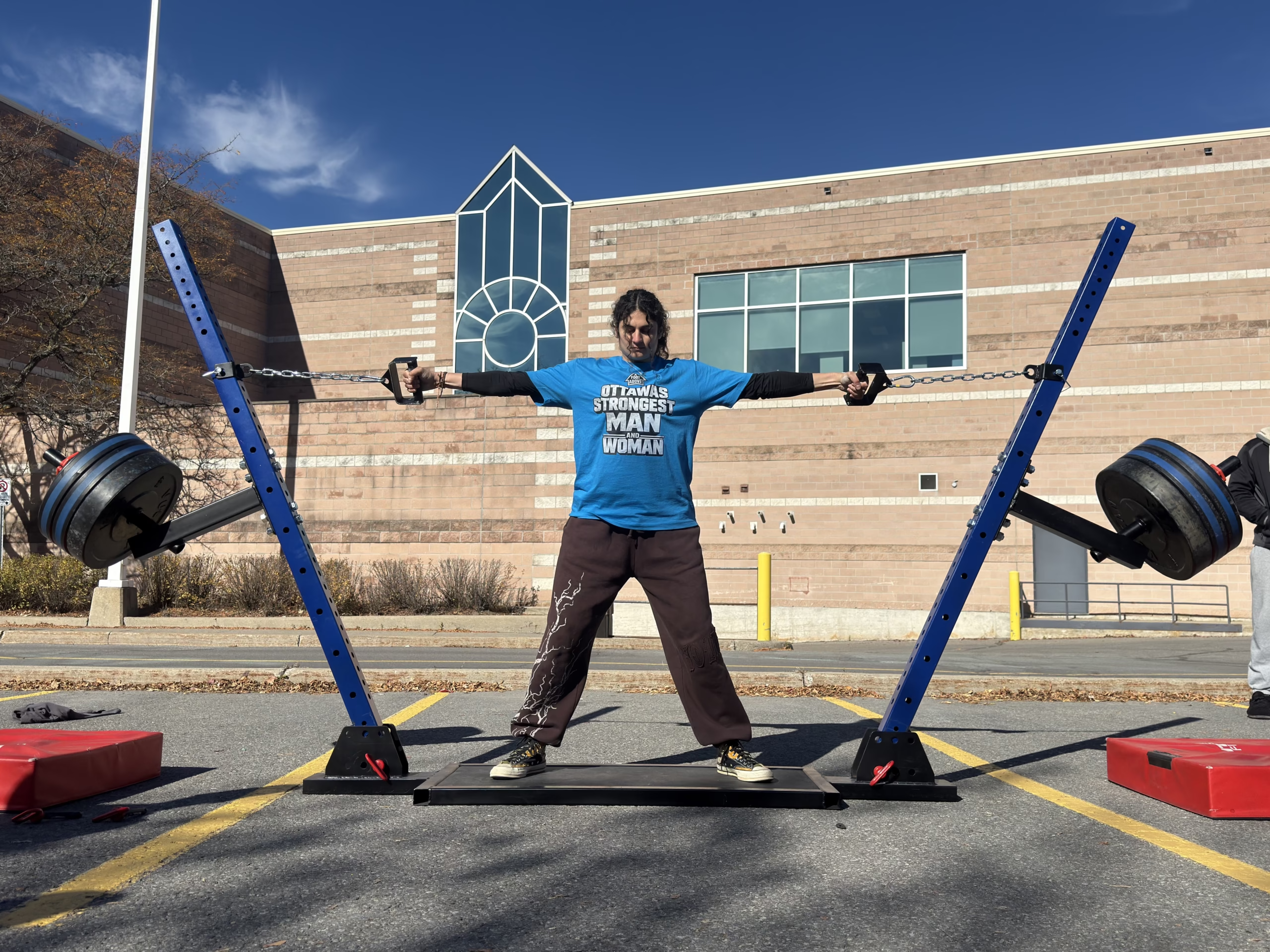
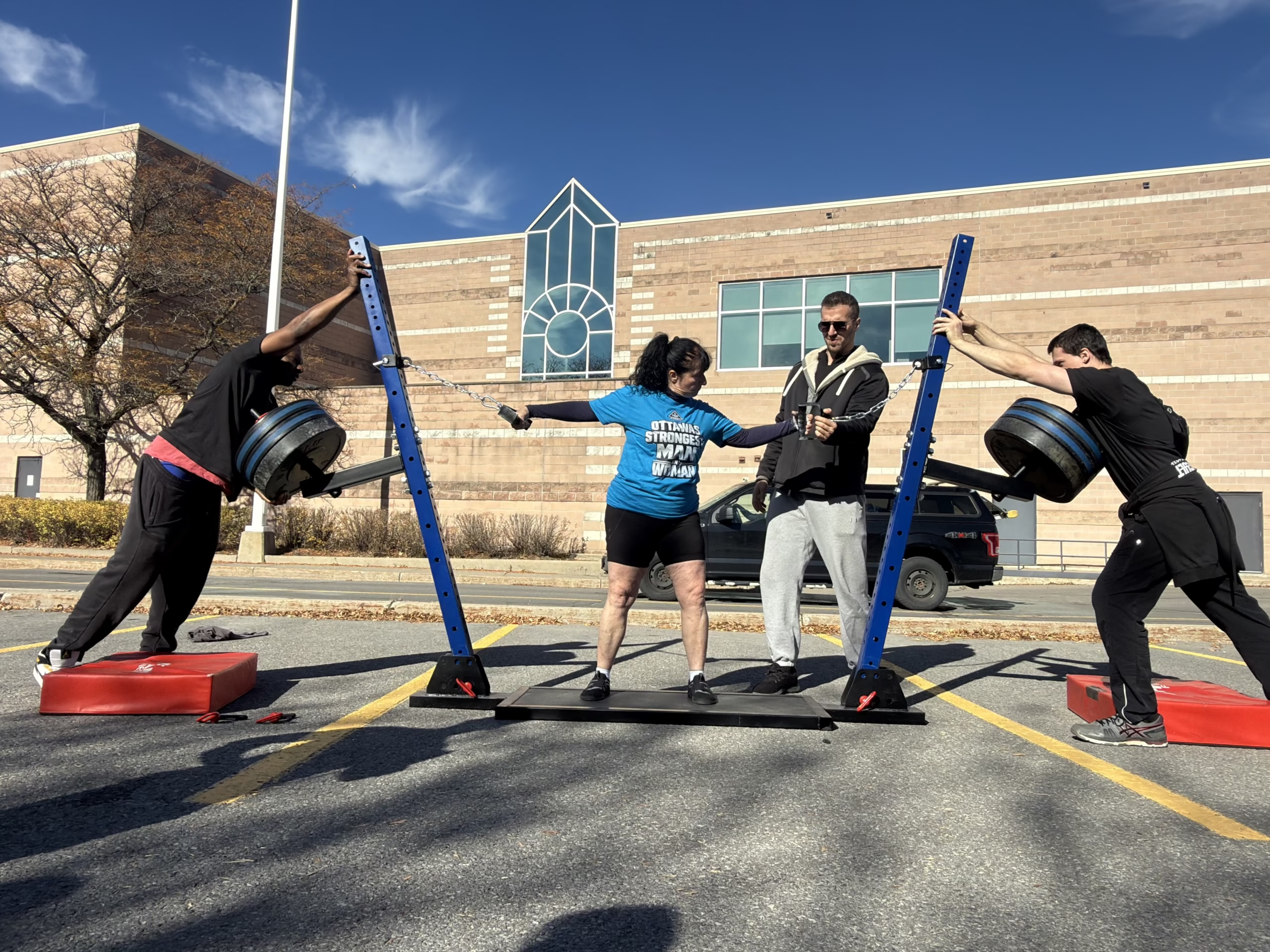
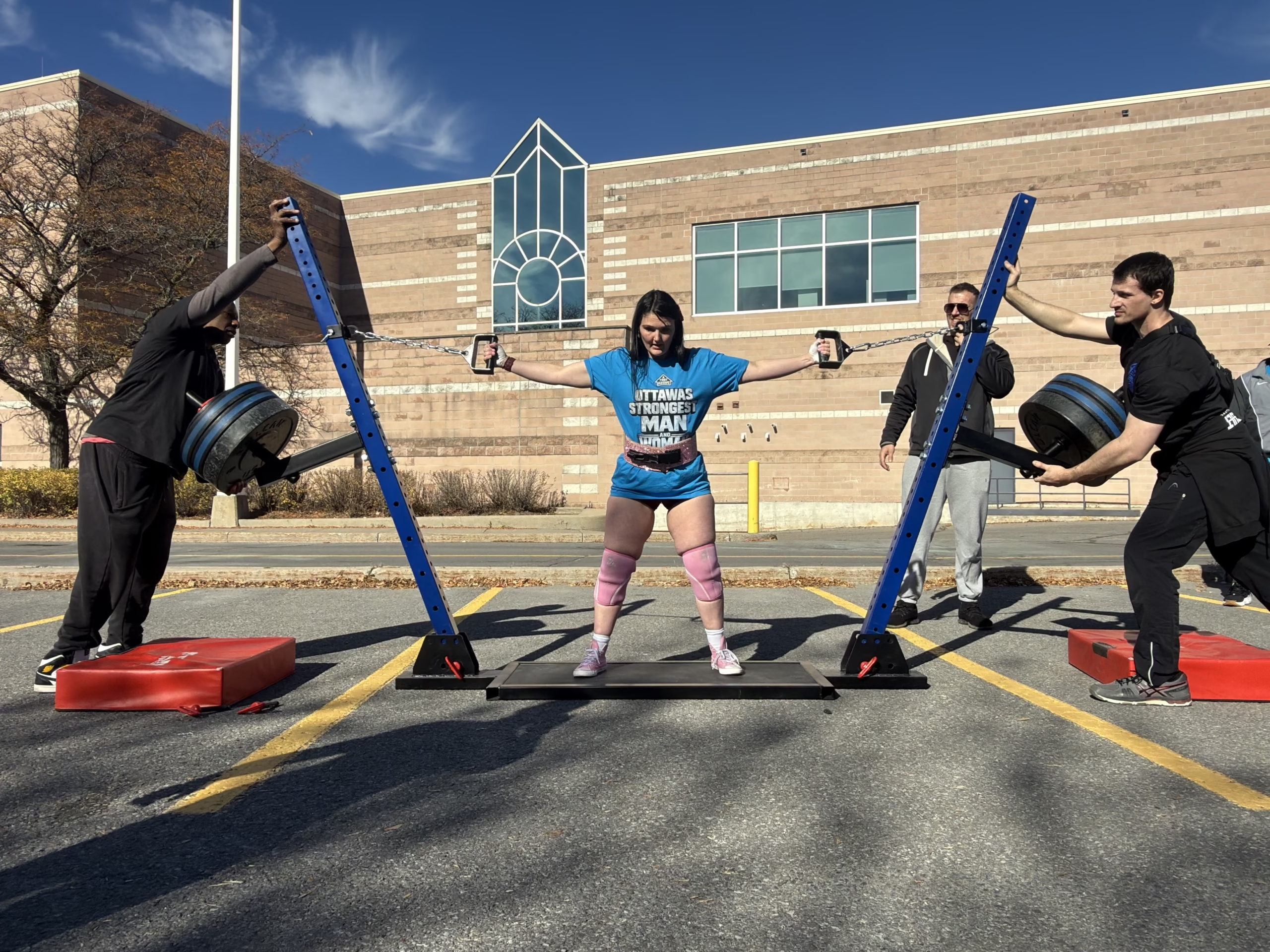
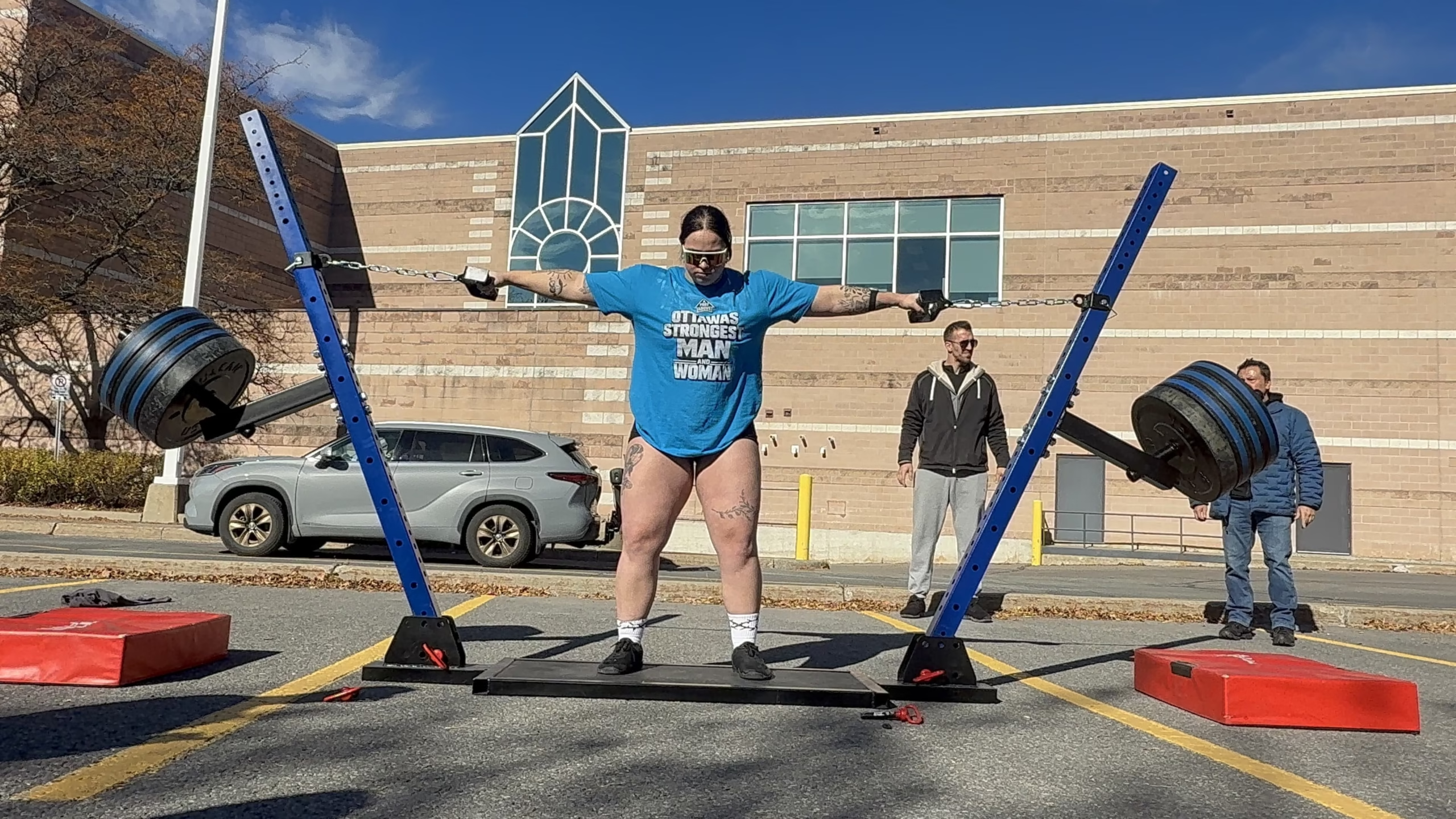
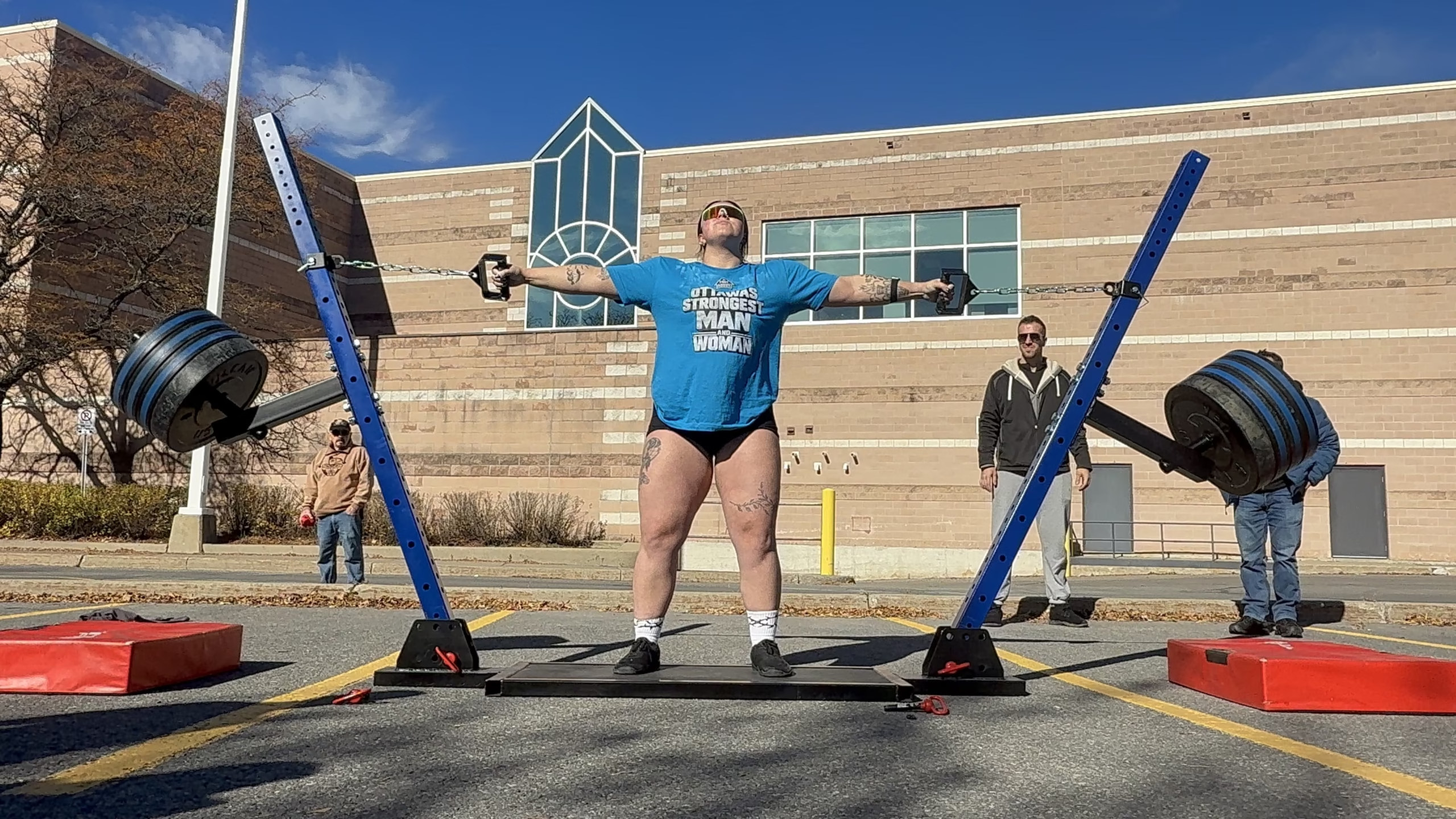
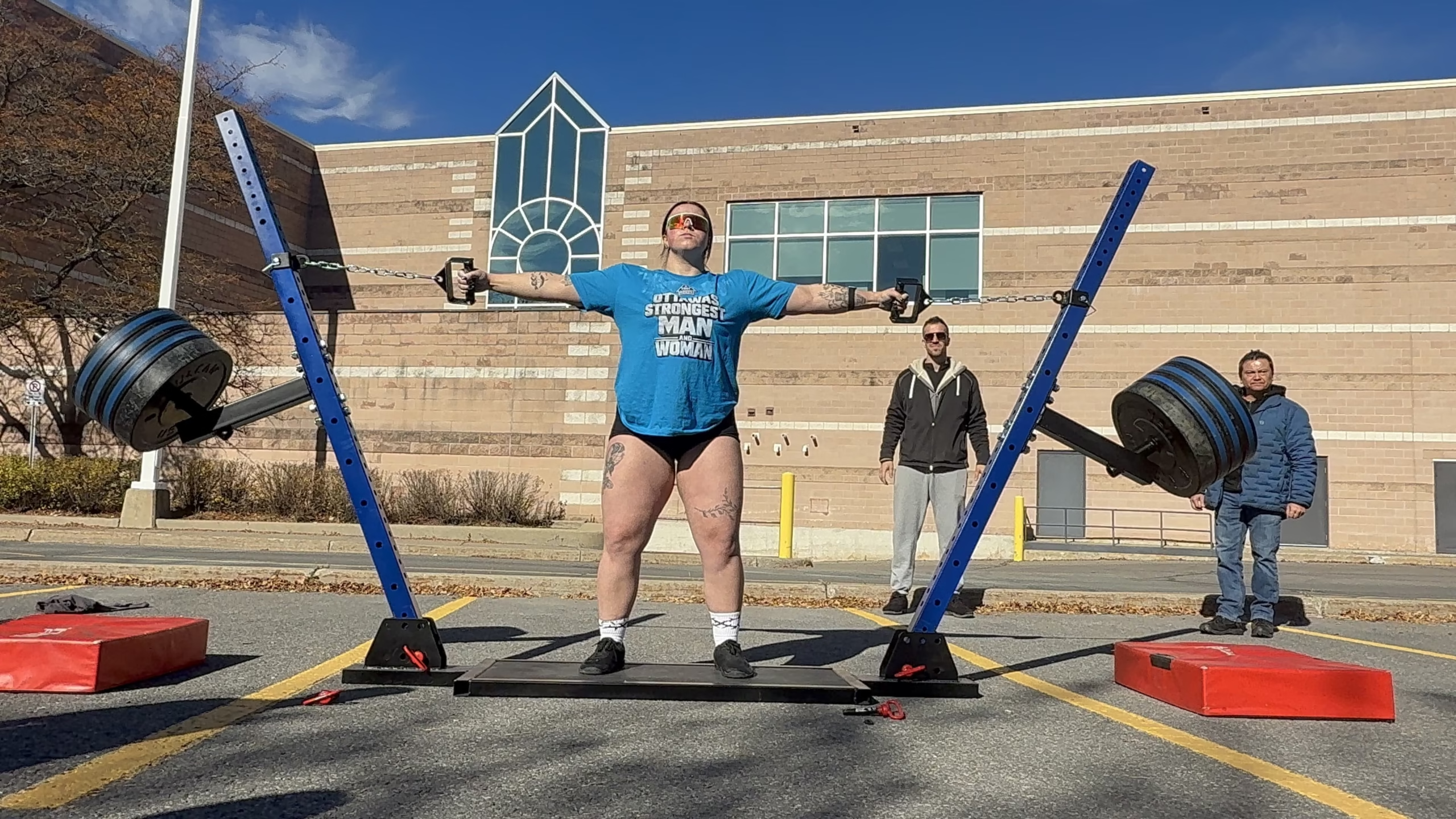
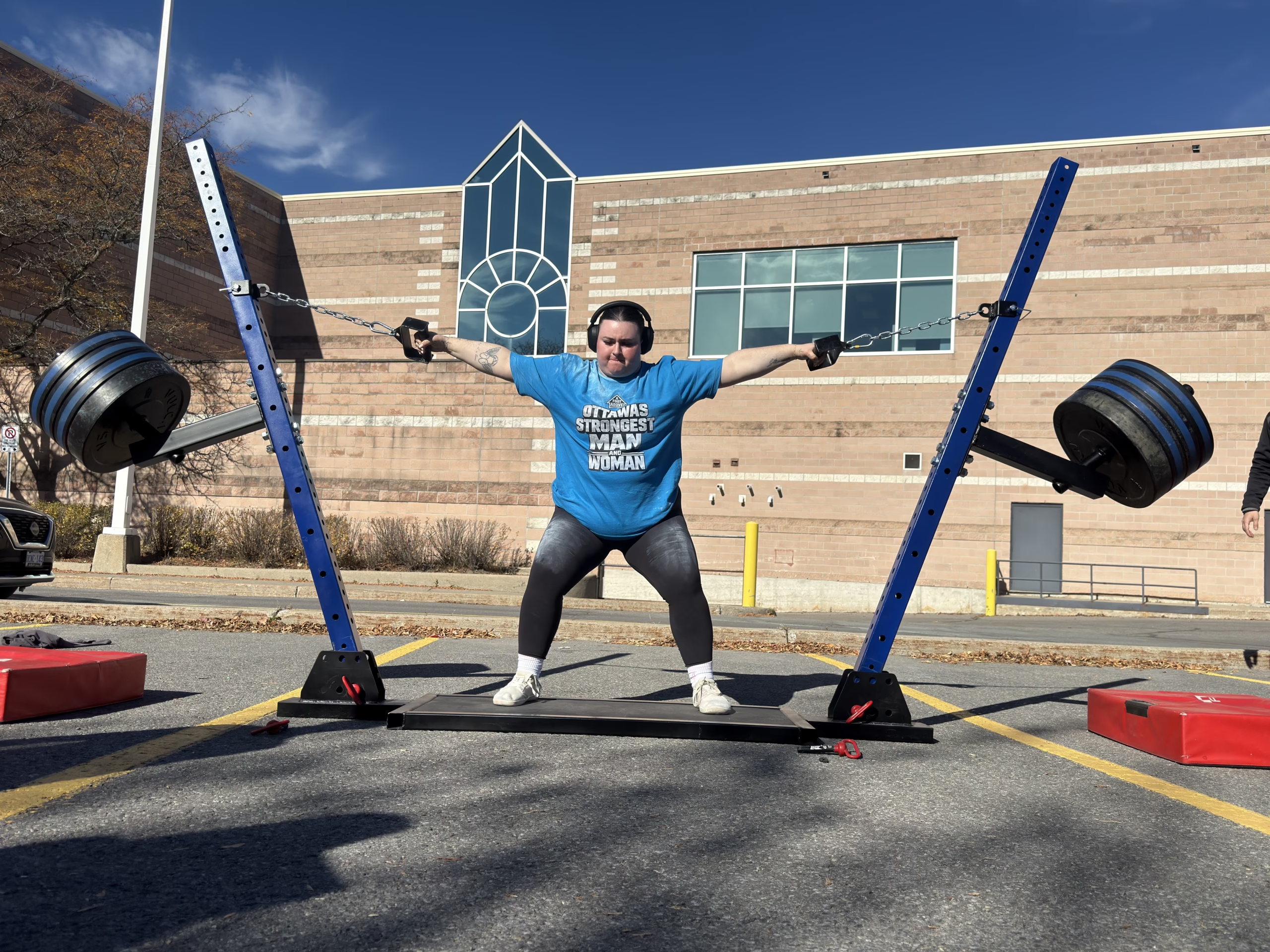
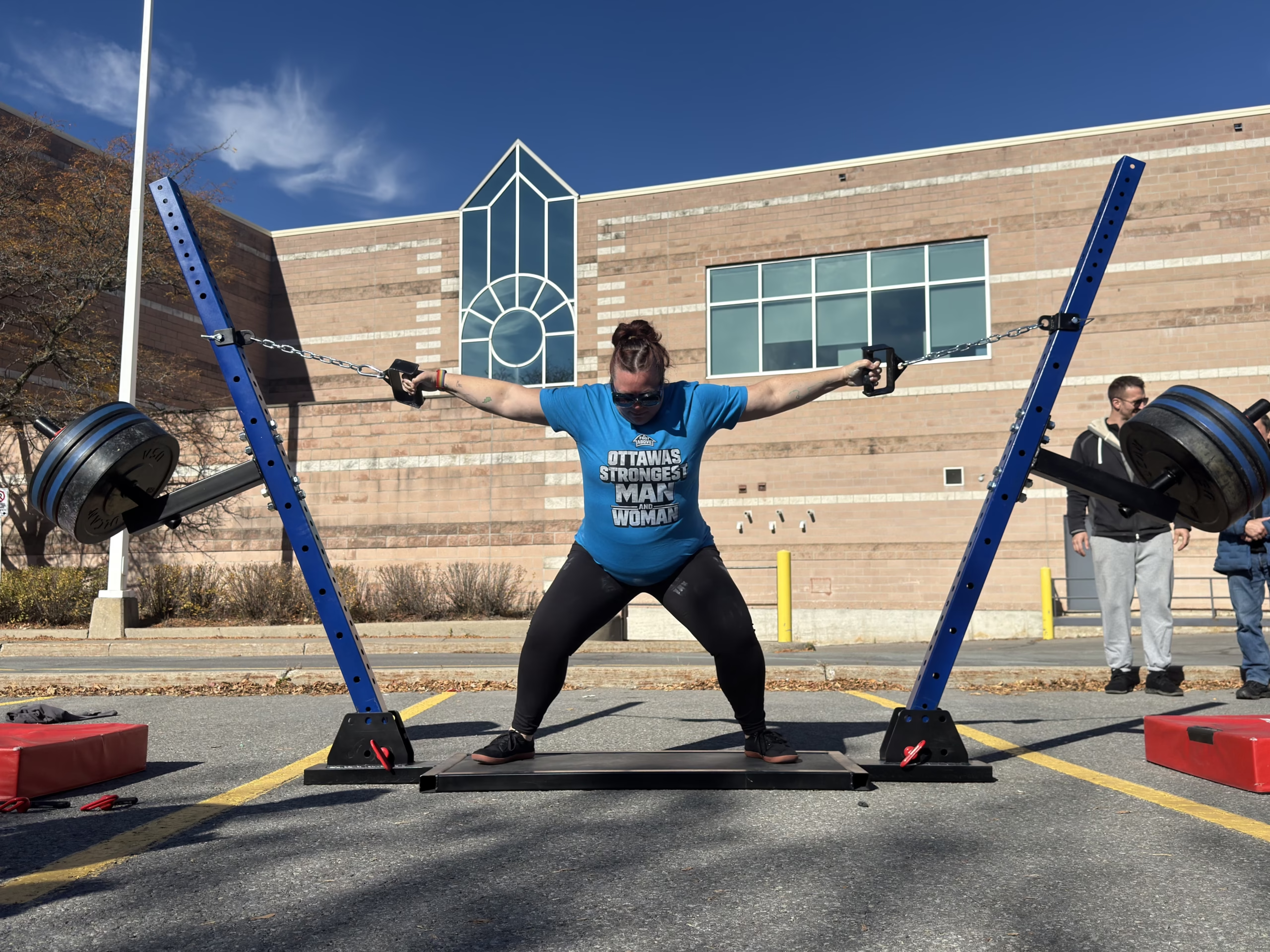
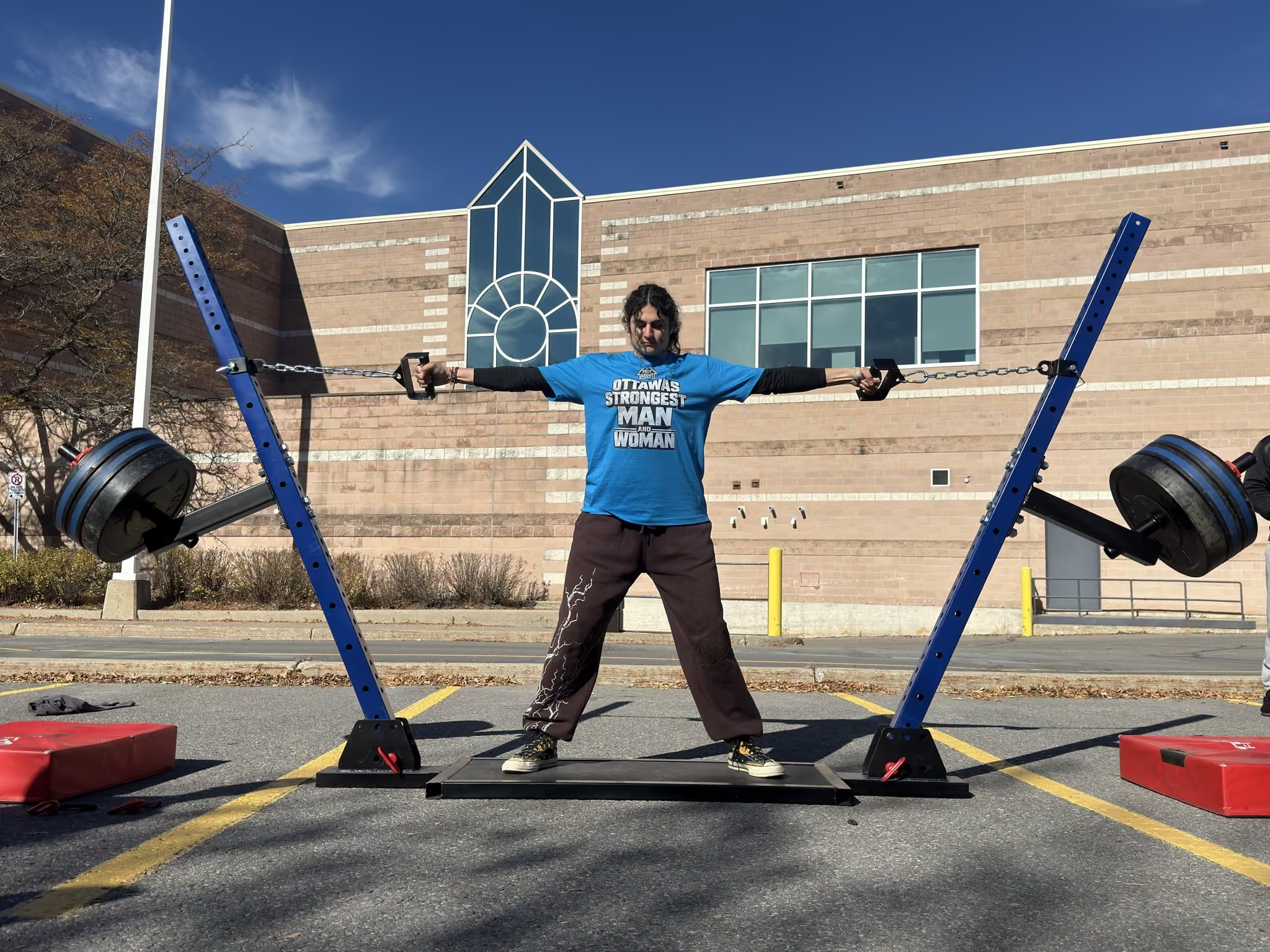
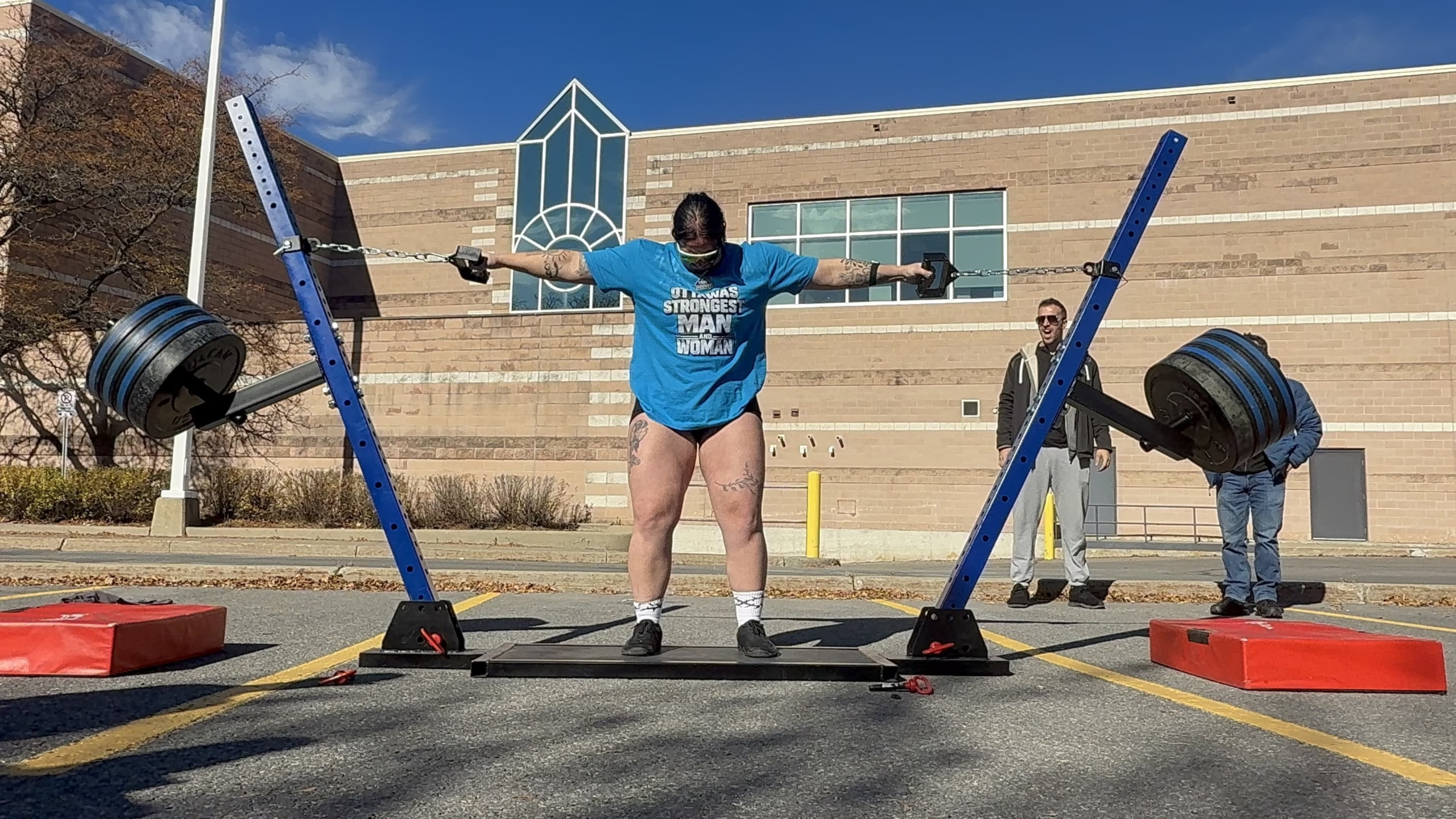
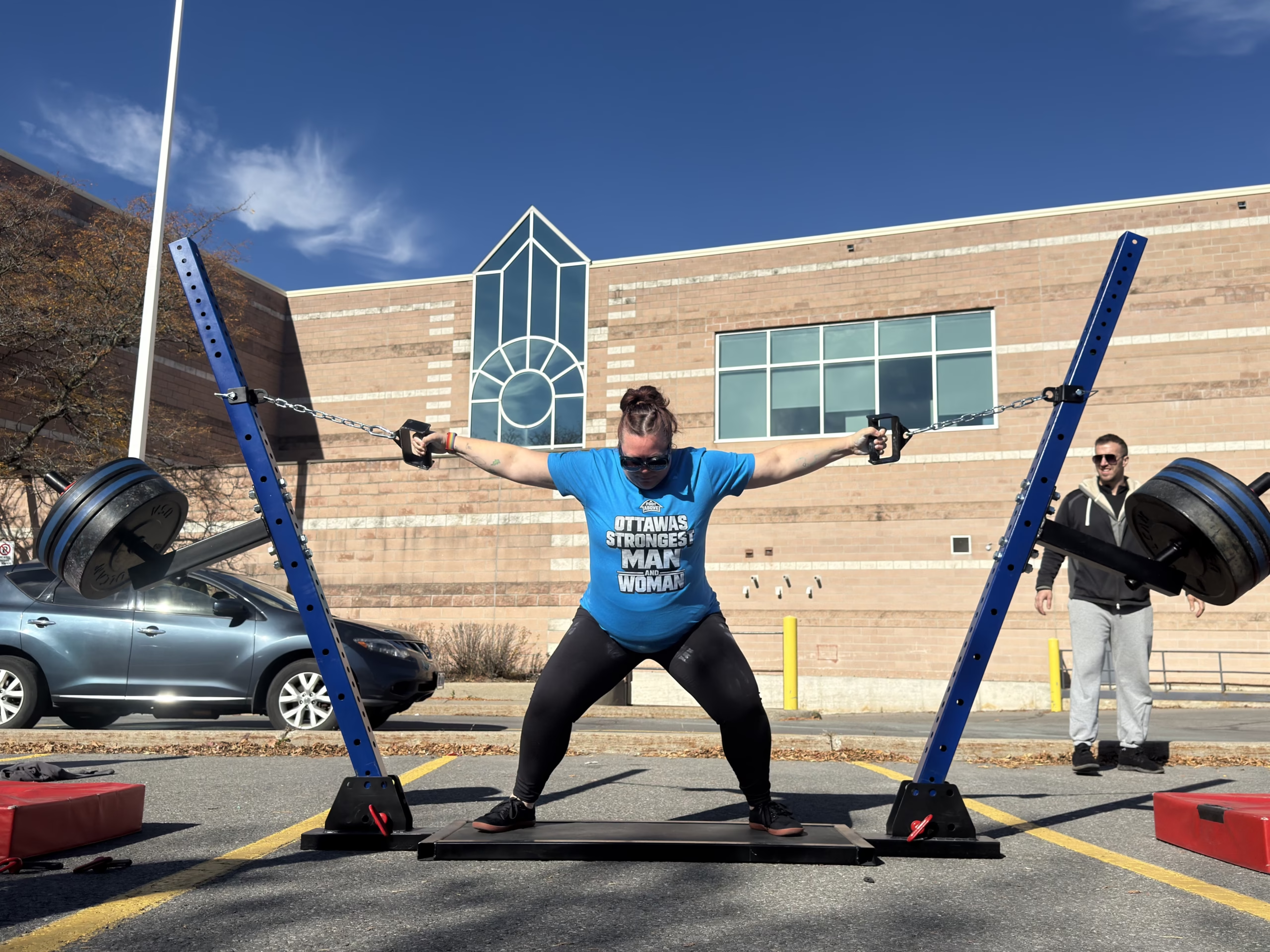
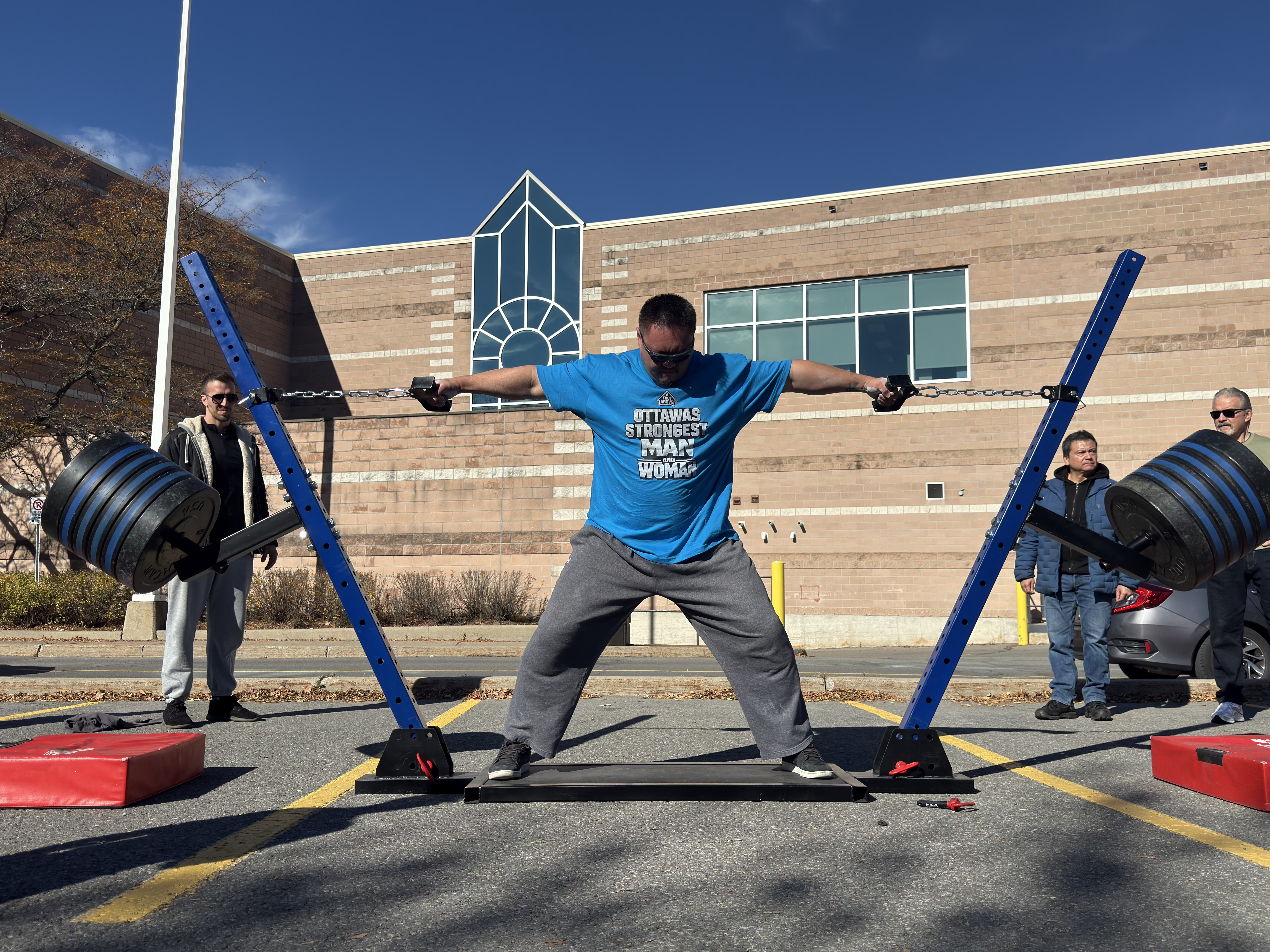
The Hercules Hold exposed differences in grip endurance and mental toughness more than any other event. Hold times ranged from a few seconds to well over a minute. Christina Saydé’s 1:17.25 was the longest in the women’s novice field and earned her maximum points; Tarek Oueld Hammoud’s 1:03.35 led the men’s open. At the other end, several athletes dropped in under 20 seconds, and one novice woman lasted only 4.43 seconds.
The event is simple in description and brutal in practice. Athletes stand between two pillars and hold chains or handles while the load tries to pull their arms outward and their hands open. There is no movement to reset the grip and no way to rest the shoulders. Success depends on crushing grip strength, the ability to keep the shoulder blades packed, and the willingness to keep holding after the forearms and traps have already started to burn. Athletes who trained static holds and heavy carries tended to last longer; those who relied mainly on dynamic pressing and pulling often faded quickly once the isometric demand set in.
Outside the competition, the Hercules Hold mirrors any situation that requires sustained grip under load. Carrying heavy bags for a long walk, holding a child or pet while standing, gripping tools or materials for extended periods on a job site, or simply keeping a firm hold when something starts to slip all use the same qualities. The competitors who lasted the longest demonstrated the kind of grip and shoulder endurance that makes ordinary heavy carrying safer and less likely to end early. For many athletes, the Hercules Hold was less a specialty test and more a direct measurement of how well their training prepared them for the static demands of real work and daily life.
Truck Pull
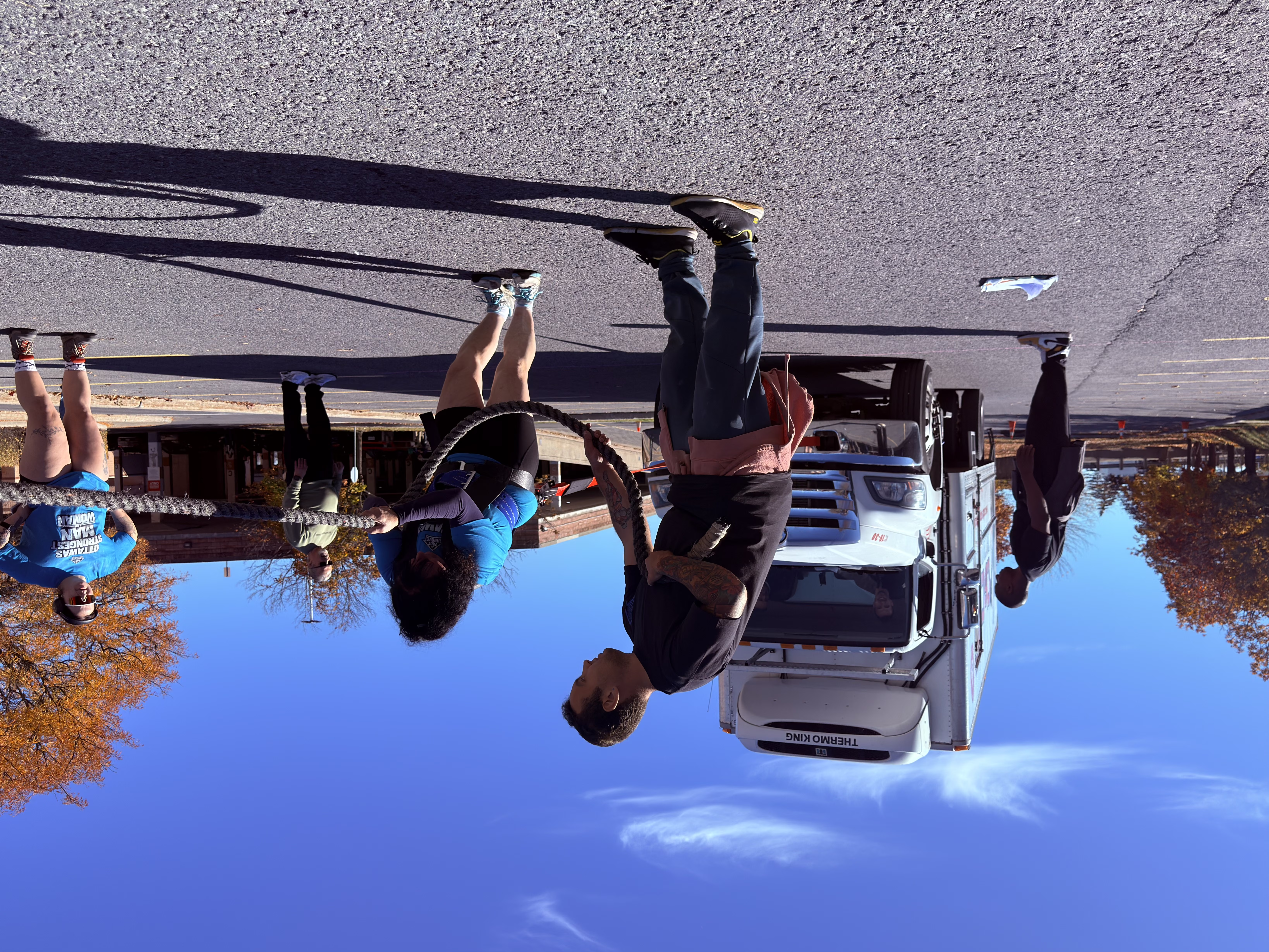
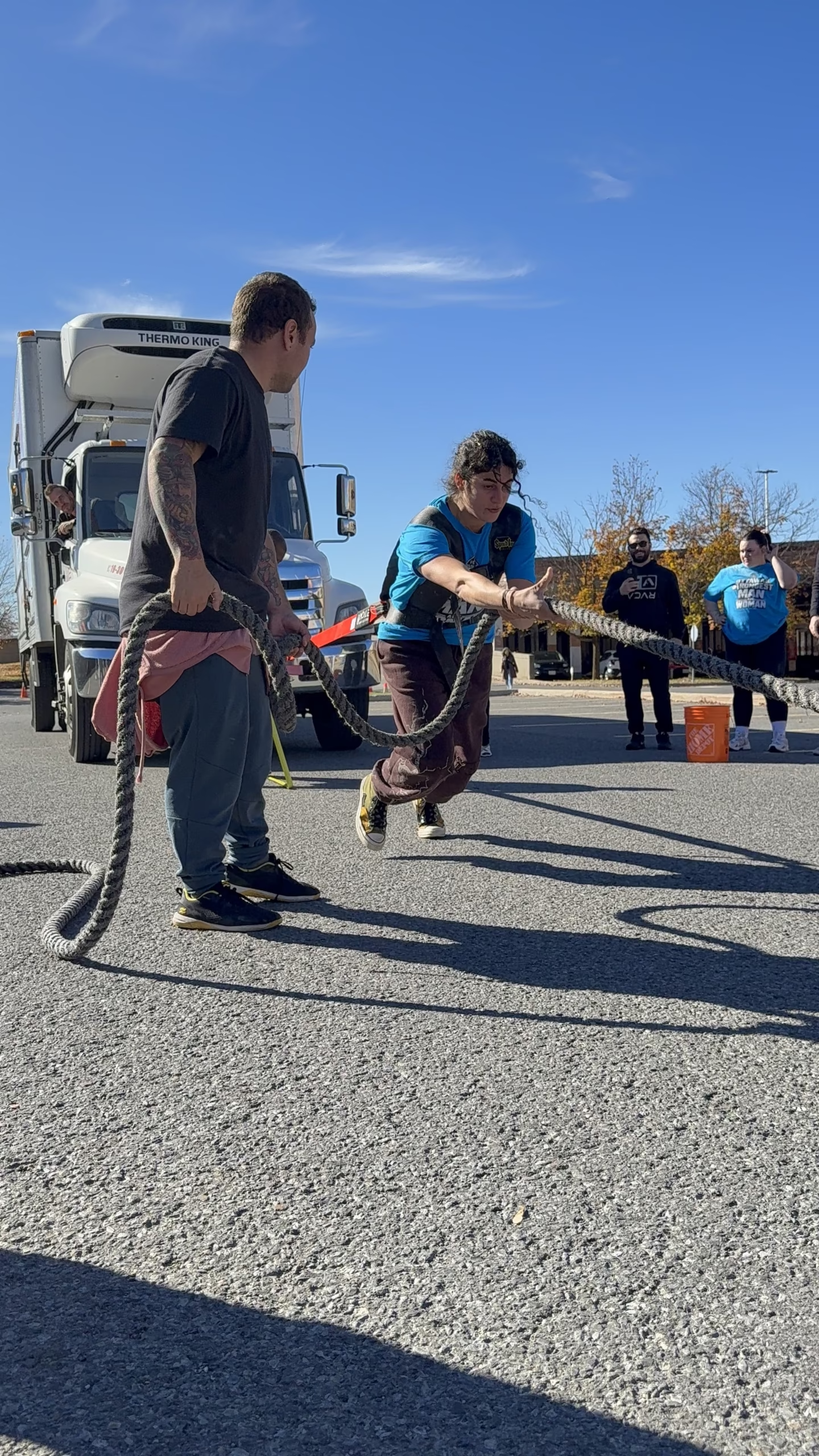
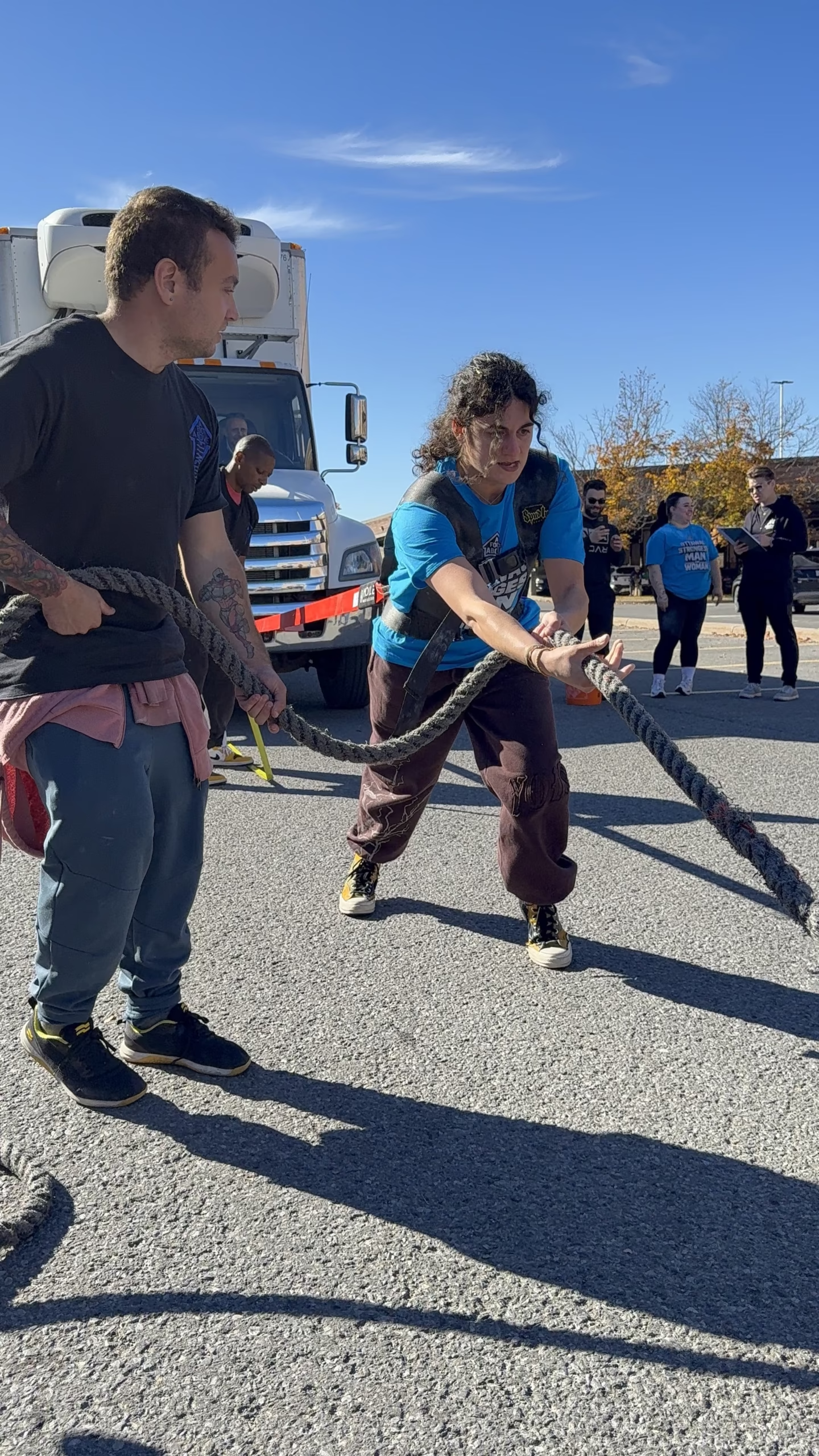
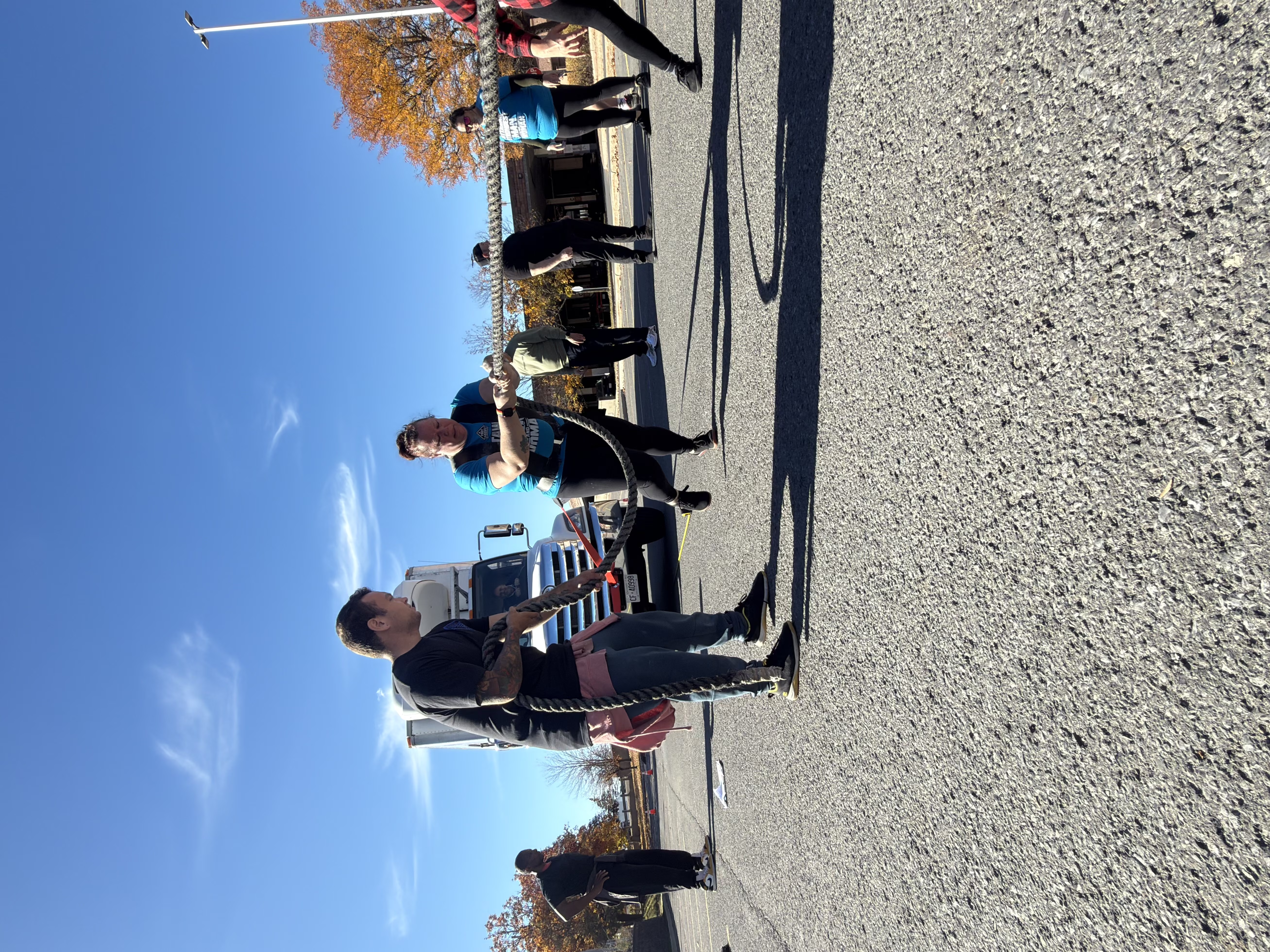
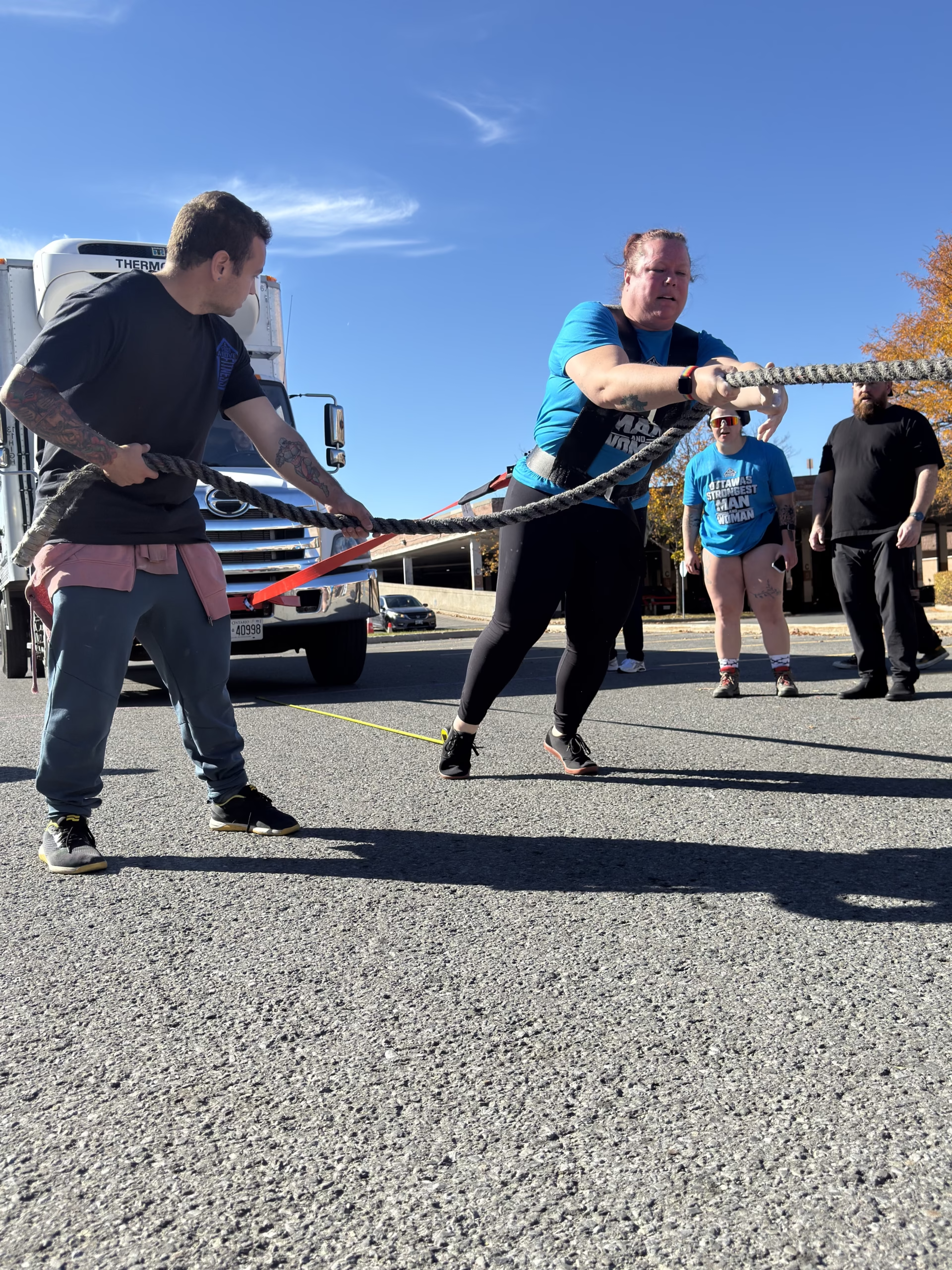
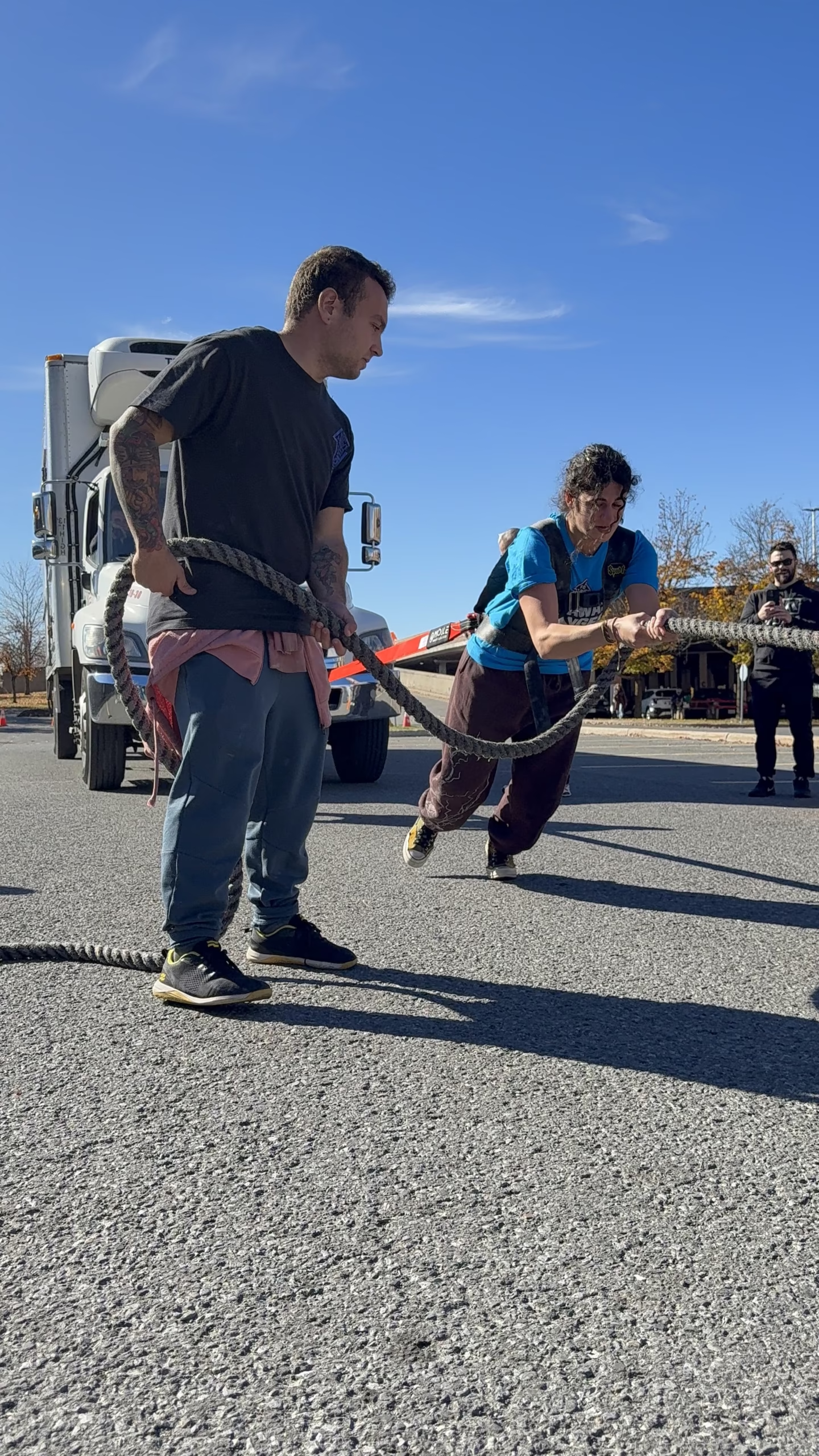
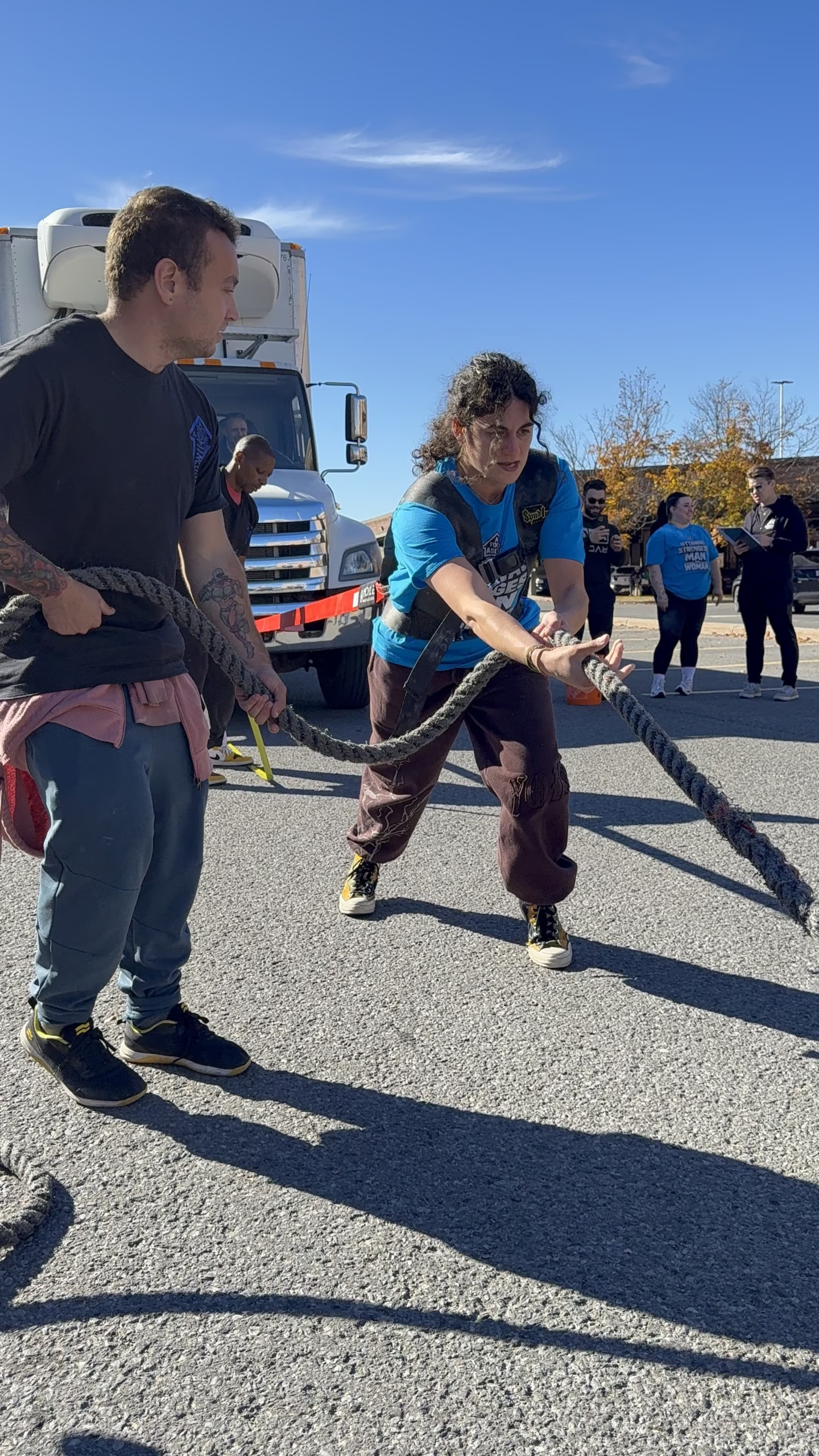
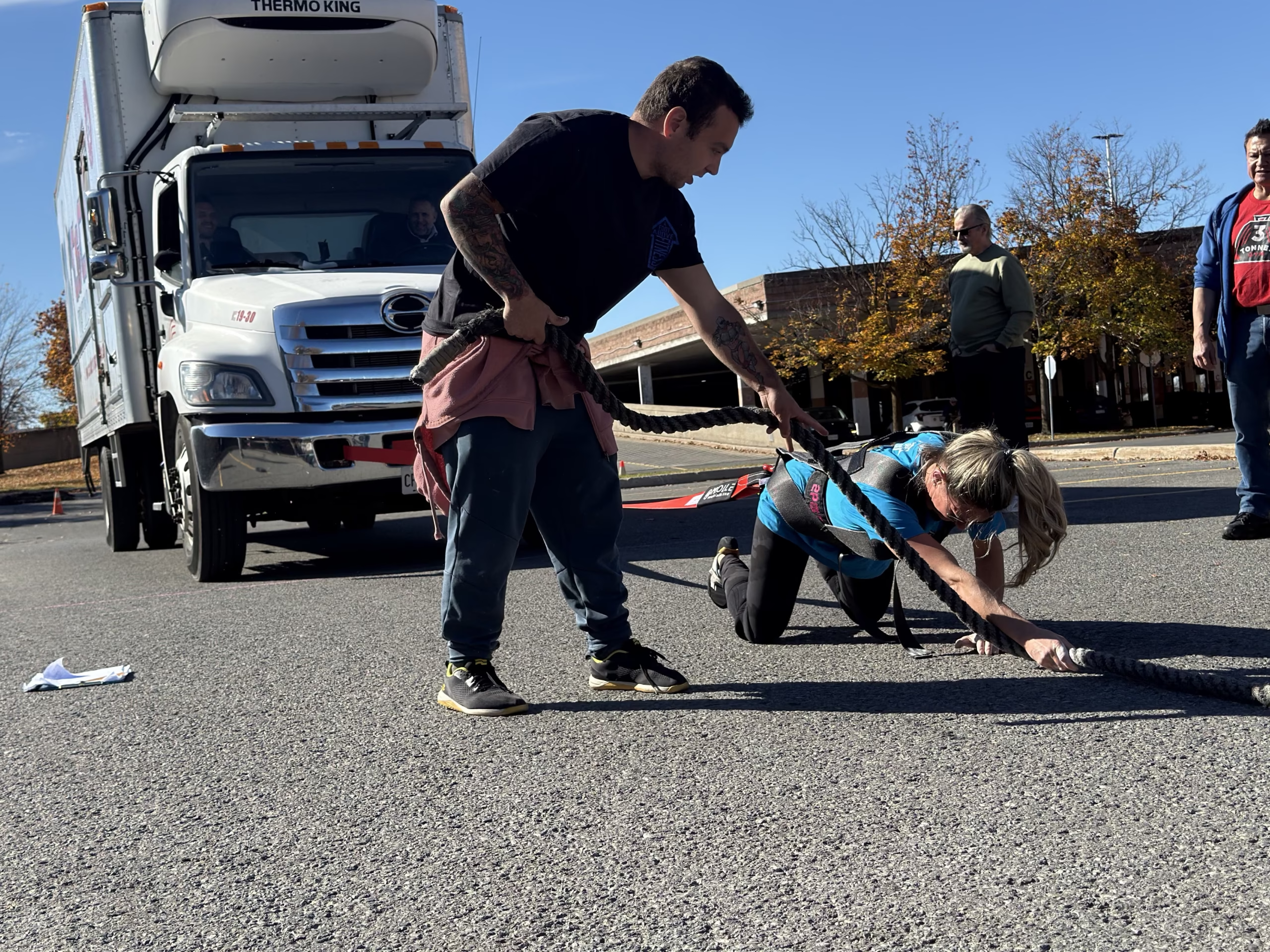
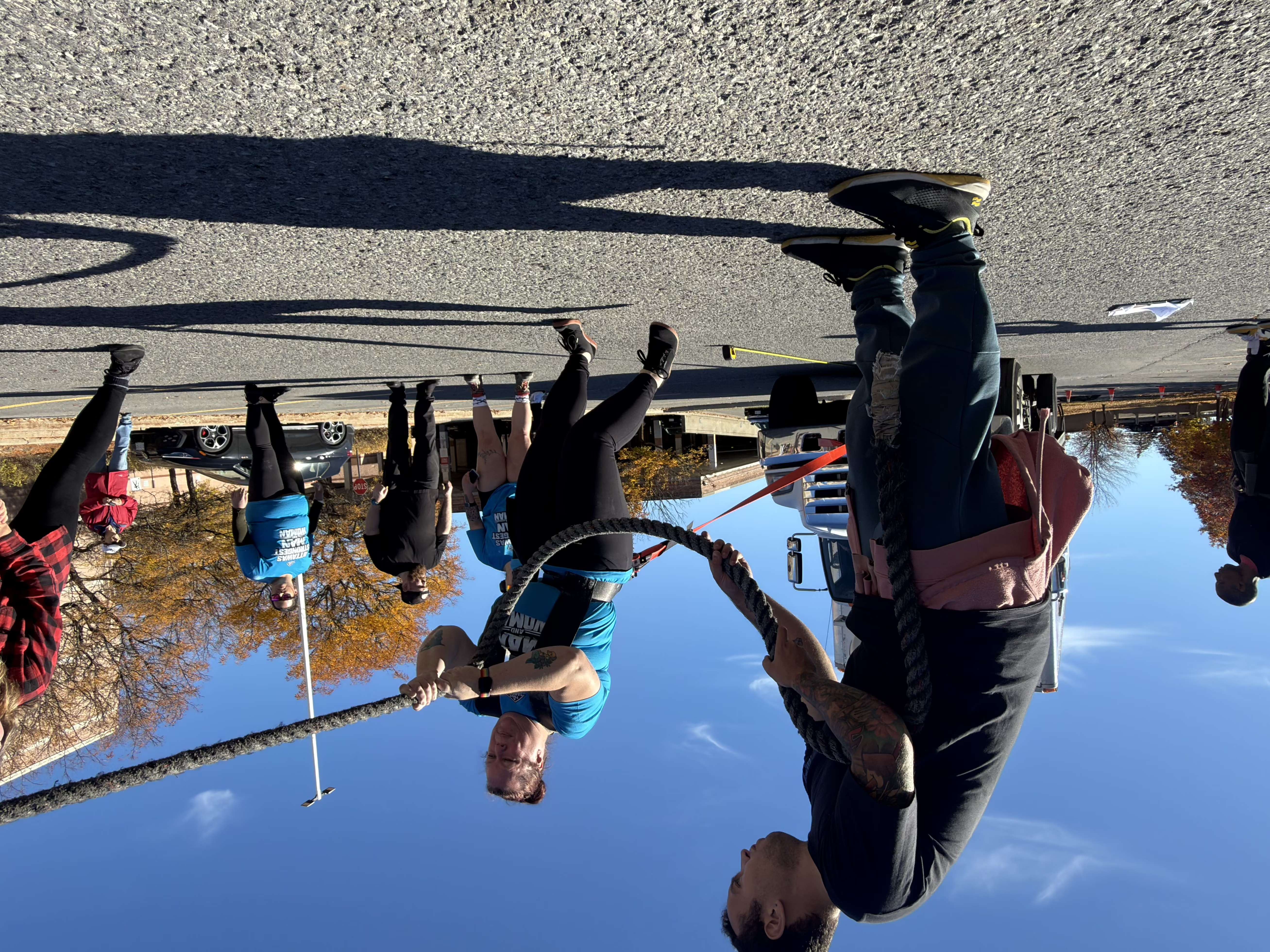
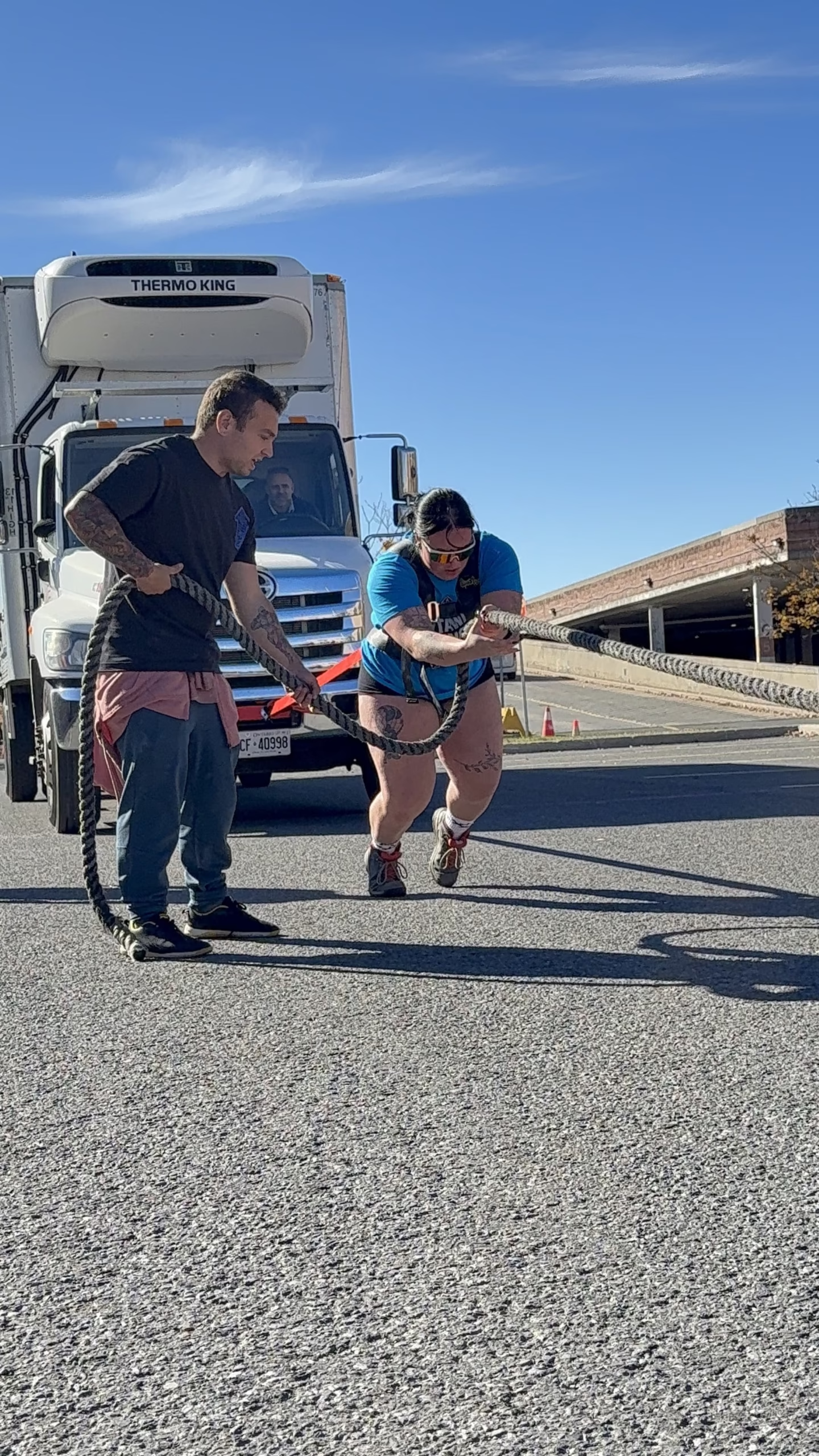
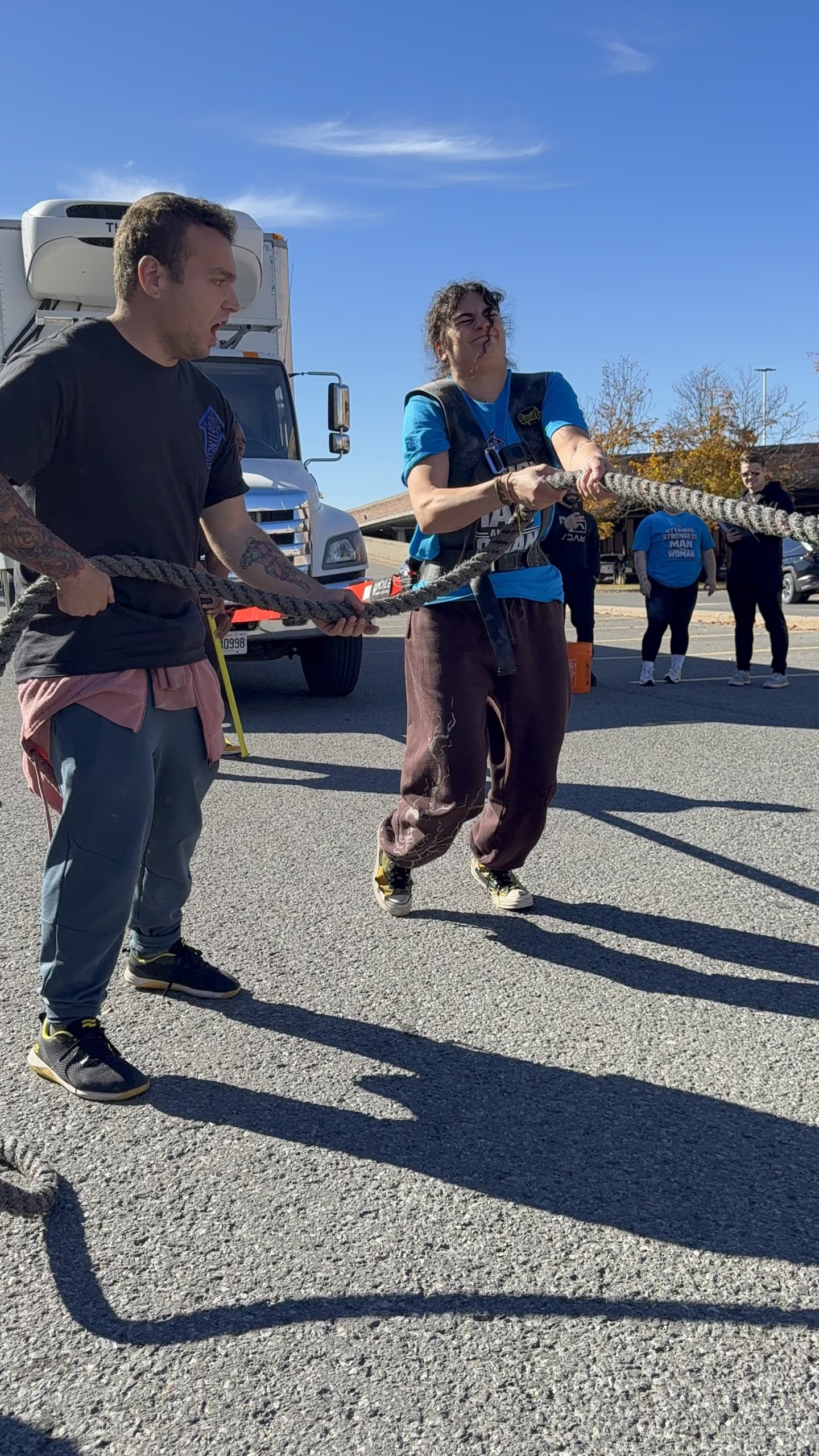
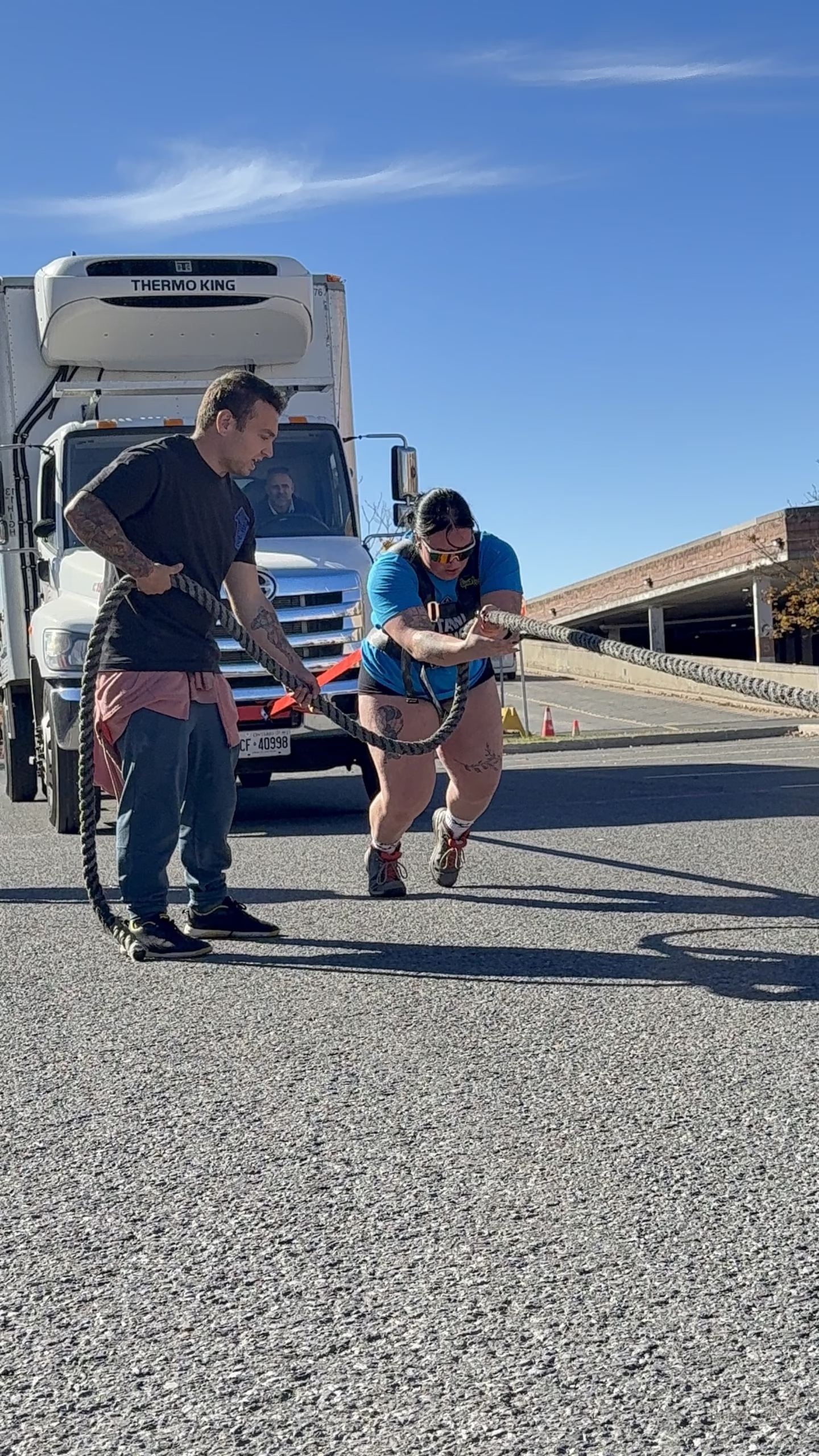
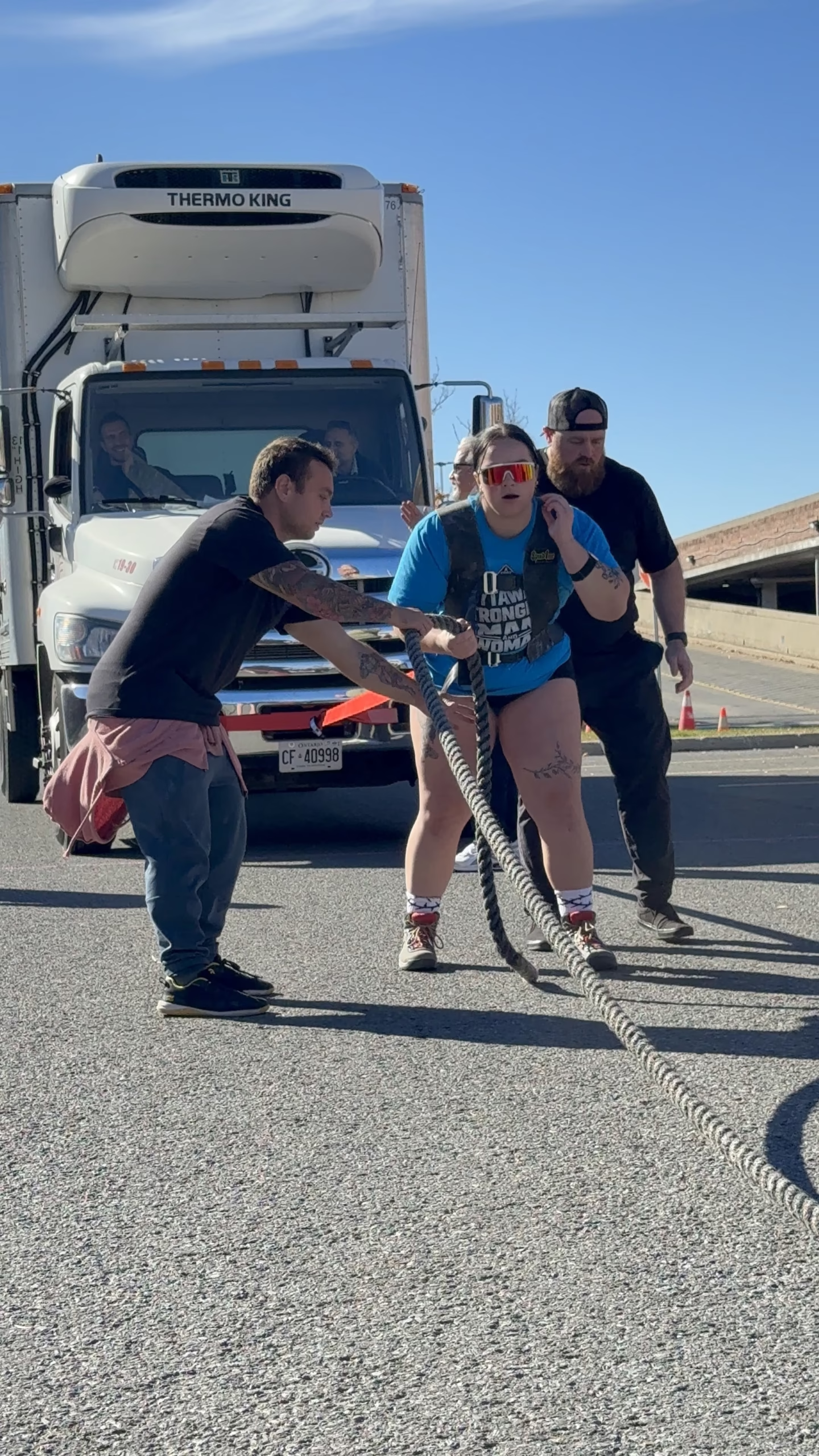
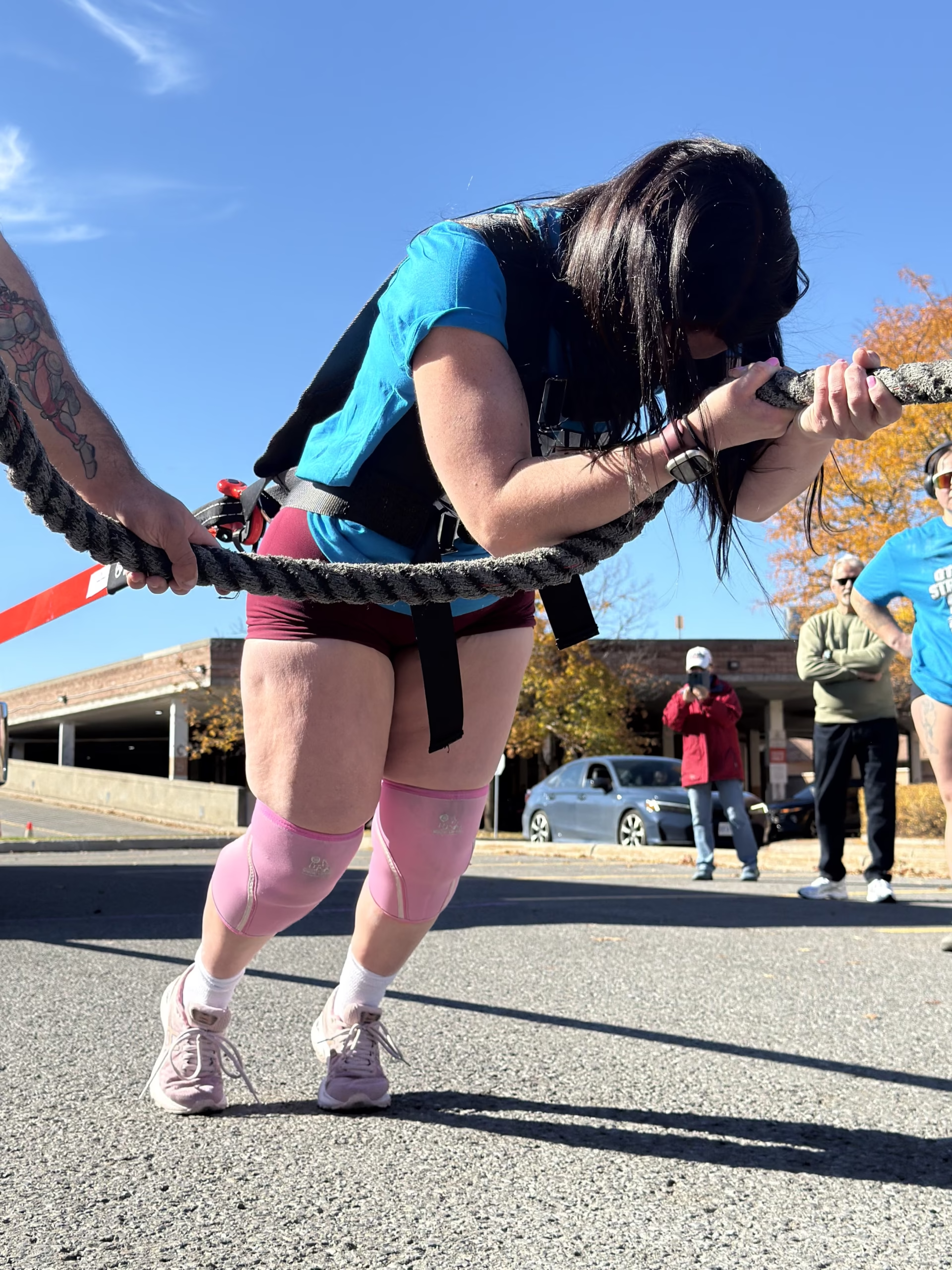
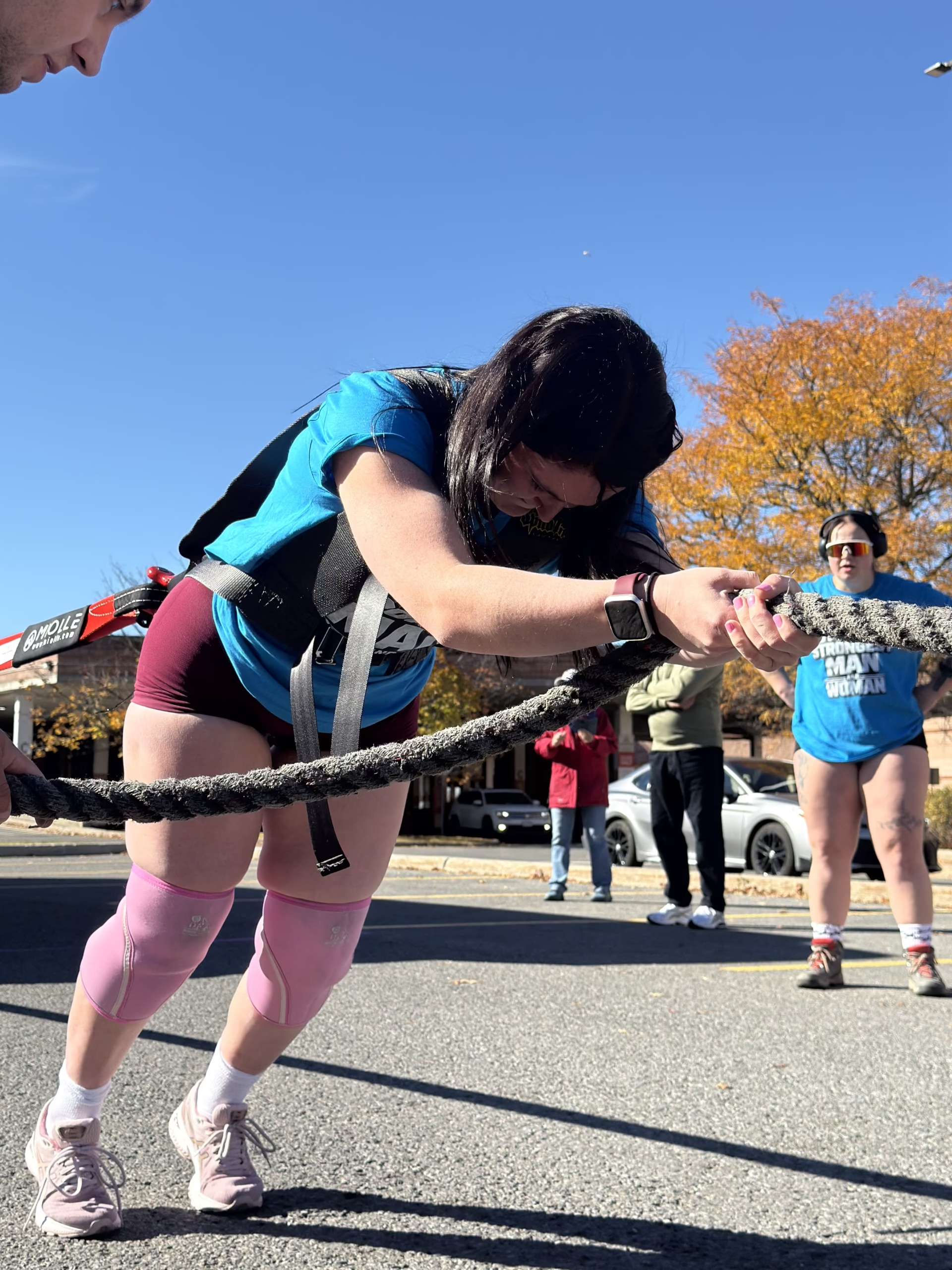
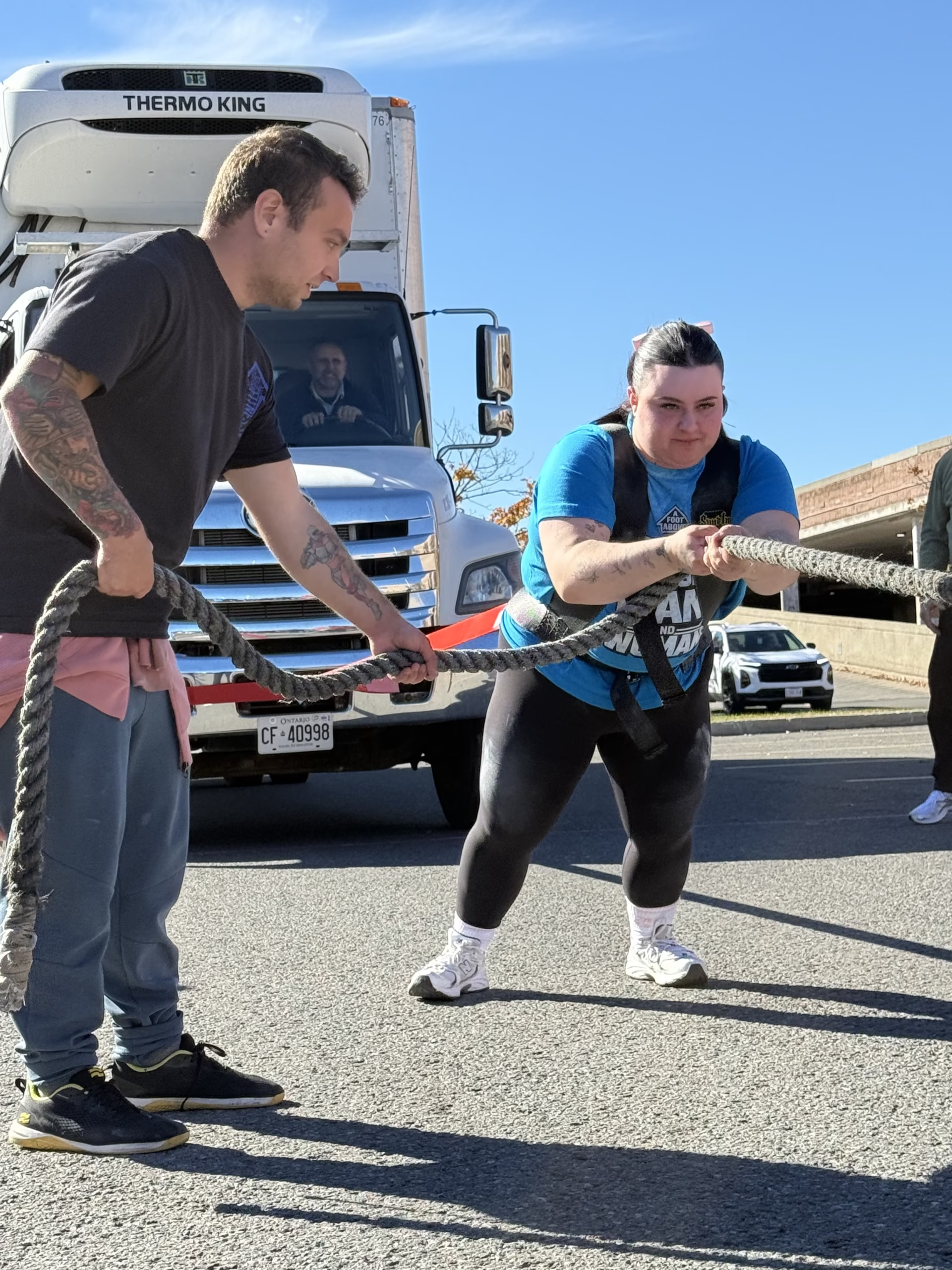
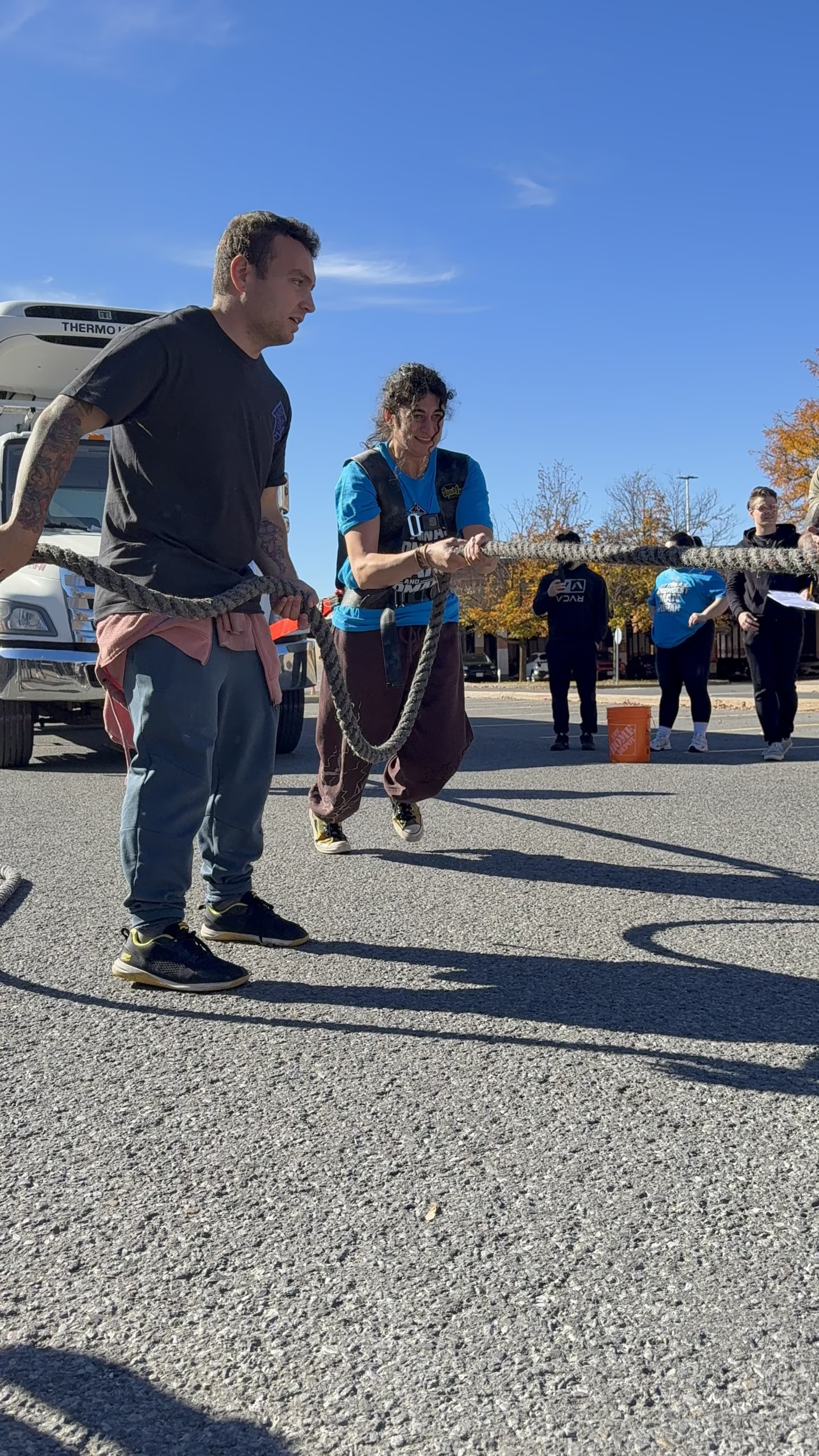
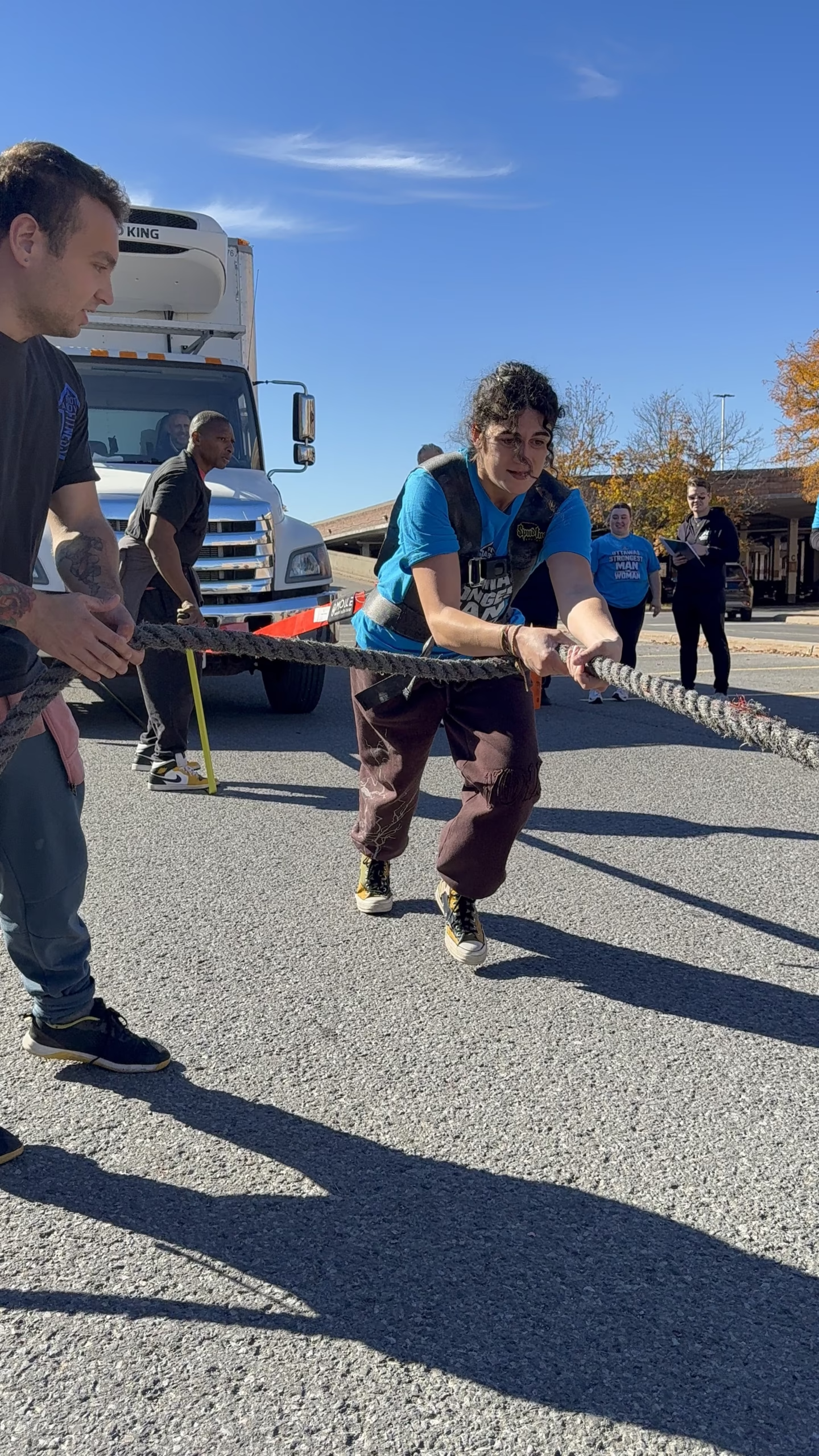
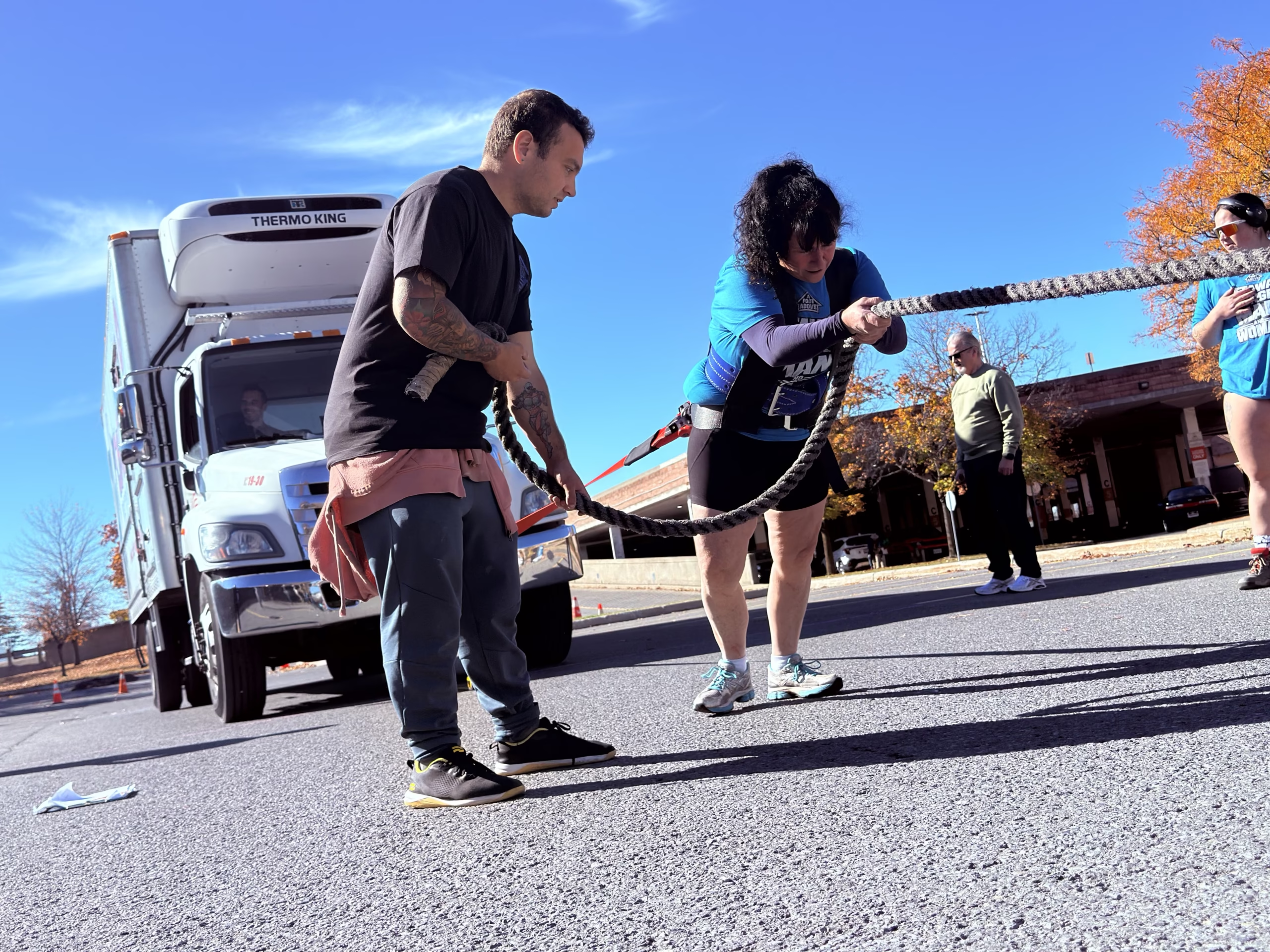
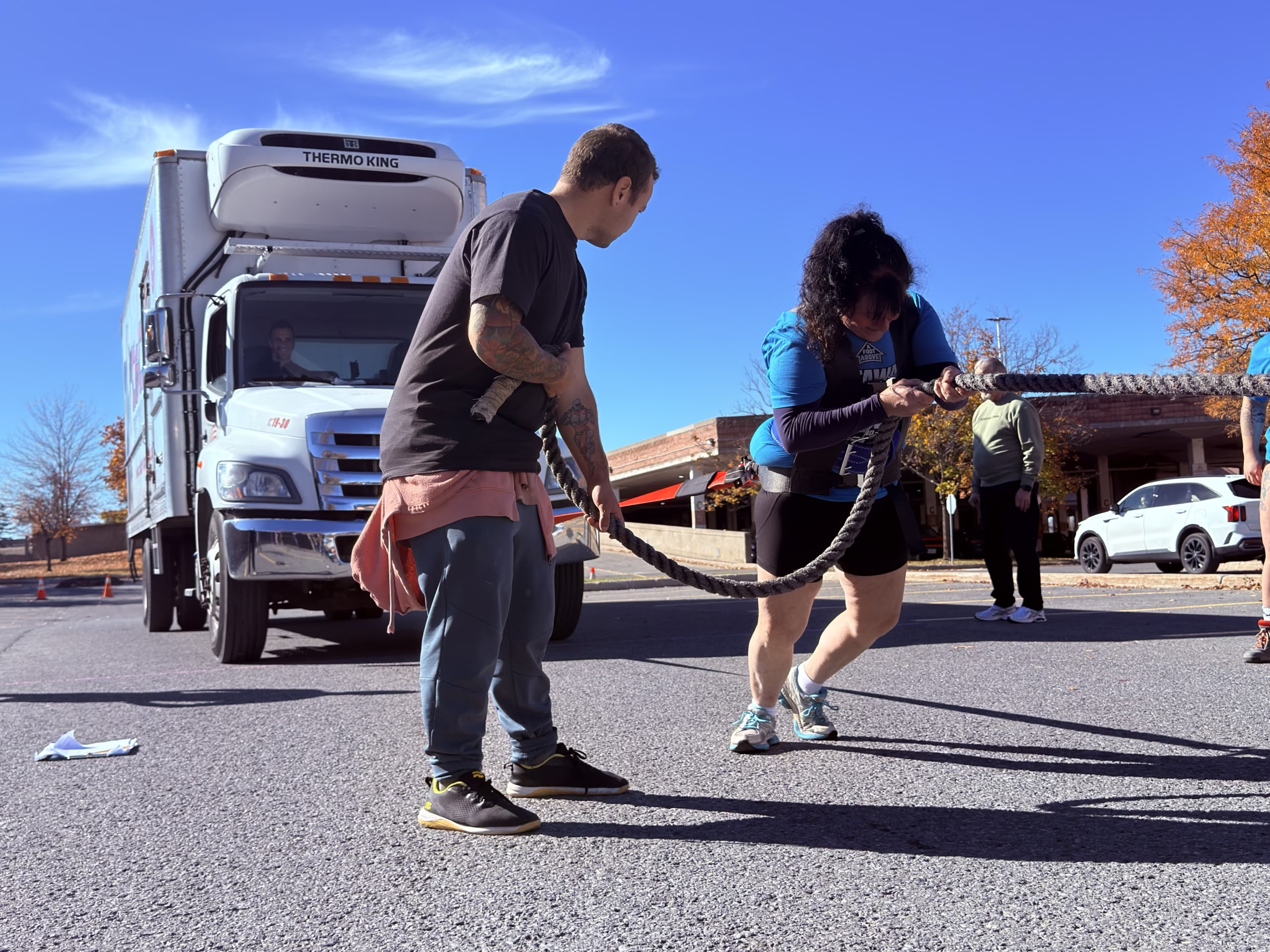
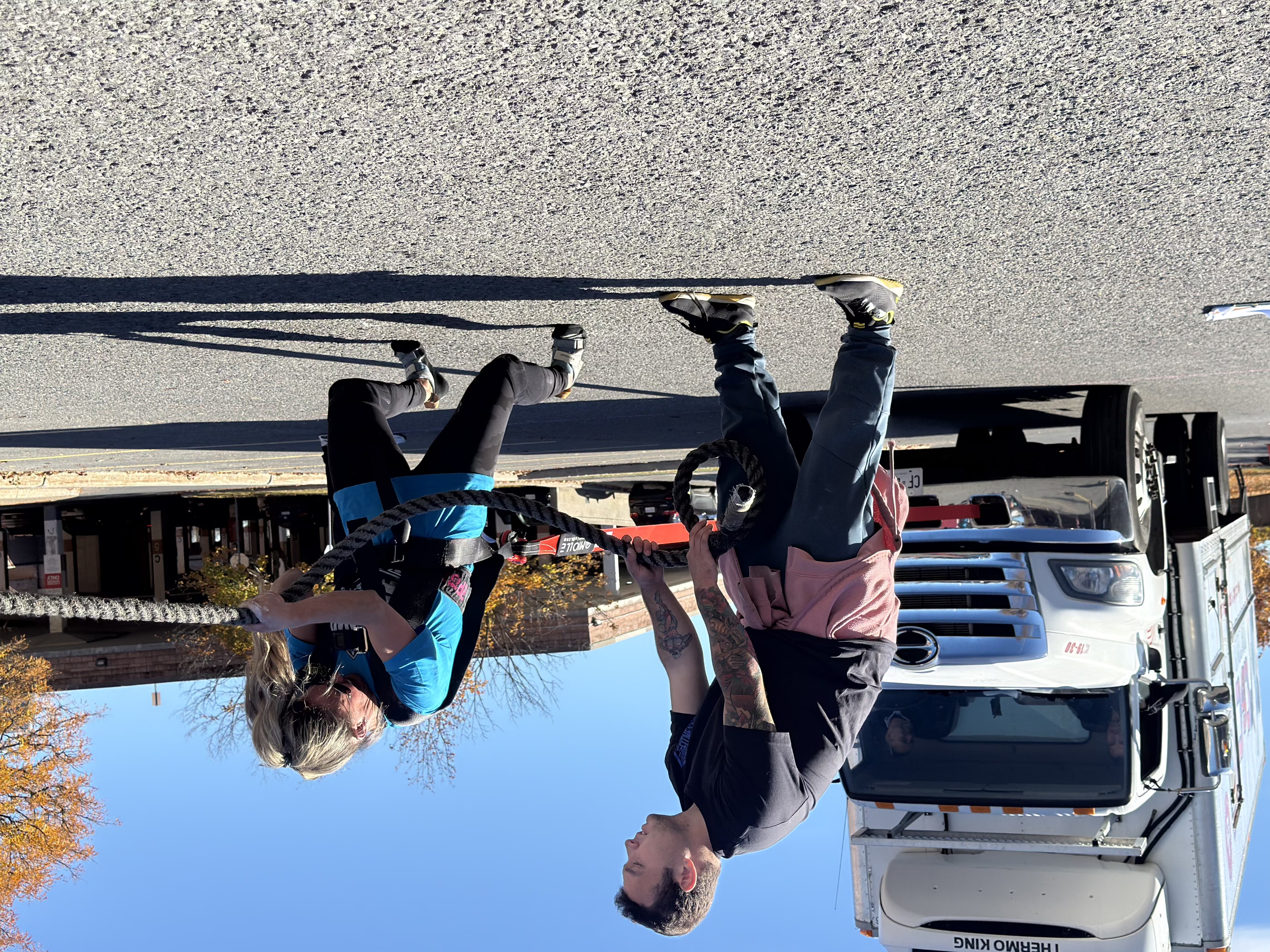
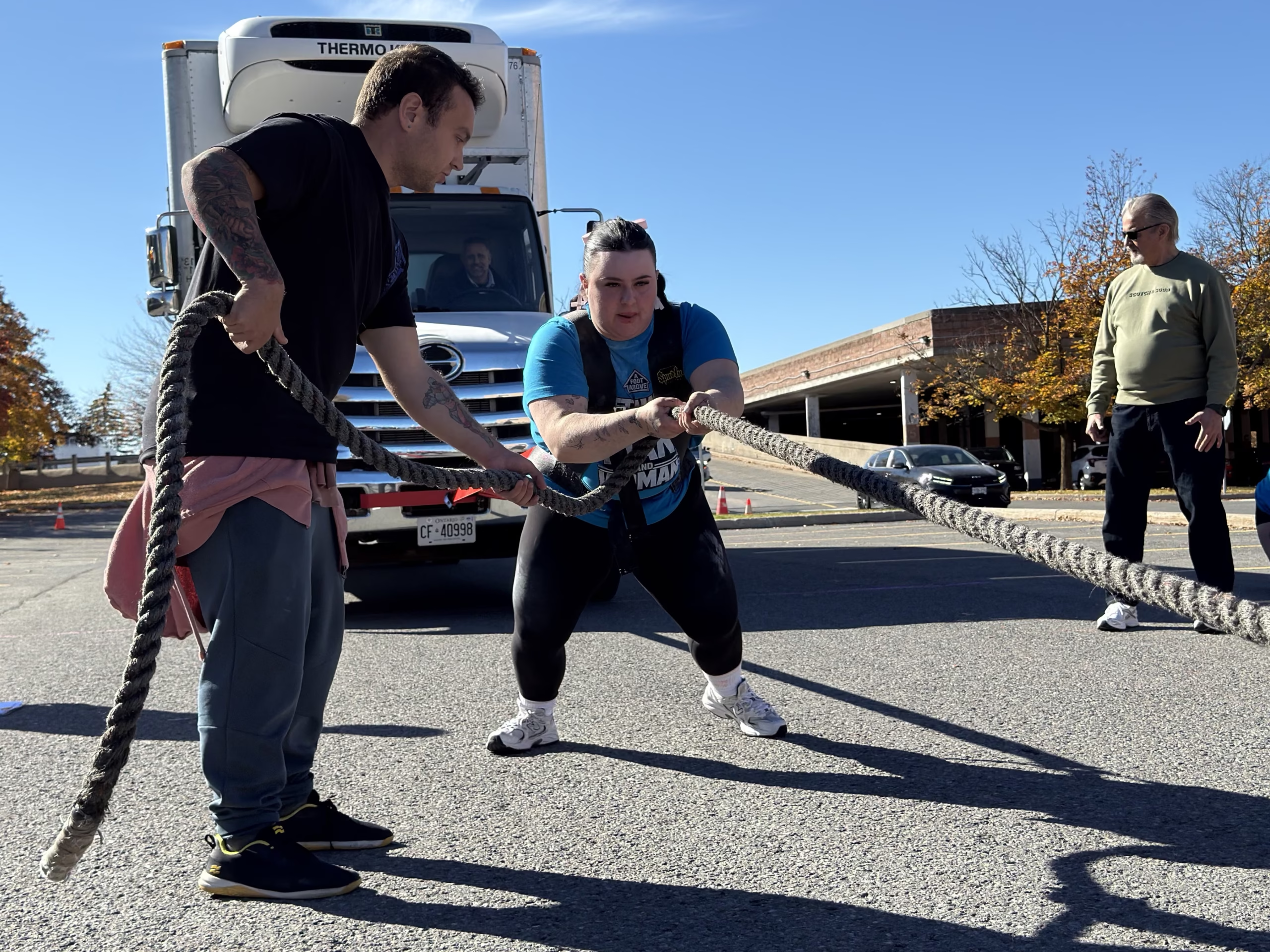
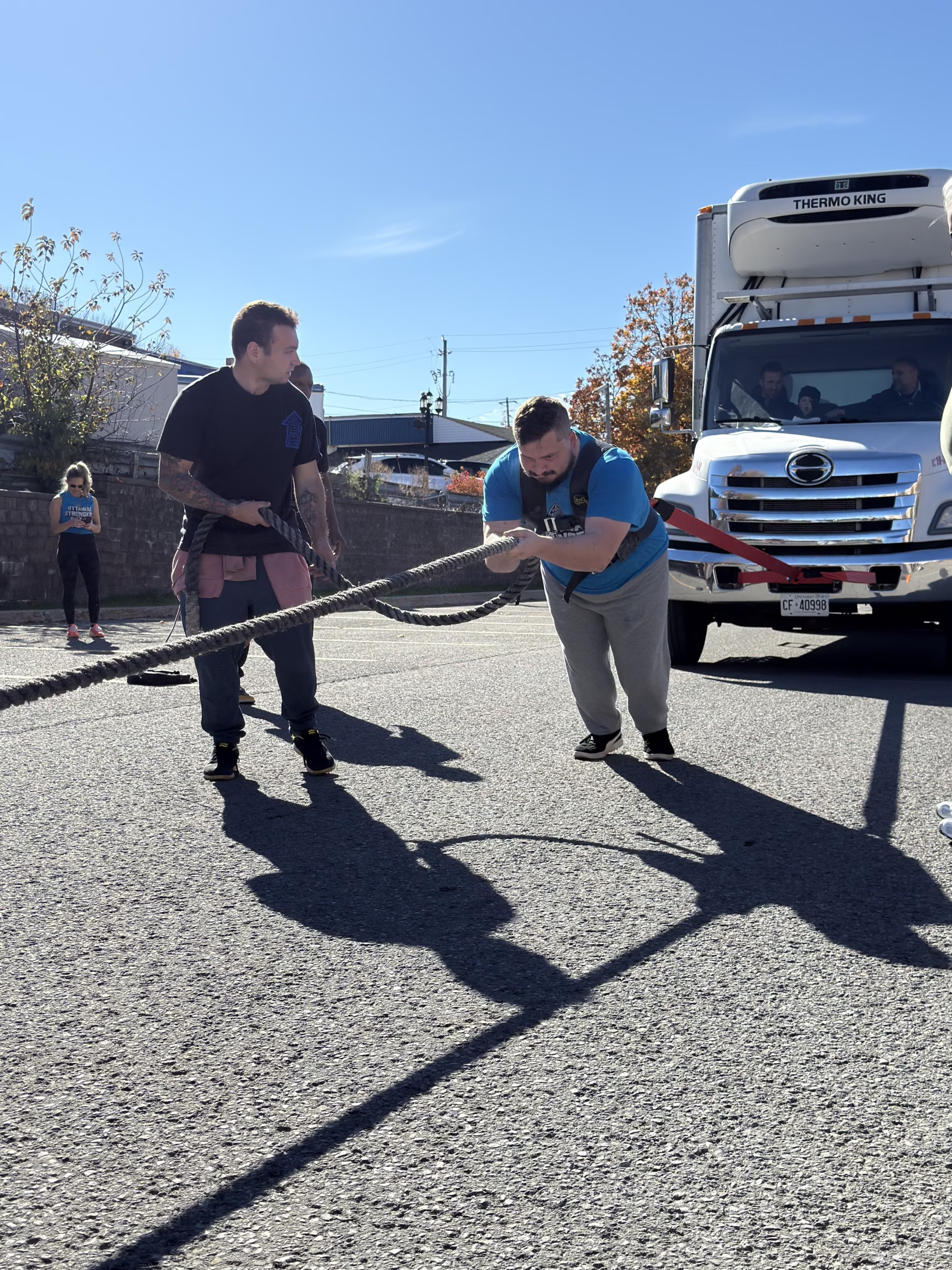
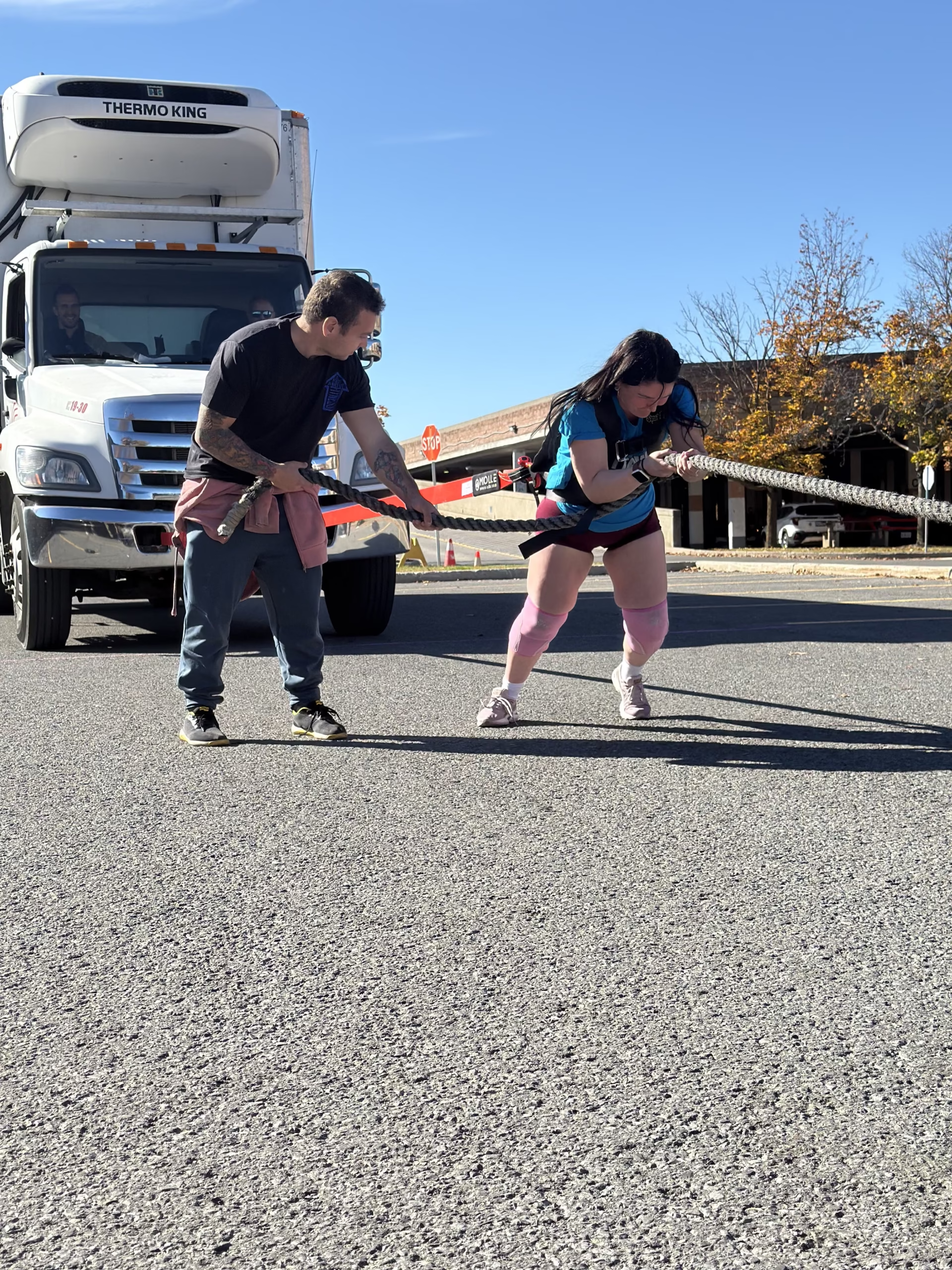
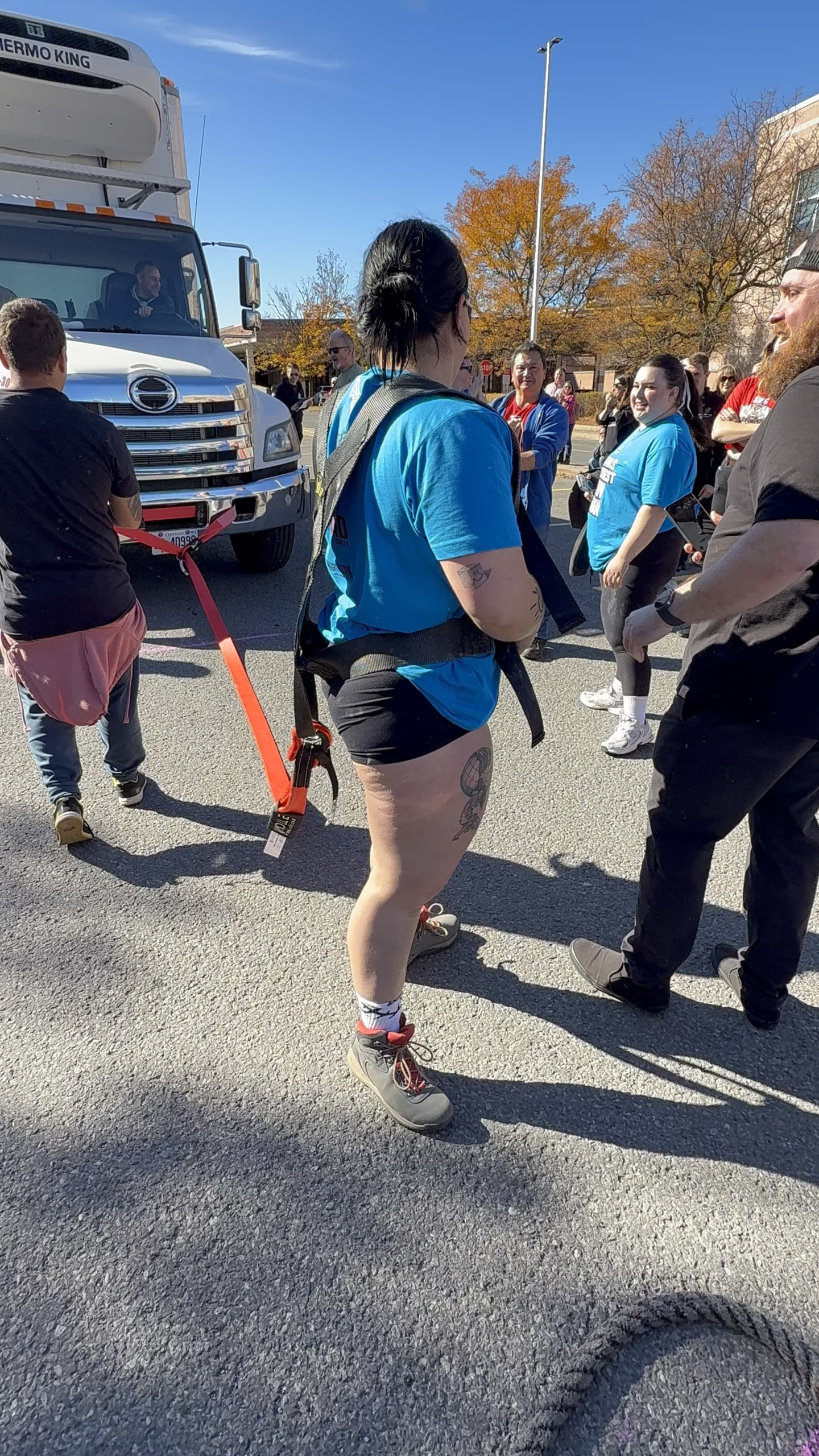
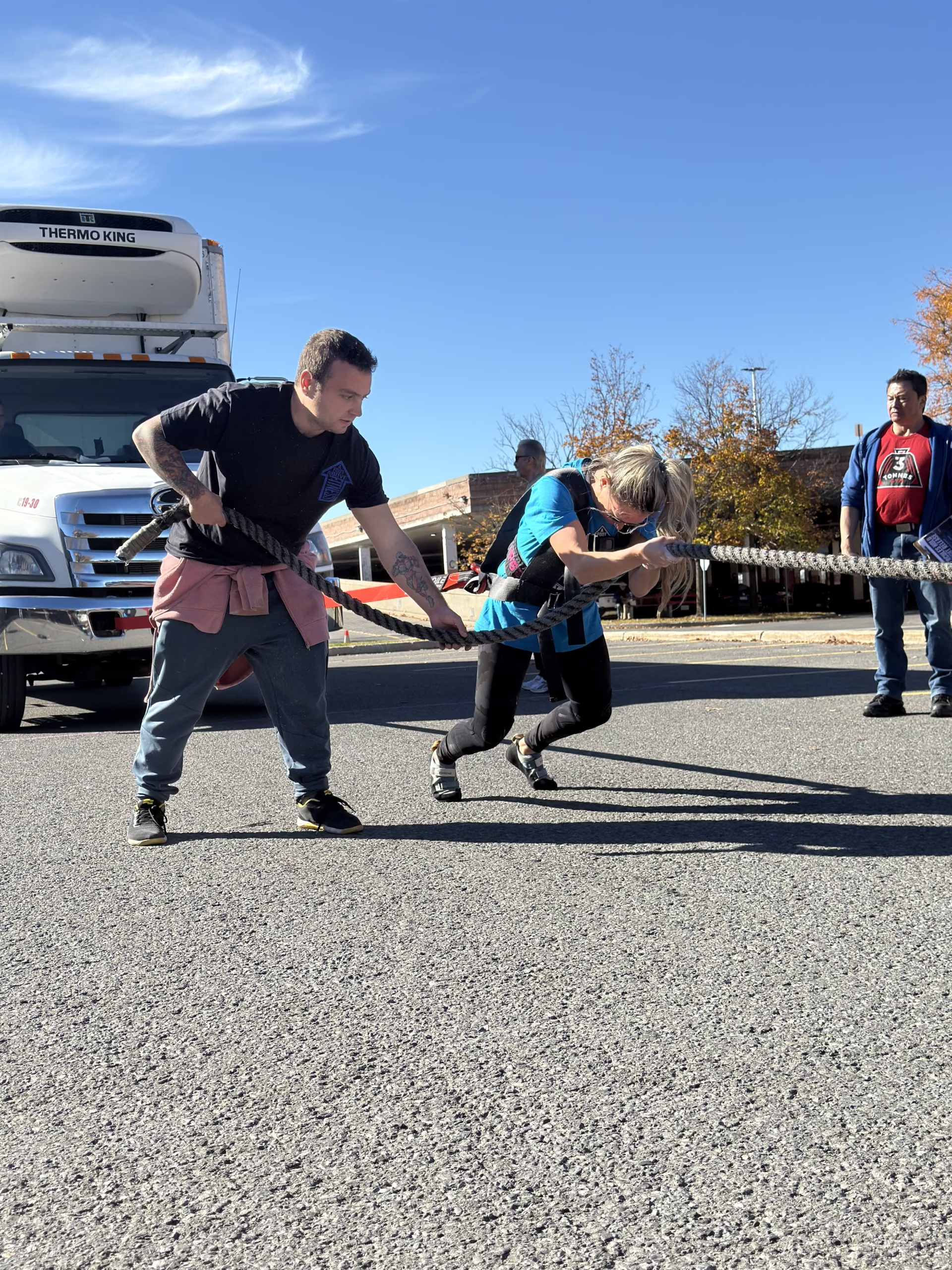
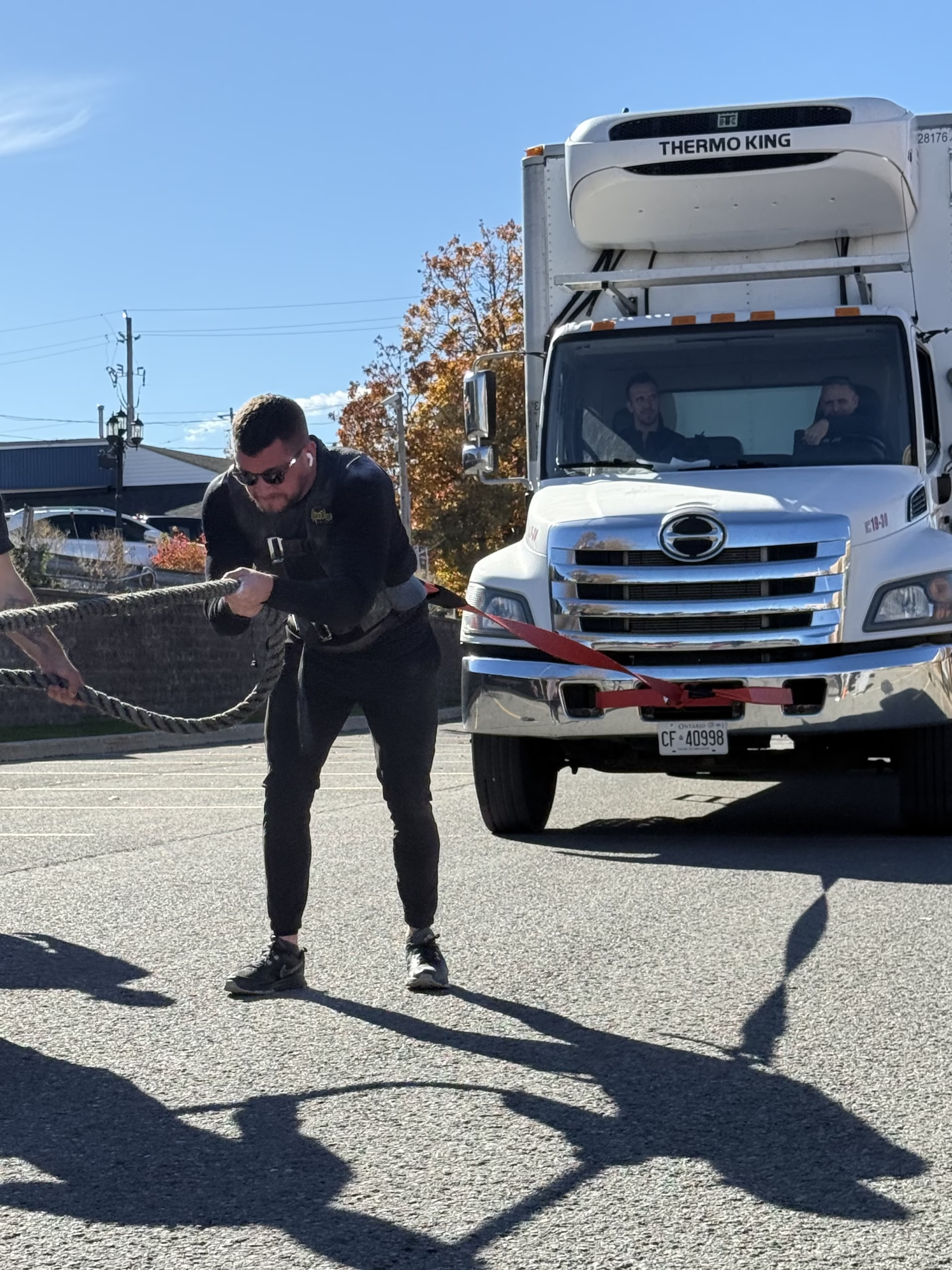
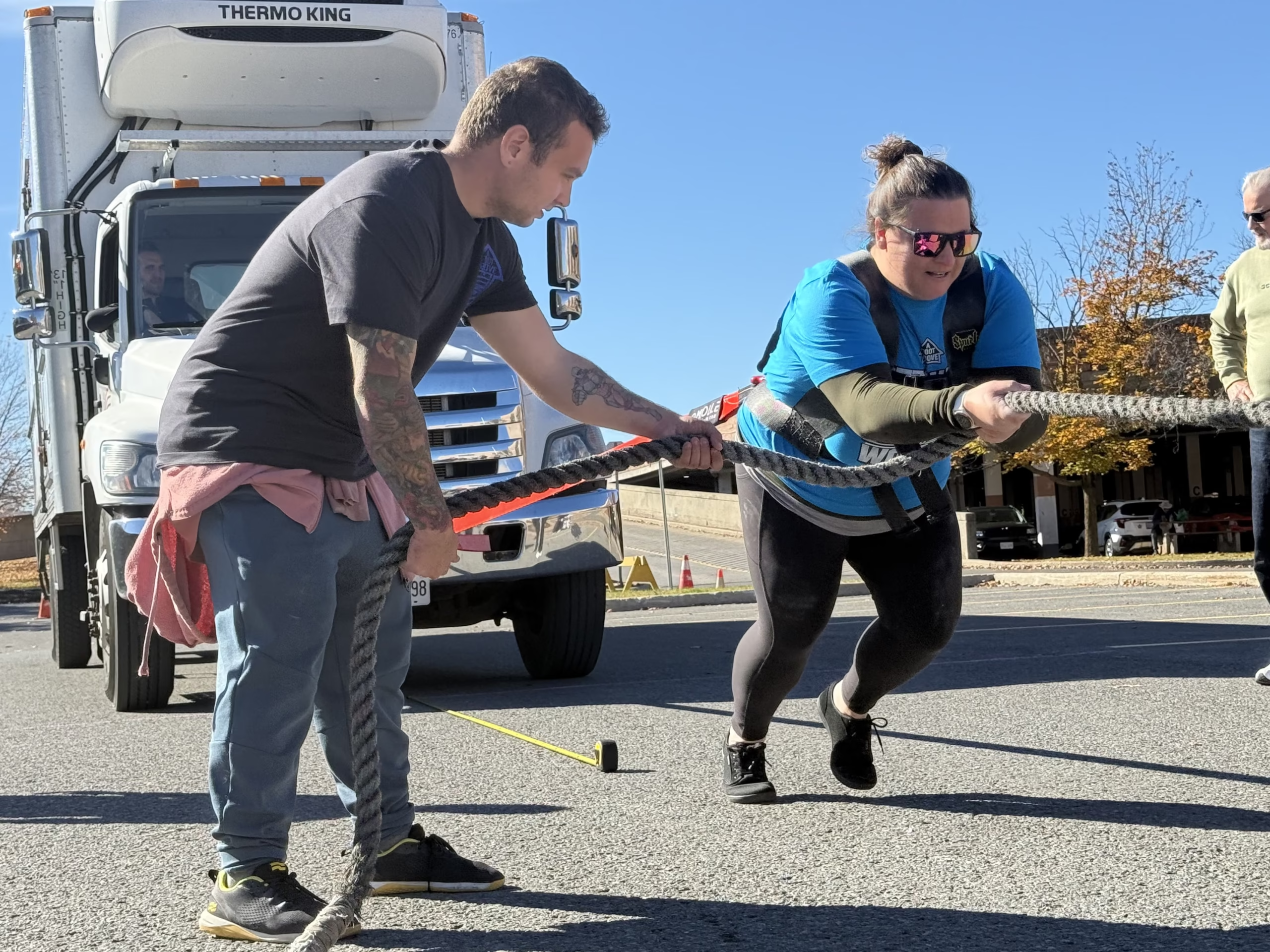
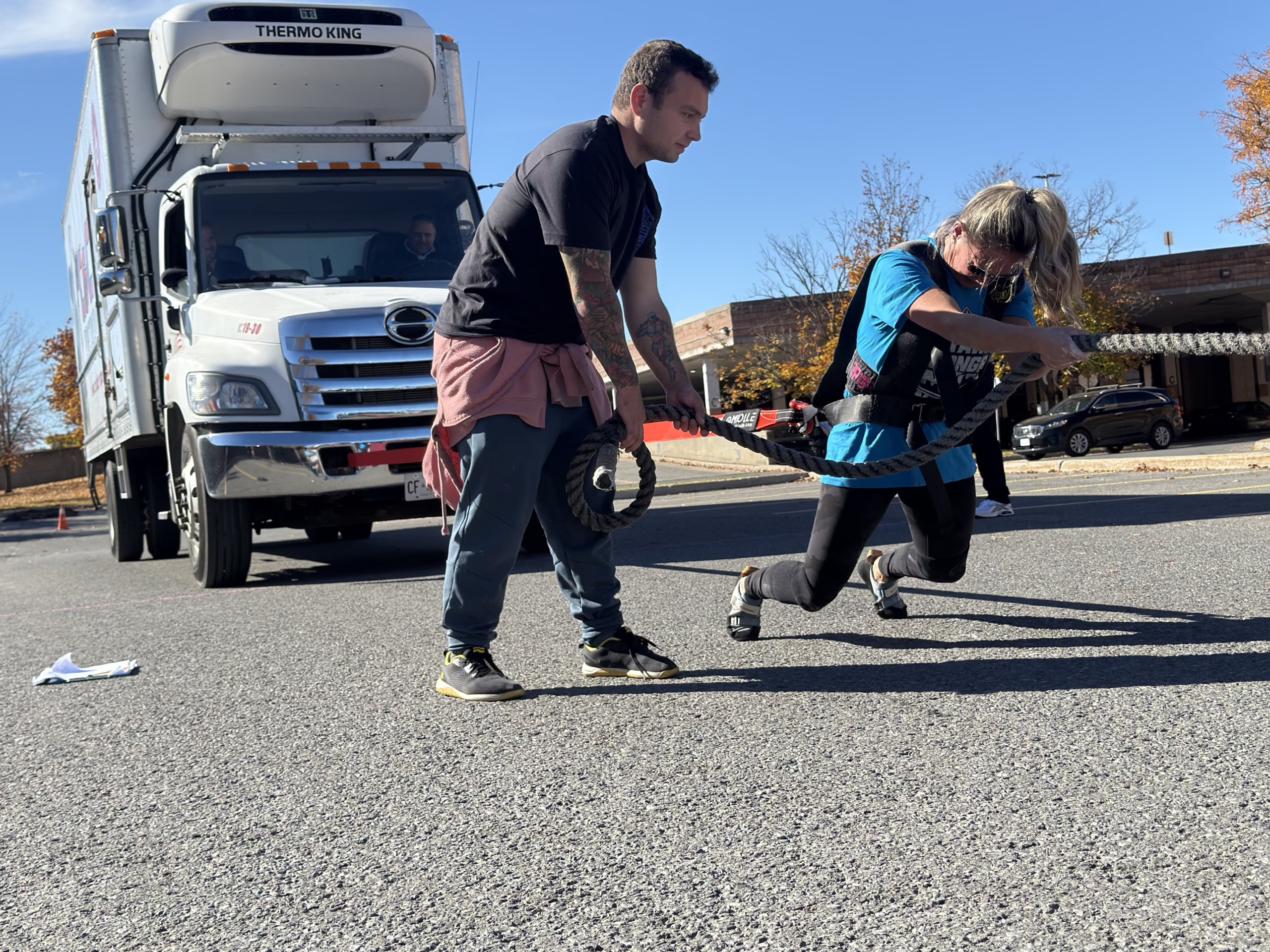
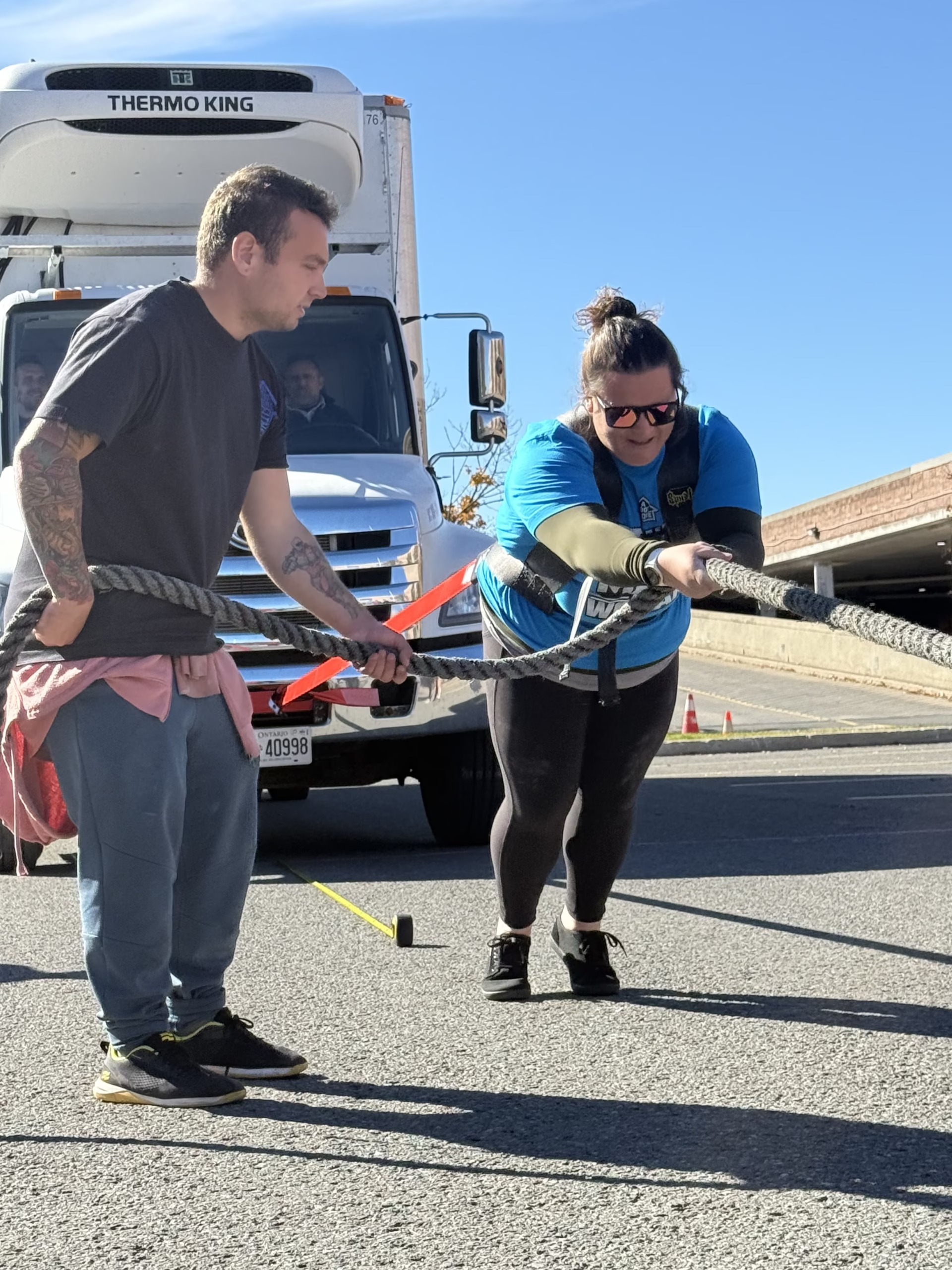
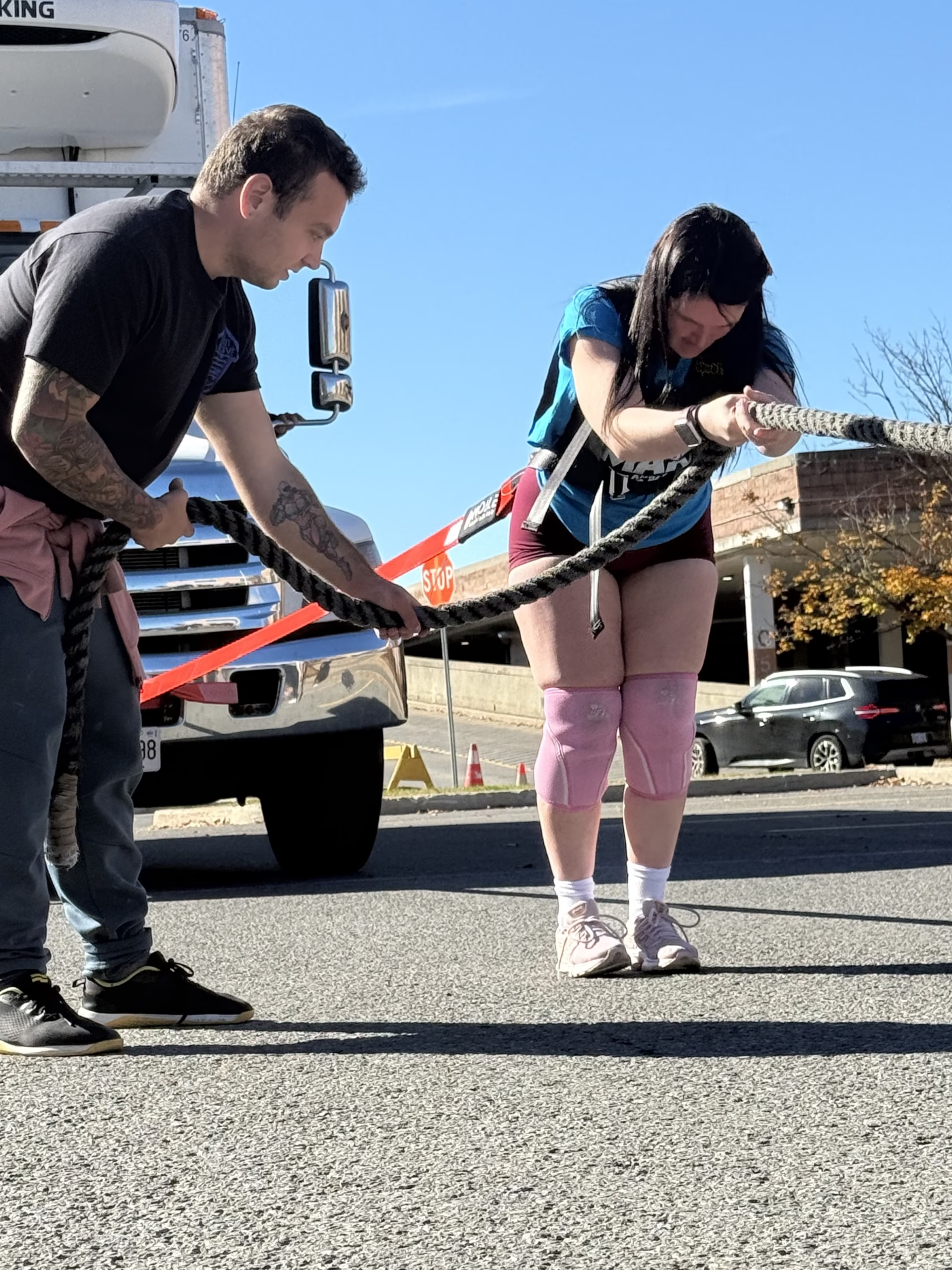
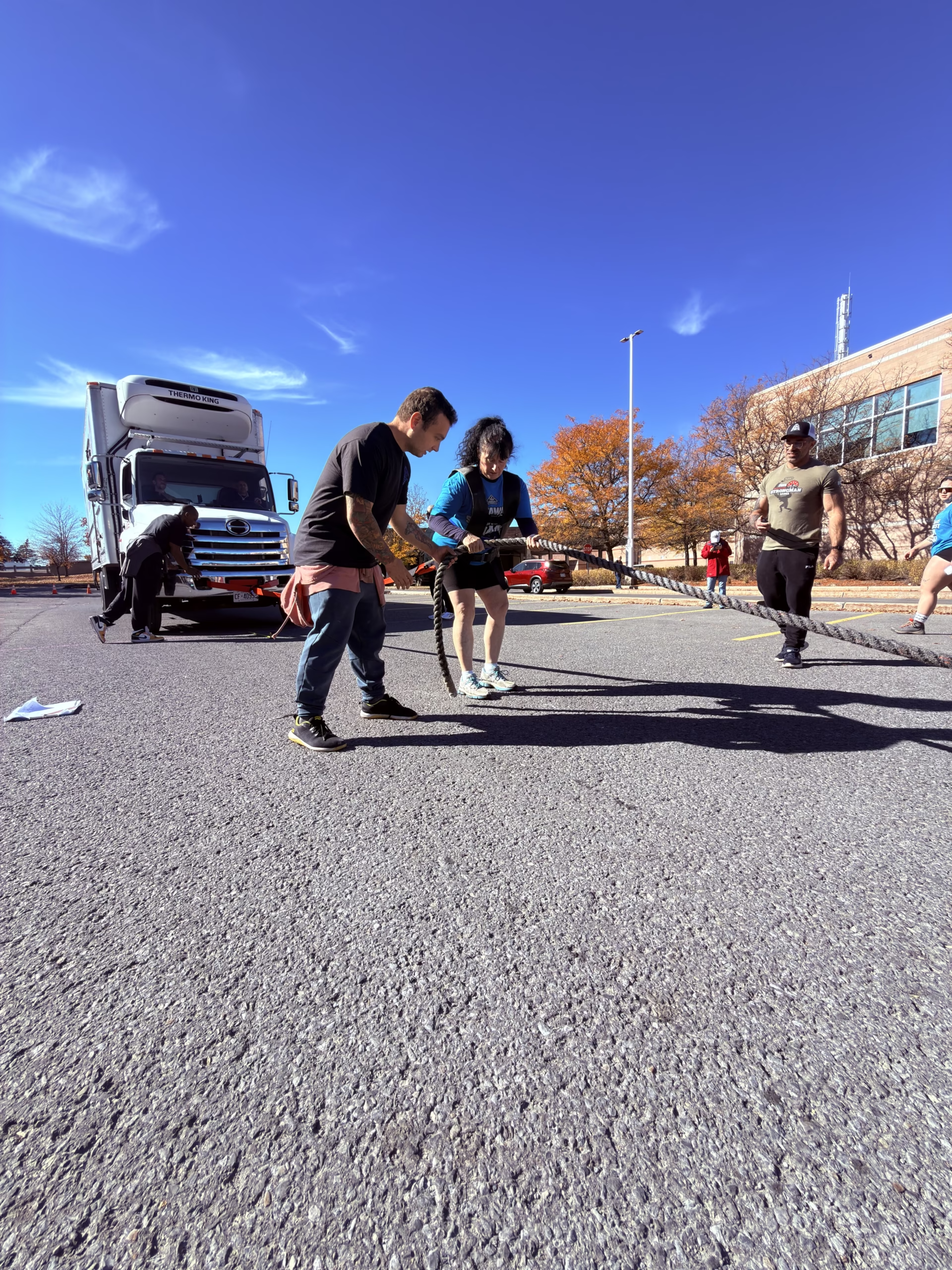
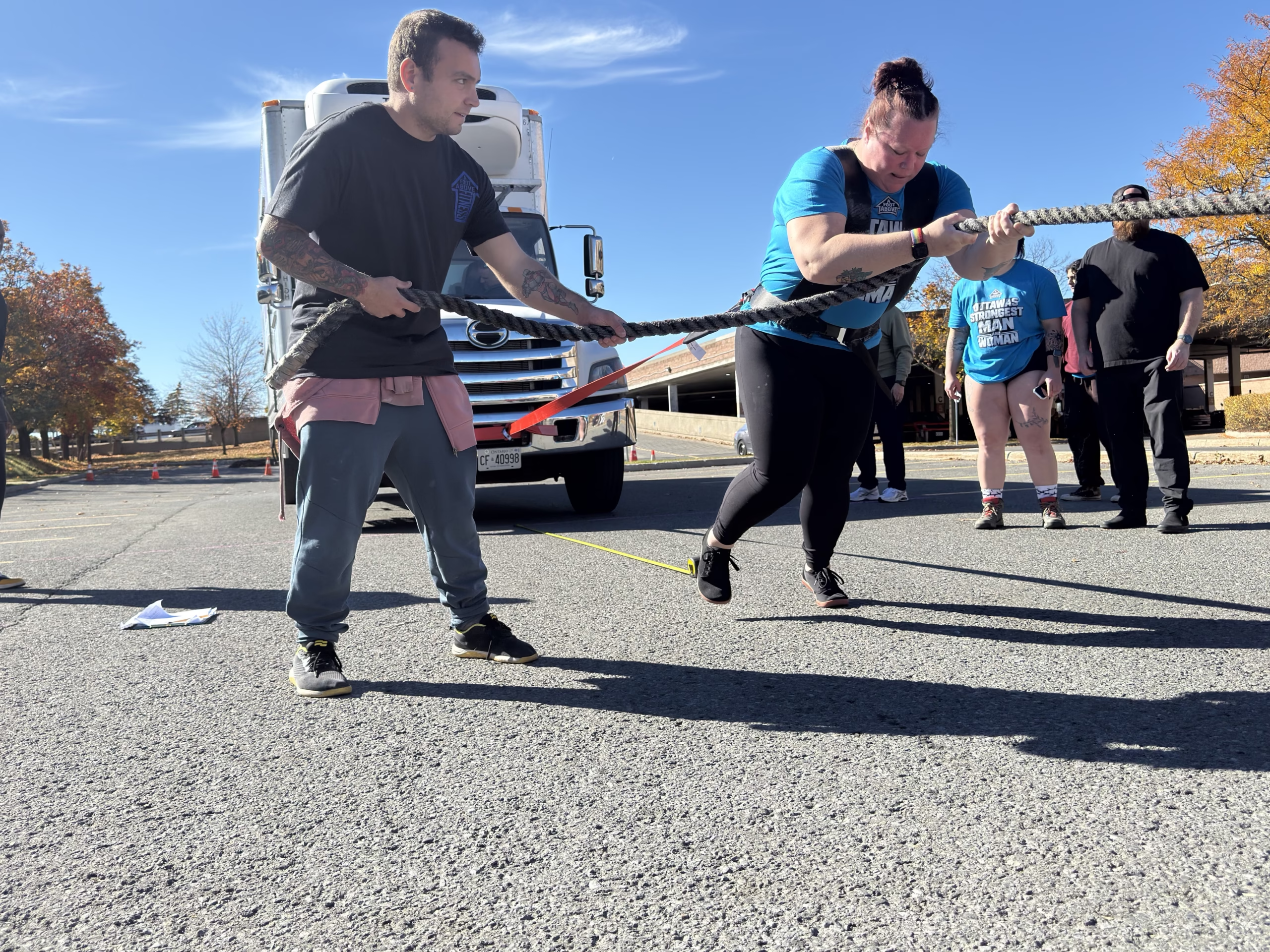
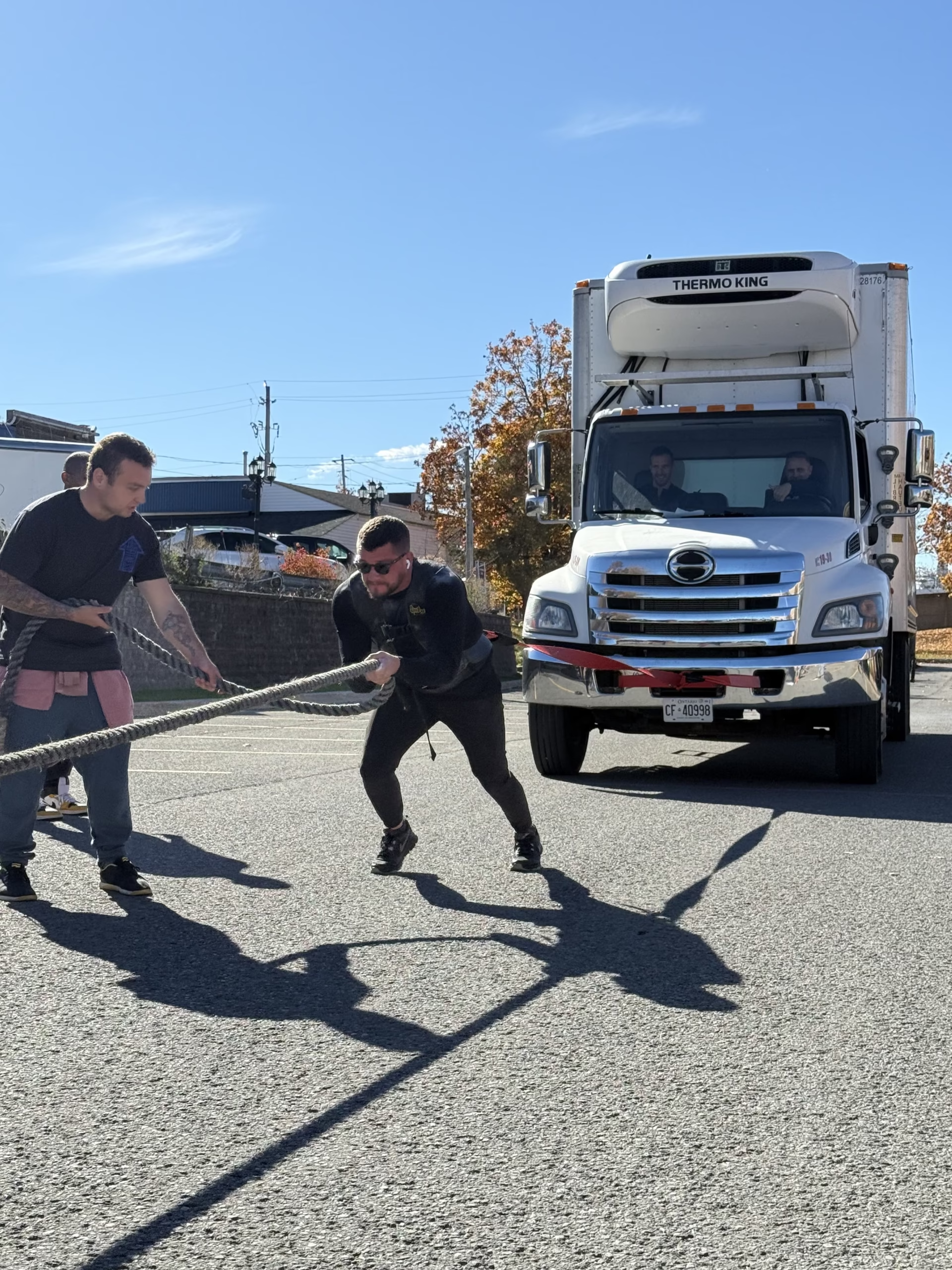
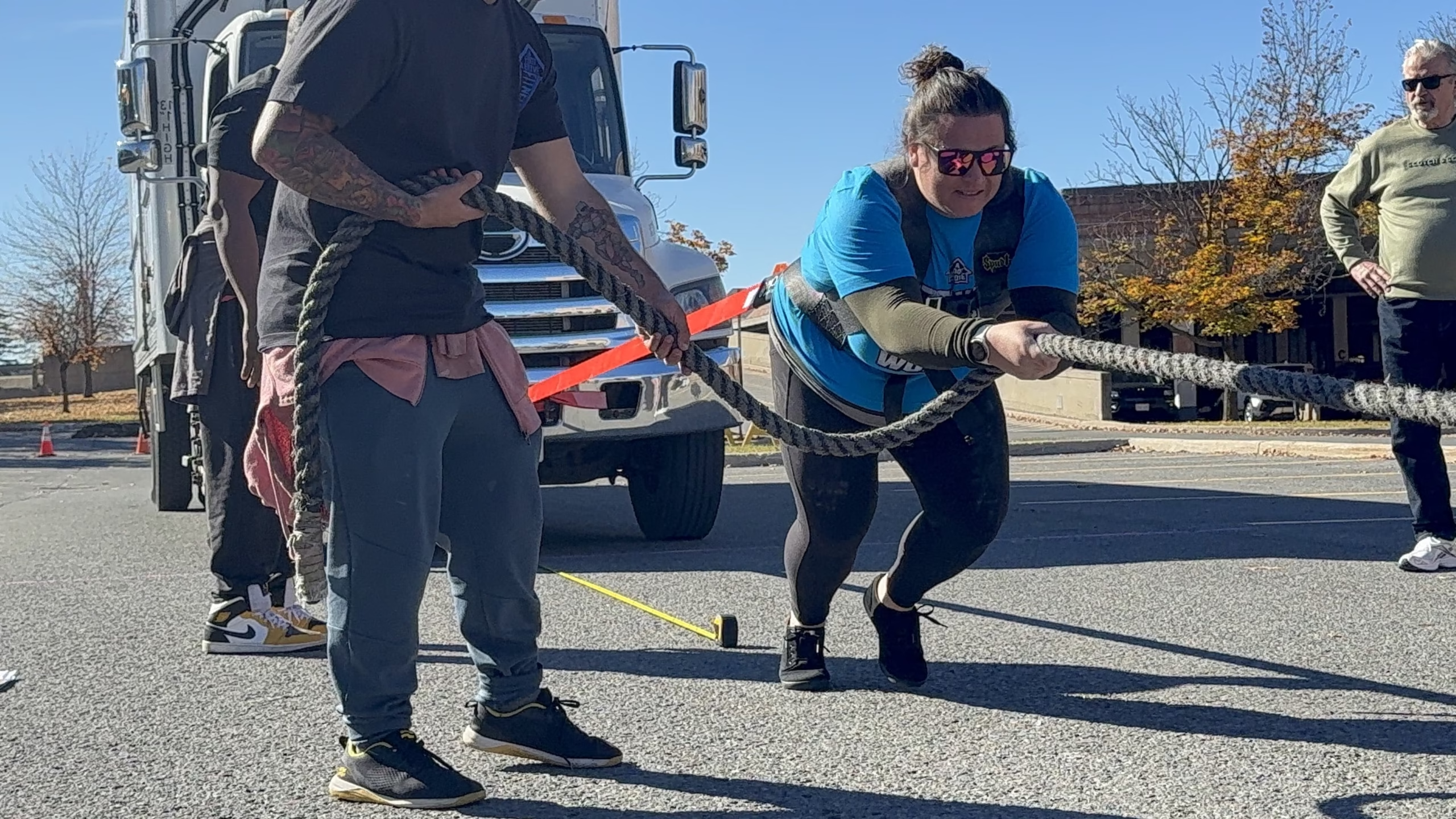
The Truck Pull closed the competition and produced some of the day’s most visible performances. Scoring mixed finish times with partial distances, the same pattern seen in the Sandbag/Farmers Carry: athletes who completed the course were ranked by speed, while those who stalled were ranked by how far they got. Christina Saydé posted the top mark in the women’s novice field, Gabby Sebrango pulled a 26,000 lb milk truck 50 feet in 47 seconds in the women’s open, and Charles-Alexandre Ladouceur recorded the fastest time among the novice men.
Pulling a vehicle demands full-body power and the ability to keep producing force once the initial momentum is gone. Athletes drive through the legs and hips, stay braced through the core, and maintain tension in the harness while the truck’s weight and rolling resistance fight every step. Grip is less of a limiter than in the Hercules Hold, but lower-body endurance and the willingness to keep leaning and driving when the lungs are burning become decisive. The athletes who finished cleanly showed both the strength to break the truck free and the conditioning to keep it moving; those who stopped short usually lost the battle once the vehicle’s inertia settled.
In practical terms, the Truck Pull is the closest the event list comes to the occasional real-world task of moving something far heavier than the person doing the work. Pushing a stalled car, dragging heavy equipment across a yard or job site, or simply finishing a long bout of physical labor without quitting all rely on the same combination of leg drive, core rigidity, and mental persistence. The competitors who handled the truck well demonstrated usable power and work capacity—the kind that makes hard physical days more manageable and less likely to end early. For many athletes, the final event was both a test of everything that came before it and a clear measure of how well their training prepared them for sustained, heavy effort.
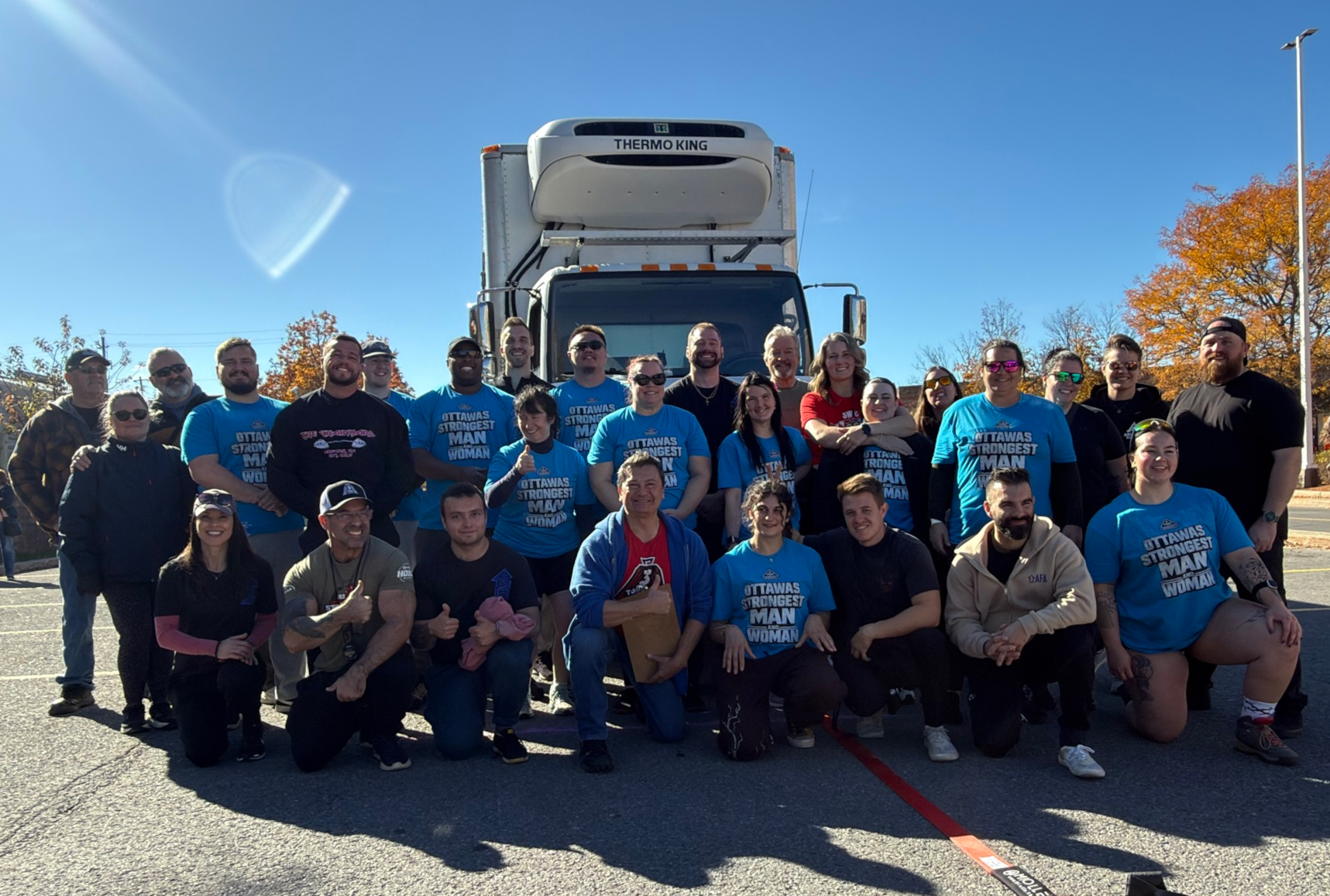
A Foot Above Fitness doesn’t just open its doors for workouts. It regularly turns the space into a community hub, most often around martial arts. The gym has hosted multiple Fight Nights featuring live amateur sparring (Muay Thai and other combat sports), complete with vendors, food, and spectators. It maintains a dedicated combat sports room with a regulation-size boxing ring and heavy bags, and it partners with groups such as Lethwei Dan Fight Academy.
Competing or simply training in a place that runs these kinds of events changes the experience. You train alongside people who are preparing for something public, which raises the standard. Watching others step into the ring or onto a strongman platform builds familiarity with competition nerves and makes your own goals feel more achievable. The social side is real too: regular events create connections that go beyond the usual gym small talk. Members see the same faces week after week, cheer for each other, and often stick around longer because the place feels like more than a collection of equipment.
For strength athletes, the combat-sports presence is a bonus. Grappling, striking, and conditioning work build the kind of resilient core, grip, and work capacity that strongman events reward. For everyone else, the events simply make the gym feel alive. When a facility invests in bringing people together—whether for a truck pull or a fight night—it tends to produce members who stay consistent, support one another, and keep showing up even on the hard days.
These were not national-level weights or distances, but they were real, challenging implements that rewarded consistent training and mental toughness. Standout moments included the truck pulls that turned heads in the parking lot and the Hercules Holds that tested grip and shoulder endurance under fatigue.
Events like this matter in a city with a growing strength culture. Canada continues to produce elite strongmen, and local shows like Ottawa’s Strongest Man and Woman give newer and intermediate athletes a stage, a community, and a chance to test themselves outside the gym. A Foot Above Fitness provided the perfect backdrop: space, equipment, and a welcoming atmosphere for both competitors and spectators.
Congratulations to every athlete who stepped up on October 24. Special recognition goes to the open champions who took home cash prizes and the bragging rights of being Ottawa’s Strongest. For anyone watching from the sidelines and thinking “I could try that,” the gym is open 24/7 for members and already hosts a range of strength and combat sports programming. The next local show is likely already in the works.
Heavy lifts, local pride, and a day that proved strength thrives right here in Orléans. That’s a wrap on Ottawa’s Strongest Man and Woman 2026.